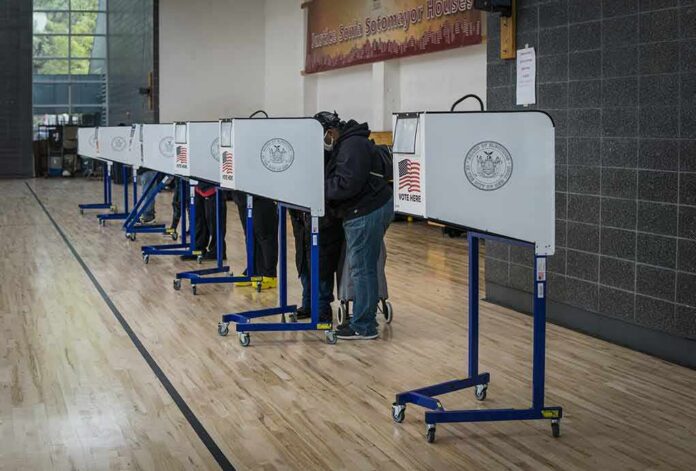
On the eve of counting, the Justice Department asked the Supreme Court to let California set aside about 20,000 disputed ballots, raising fresh alarm over both election integrity and voter rights.
Story Snapshot
- The Justice Department asked the Supreme Court to let California segregate roughly 20,000 ballots tied to “likely” noncitizens.
- Lower courts rejected the emergency request, warning of election disruption and weak evidence.
- California’s review flagged major reliability problems, including U.S.-born names and no voter-file matches.
- The fight highlights a core dilemma: protect elections without sidelining eligible voters.
What the Justice Department Asked the Supreme Court to Do
On Monday, the Justice Department asked the Supreme Court to order California to set aside ballots linked to about 20,000 people the federal government described as “likely” noncitizens. The department said it built the list from public records and federal review. The proposed remedy would not cancel votes, but would hold them while officials verify citizenship. The filing followed setbacks in lower courts and sought emergency relief before counting advanced further.
Federal lawyers argued that keeping potentially ineligible ballots in the same stream as eligible ones risks tainting results. They said temporary segregation protects everyone: citizens do not lose their votes, and any ineligible ballots do not slip through. They framed the ask as narrow and time-limited. They also said the list was a good-faith effort to flag issues that states might miss. The request came as mail ballot processing and counting timelines neared.
Why Lower Courts Said No, For Now
United States District Judge David Carter denied the emergency request. He found the government had not shown it would likely win on the merits and warned the plan could disrupt an ongoing election. He said the relief could discount citizens’ votes and sow confusion in the count. The United States Court of Appeals for the Ninth Circuit also declined emergency relief, leaving the Justice Department to make a last effort at the Supreme Court before counting moved forward.
California officials pressed hard on reliability. The state said the department first floated a number near 190,000 and later cut it to about 20,000 without clear standards. The Attorney General’s office reported a review that found U.S.-born people on the list and many with no voting history. A separate analysis said forty-two percent of the names did not match anyone in the state’s current voter file. Los Angeles County also flagged duplicate entries and limited local matches.
The Evidence Gap Driving the Clash
The core tension is method. The department described a universe of about 20,000 people who appeared to be registered and were likely not citizens, but it did not publicly show exactly how it matched records. In an earlier hearing, state officials said they still lacked the underlying data and rules needed to test the claims. Without that, courts saw a risk of sidelining eligible voters based on uncertain flags during live election operations.
California’s Attorney General said a spot check of 200 names found many inactive or canceled registrations, some U.S. birthplaces, and little voting history. County officials reported only 7,035 names with county addresses out of the 20,000, and some duplicates. An Associated Press-cited analysis found 8,880 names, or forty-two percent, did not match the current voter file at all. Those findings cut against the push for emergency relief days before counting.
Why This Matters Beyond California
This fight blends two values most Americans share: count every lawful vote and count only lawful votes. When flags are accurate, early segregation can protect elections. When flags are wrong, last-minute holds can silence eligible citizens. The Supreme Court now faces a timing bind. The justices must weigh process fairness, the risk of error, and the real-world strain on local offices that are already processing ballots on tight deadlines.
The Trump administration asked the Supreme Court on Monday to set aside about 20,000 disputed California mail ballots a day before the midterms, after a divided appeals court refused. It suspects the voters may not be US citizens. https://t.co/juCVmvNuMa #Midterms
— earholes (@earholes) November 2, 2026
For voters tired of power games, this case feels familiar. Washington says it is closing gaps. Sacramento says the feds are overreaching with shaky data. Local workers get squeezed in the middle. The deeper fix is clear but hard: share the data, show the matching rules, test a sample with independent checks, and publish error rates. That is how you prove a safeguard is precise enough to use during a live election without hurting the very voters it claims to protect.
Sources:
sfchronicle.com, npr.org, oag.ca.gov, newsweek.com, nbcnews.com, usatoday.com, houstonpublicmedia.org, rollcall.com, latimes.com