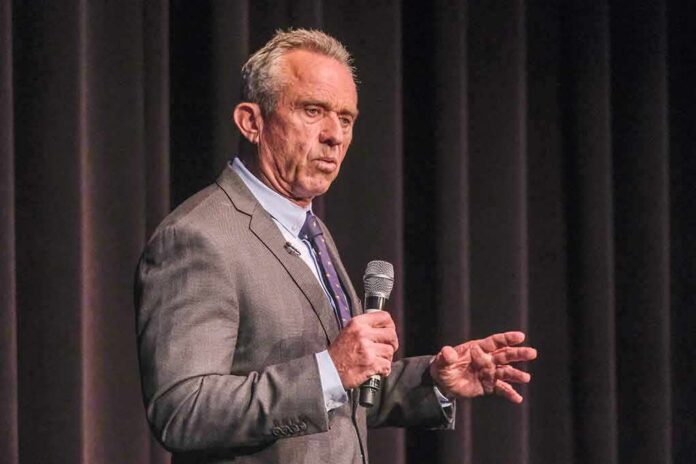
Health and Human Services Secretary Robert F. Kennedy Jr. headlined a Children’s Health Defense conference in Washington, D.C., joining the organization he once led as its keynote speaker.
Story Highlights
- Children’s Health Defense hosted a one-day conference in Washington, D.C., listing RFK Jr. as a featured speaker.
- Press reports described Kennedy’s role as the keynote address for the event.
- The appearance marked a notable public return to a group often labeled anti-vaccine by major outlets.
- Federal ethics guidance outlines guardrails for cabinet officials speaking at outside conferences.
What Happened at the Washington Conference
Children’s Health Defense held a one-day event at the Grand Hyatt in Washington, D.C., on Thursday, September 17, 2026. The group’s conference site listed the date, venue, and a program that named Robert F. Kennedy Jr. as a speaker on children’s health and “health freedom” topics. Multiple news outlets reported that Kennedy would deliver the keynote address, framing the appearance as a major public moment with the organization he previously led as chairman while on leave.
Kennedy’s participation drew attention because of his position as Secretary of Health and Human Services in the Trump administration. Reporters highlighted that his speech would be his first clear public embrace of the group since taking the cabinet role, signaling a continued link to its agenda and audience. Coverage ahead of the event described Children’s Health Defense as an anti-vaccine organization, shaping expectations about the policy themes and rhetoric that might appear in the keynote.
Why This Matters for Public Institutions
Cabinet members speak at outside events often, but rules exist to protect public trust. Federal ethics guidance says agencies must assess conference purpose and control over content. It bars compensation tied to official duties, limits the use of public office for private gain, and warns against endorsing private groups while on duty. These standards aim to prevent conflicts of interest and favoritism, and they guide how senior officials interact with advocacy organizations.
This appearance lands inside a broader fight over health policy and trust in institutions. Vaccine debates and “health freedom” movements have long mixed science claims with identity and politics. Public speeches by senior officials can become signals of alignment, even when focused on policy. That is why ethics offices stress clear roles, transparent purpose, and careful separation between official duties and past affiliations.
How the Event Fits Today’s Political Climate
Americans across party lines worry that government serves insiders first and families last. Supporters on the right say past health mandates and elite decision-making ignored costs to workers and parents. Supporters on the left say powerful interests shape policy and silence dissenting voices. A cabinet secretary keynoting a high-profile advocacy conference will feed both readings at once, because it blends public authority with movement energy in a single stage moment.
For many, the key test is not the applause in the room but the policy that follows. People want lower costs, clear data, and accountable leaders who explain tradeoffs in plain language. Ethics rules exist to keep focus on the public interest. When senior officials speak to outside groups, those rules help ensure that the message serves citizens, not any one organization. That balance will shape how this appearance is judged in the weeks ahead.
Sources:
facebook.com, childrenshealthdefense.org, economictimes.indiatimes.com, politicalwire.com