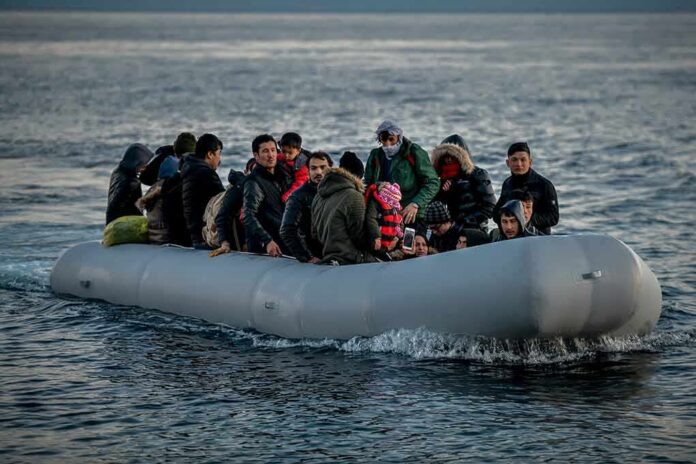
Sixty-two people jumped from a boat and swam to a crowded Spanish beach at midday, and authorities say they found every one of them in good health.
Story Snapshot
- Officials counted 62 arrivals at Cala del Barco in Cartagena around 1:00 p.m. Wednesday.
- Guardia Civil led a search-and-locate effort and reported all occupants were found.
- Authorities described the group as 45 men, 2 women, and 15 minors, presumably Algerian.
- Viral video framed the landing as tourists fleeing, amplifying a wider border-control debate.
Midday Landing At A Family Beach
Emergency managers in Spain’s Murcia region said multiple people called the 112 line around 1:00 p.m. to report a boat off Cala del Barco, a small cove near La Manga Club in Cartagena. Reports said dozens jumped into the water and swam to shore as beachgoers gathered their things and left. Local and national outlets posted video that showed the rush ashore, which drove attention far beyond the cove itself. Officials later confirmed the landing and the headcount.
The Delegation of the Government in Murcia said 62 people were on the craft. The group included 45 adult men, 2 adult women, and 15 minors. Authorities described them as presumably Algerian, which signals nationality was still being verified. The report said all appeared to be in good health at first contact. This mirrors past beach arrivals in the region, where basic checks occur on site before transfer to aid groups and police for processing.
Rapid Search, Aid, And Police Processing
The Guardia Civil, Spain’s national gendarmerie, activated an operation and reported that officers located all occupants from the boat. Standard protocol places first medical screening with the Red Cross, followed by handover to the National Police for identification and immigration steps. While public summaries did not show individual intake forms, the agencies reported the core outcomes: all found and no urgent medical issues noted at the scene. That swift closure can calm a tense situation when landings happen within sight of families.
Regional leaders still pressed central authorities on prevention. Murcia’s regional president, Fernando López Miras, asked how a large outboard vessel reached the shore without detection and called for stronger maritime control. That question lands in a familiar political lane in Spain: who is accountable for stopping smuggling runs, and how much surveillance is enough. The debate usually grows after public, daylight landings that feel unsafe to locals and visitors, even when no violence occurs.
Why This One Video Touched A Nerve
This event fit a pattern that experts have described for years. A dramatic arrival, caught on camera, travels fast and becomes a symbol of border strain. National outlets highlighted beachgoers leaving as the swimmers came ashore, framing the scene as a breakdown of order. Yet the official record for this case was clear on key facts: the headcount was 62, all were found, and no medical emergencies were reported at contact. Both truths can exist at once in today’s media cycle.
Spain’s coastal routes remain under steady pressure. A 2025 briefing from the European Parliament said Spain counted 63,970 irregular arrivals in 2024, most by sea, with continued stress into 2025. Smuggling groups adapt routes and timing, which pushes authorities to shift patrols and sensors in response. That tactical back-and-forth means single events are rarely isolated; they sit inside a larger contest between smugglers’ speed and state coverage of long coastlines.
Shared Concerns, Different Policy Fixes
For people on the right and left, scenes like this raise real questions. Families want safe beaches and clear borders. Communities also want humane care for minors and due process for adults. In this case, the state said it met its first duties: locate everyone and check basic health. Critics ask for more, including radar reach, faster interdiction, and tougher actions against trafficking networks that profit from risky crossings.
The language around nationality stayed cautious. Authorities used “presumably Algerian,” which often reflects early interviews before formal identification is complete. That caution is common and avoids errors. It also frustrates those who want instant clarity. The bigger picture is operational: consistent patrols, useful cooperation with North African counterparts, and strong action on the smuggling business model. Those steps, not viral clips, decide whether the next boat reaches a family beach or is stopped at sea.
Sources:
humanevents.com, europapress.es, elespanol.com, telegraph.co.uk, infobae.com, rtl.de, skai.gr