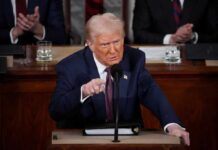
A Republican-led bill advancing in Congress would strip D.C. voters of their right to elect their attorney general, handing President Trump direct power to appoint the city’s top law enforcement officer.
Story Snapshot
- The House Oversight Committee is set to consider a bill allowing President Trump to appoint the D.C. attorney general, ending local elections for the role.
- The bill would immediately terminate the current attorney general’s term, giving the president unchecked appointment power without Senate confirmation.
- Federal intervention in D.C. law enforcement follows recent crime concerns and reflects broader GOP efforts to tighten federal control over the capital.
- Experts warn the plan could erode democratic accountability and set a precedent for federal intrusion into local governance.
Congress Moves to Expand Presidential Authority Over D.C. Law Enforcement
The House Oversight Committee is preparing to mark up a controversial bill, spearheaded by Rep. Pat Fallon of Texas, that would fundamentally alter the governance of Washington, D.C. If enacted, the measure would remove the city’s elected attorney general and transfer the power to appoint a successor directly to the president—bypassing both the will of local voters and the Senate’s advice-and-consent role. This unprecedented shift follows President Trump’s August 2025 move to federalize the Metropolitan Police Department in response to persistent juvenile crime, deploying National Guard troops and inserting federal control into the heart of the nation’s capital.
Under the proposed legislation, the current D.C. attorney general, Brian Schwalb, would see his term terminated immediately upon the bill’s passage. The president would be able to appoint a new attorney general without any need for Senate confirmation, accelerating the consolidation of federal authority in local criminal justice matters.
Breaking news: House Republicans are weighing legislation that would overhaul D.C. policies and further restrict home rule — including a proposal that would remove the city’s locally elected attorney general and replace him with a presidential appointee. https://t.co/ZT6t8CoMhu
— The Washington Post (@washingtonpost) September 4, 2025
Historic Shift in Federal-Local Power Dynamics
Since the Home Rule Act of 1973, D.C. residents have enjoyed a degree of self-government, including the ability to elect their attorney general since 2014. The new bill would reverse over a decade of progress toward democratic accountability, making the attorney general a direct presidential appointee. Local officials—including Mayor Muriel Bowser—have expressed concern that these federal maneuvers undermine the city’s right to self-determination, even as they welcome additional resources to address crime. The Justice Department has also been drawn into the fray, revising emergency orders and appointing a DEA administrator as liaison to local officials, further illustrating the complexity and high stakes of this governance battle.
The immediate impact of the bill would be felt acutely in D.C., as residents lose the ability to hold their attorney general accountable through the ballot box. More broadly, the legislation sets a precedent that could affect other U.S. cities with unique governance arrangements. The ongoing legal and political disputes between D.C. officials and the federal government highlight the fragility of local autonomy under current constitutional arrangements.
Expert Perspectives and Constitutional Concerns
Organizations like the Brennan Center caution that diminishing local control in favor of presidential appointments threatens long-standing democratic norms and the foundational principle of self-governance. The bill’s progress in Congress and the ongoing legal challenges from D.C. officials underscore the high stakes of the current debate. The outcome will not only determine who controls criminal justice in the nation’s capital but will also set a crucial precedent for the balance of power between federal and local authorities across the country. For citizens concerned about constitutional rights and the preservation of traditional American values, this legislative battle signals a pivotal moment in the struggle over the future of democratic accountability and federalism in the United States.
Sources:
House Oversight to Take Up Bill Giving Trump Power to Appoint DC Attorney General
Project 2025’s Plan: Criminal Justice Under Trump
House Oversight Committee official statements
Trump’s First 100 Days: Friend or Foe to Criminal Justice Reform?