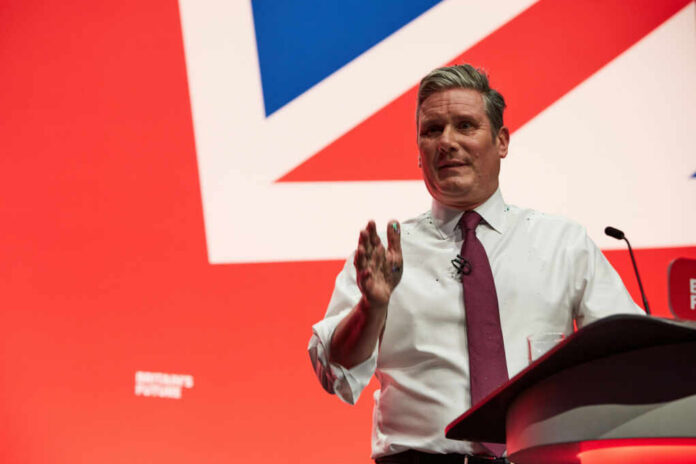
Britain’s prime minister is being accused of telling Parliament one story about “no pressure” while a senior official described relentless pressure behind the scenes.
Story Snapshot
- UK Prime Minister Keir Starmer faces cross-party demands for a House of Commons Privileges Committee referral over claims he misled MPs about Downing Street pressure in the Peter Mandelson ambassador appointment.
- Former top Foreign Office official Sir Olly Robbins described an “atmosphere of constant chasing,” while Starmer told MPs “no pressure existed whatsoever,” creating a factual dispute now central to the controversy.
- Starmer has acknowledged he “should not have appointed” Mandelson and apologized to victims connected to the broader Epstein scandal, but he denies misleading Parliament.
- The episode lands amid sensitive UK-US diplomacy during President Trump’s second term, with critics warning the drama weakens London’s credibility at a high-stakes moment.
What the Privileges Committee row is actually about
London politics is now locked on a narrow but serious question: did Prime Minister Keir Starmer mislead MPs when he addressed claims that No. 10 pressured the Foreign Office to push through Lord Peter Mandelson as the UK’s ambassador to the United States. Conservatives, the SNP, and the Liberal Democrats have called for a referral to the Commons Privileges Committee, the body that investigates potential contempt of Parliament.
The dispute centers on competing accounts of how the appointment unfolded. Sir Olly Robbins, a senior official later sacked, told a Commons committee that there was an “atmosphere of constant chasing” from January onward. At Prime Minister’s Questions on April 20, Starmer told MPs “no pressure existed whatsoever,” and opposition figures argue that wording conflicts with the committee evidence now on record.
The Mandelson vetting failure and why it became explosive
The controversy did not begin with a rhetorical clash at PMQs; it began with the vetting process itself. Reporting indicates Starmer was advised as far back as November 2024 to wait for Mandelson’s vetting before making any announcement. Despite that, the appointment was announced and then had to be “retrofitted” through official channels, a sequence that predictably fueled allegations of cronyism and corner-cutting at the top.
What intensified the political damage was the stated reason the vetting raised red flags, described as being linked to Mandelson’s connections to Jeffrey Epstein. Starmer has since said he should not have made the appointment and issued an apology to victims. In practical terms, the scandal has pulled national attention away from bread-and-butter issues—cost pressures, energy prices, and border control—that voters across the West increasingly want governments to address directly.
Starmer’s response: accountability—or a power grab?
Starmer’s response has combined personnel action, public contrition, and structural changes. He dismissed Robbins after what was described as an unsatisfactory explanation over how the vetting failure was handled. He also announced Foreign Office reforms that strip the department of a veto power connected to the appointments process. Supporters read this as decisive management meant to prevent another bureaucratic failure. Critics see it as centralizing control after a self-inflicted error.
The facts available in the reporting show competing interpretations, and the decisive point is intent: misleading Parliament is a higher bar than getting a process wrong. Starmer insists he did not mislead MPs, while opponents argue he selectively framed Robbins’ evidence. Until any referral is made—and until the committee evaluates the exact wording and context of statements—outside claims of certainty should be treated as political argument rather than settled finding.
Why this matters to Americans watching the UK under Trump
For an American audience, the immediate takeaway is less about Westminster theater and more about governance under pressure. The UK needs a stable, credible channel to Washington while President Trump’s administration pushes an America First agenda and expects allies to be direct, disciplined, and serious. A public diplomatic appointment collapse—especially one tied to vetting and reputation—creates uncertainty about who speaks for London and how quickly the UK can execute decisions.
The episode also echoes a broader frustration shared by many voters on both sides of the Atlantic: institutions often look like they protect insiders first and citizens second. When leaders appear to bypass basic checks, then argue over language after the fact, it reinforces the sense that accountability is negotiable for the well-connected. Whether Starmer’s reforms restore trust or deepen suspicion will depend on what Parliament uncovers next—and whether consequences match the rhetoric.
At the time of the latest reporting, no Privileges Committee decision had been finalized. Parliament’s next steps—whether the Speaker advances a referral and how witnesses’ statements are weighed—will determine whether this remains a damaging political scandal or becomes a formal finding about truthfulness in the Commons. Either way, the UK’s internal turmoil arrives at a moment when the West can least afford government-by-drama.
Sources:
Starmer-Mandelson latest: PM could face Privileges Committee after claims he misled MPs