An Iraqi militia commander linked to Iran’s most powerful paramilitary force was arrested, extradited to the United States, and charged with terrorism offenses — and reports say one of his alleged targets was Ivanka Trump, with a revenge motive rooted in one of the most consequential U.S. military strikes of the last decade.
Story Snapshot
- Mohammad Baqer Saad Dawood al-Saadi, a 32-year-old Iraqi national, was arrested in Turkey and extradited to the U.S. to face six counts of terrorism-related charges.
- Prosecutors allege al-Saadi is an operative of both Kata’ib Hezbollah and Iran’s Islamic Revolutionary Guard Corps, linked to nearly 20 attacks and attempted attacks in Europe and North America.
- Reports say al-Saadi allegedly pledged to kill Ivanka Trump in retaliation for the 2020 U.S. drone strike that killed Iranian General Qasem Soleimani.
- Federal officials have not publicly confirmed whether charges specifically tied to the alleged plot against Ivanka Trump have been formally filed, leaving a key evidentiary gap.
Who Is the Suspect and What Is He Charged With?
Mohammad Baqer Saad Dawood al-Saadi is identified in multiple reports as a 32-year-old Iraqi national and militia commander within Kata’ib Hezbollah, a powerful Iran-backed paramilitary group. The Department of Justice charged him with six counts of terrorism-related offenses for his alleged role as an operative of both Kata’ib Hezbollah and Iran’s Islamic Revolutionary Guard Corps (IRGC). Prosecutors allege his activities included involvement in nearly 20 attacks and attempted attacks across Europe and the United States, including strikes on Jewish targets. [1][4]
Al-Saadi was arrested in Turkey before being extradited to the United States to face the federal charges. Reporting indicates he and associates allegedly planned, coordinated, and claimed responsibility for attacks carried out under the banner of Harakat Ashab al-Yamin al-Islamiya, described as a component of Kata’ib Hezbollah. The breadth of the terrorism case — spanning multiple countries and nearly two dozen alleged incidents — underscores the scope of what prosecutors are alleging, well beyond any single target. [1][4]
The Alleged Plot Against Ivanka Trump
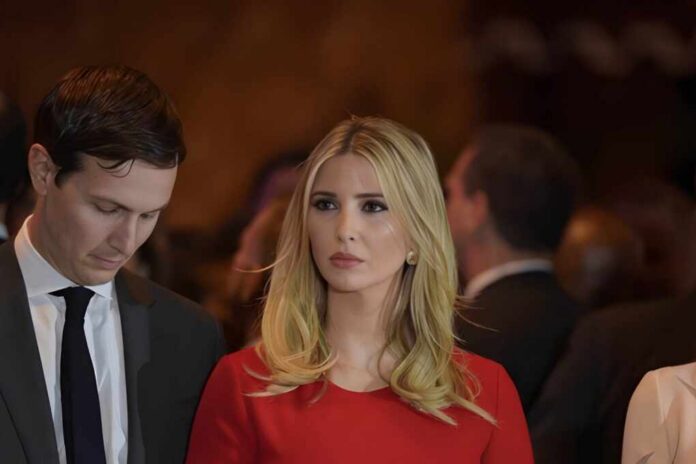
Reports describe al-Saadi as having made an explicit pledge to kill Ivanka Trump as revenge for the January 2020 U.S. drone strike in Baghdad that killed Qasem Soleimani, the head of the IRGC’s Quds Force. A former Iraqi defense official was quoted saying, “we need to kill Ivanka to burn down the house of Trump the way he burned down our house.” The alleged motive frames the threat as a direct response to one of the defining military actions of Trump’s first term. [1]
Beyond the stated motive, reporting describes concrete alleged surveillance activity. Sources told outlets that al-Saadi obtained or discussed obtaining a blueprint of Ivanka Trump’s Florida residence and posted online threats referencing surveillance of the property. A quoted online statement attributed to al-Saadi reads: “Look at this picture and know neither your palaces, nor the Secret Service will protect you. We are currently in the stage of surveillance and analysis. I told you our revenge is a matter of time.” [2][4]
What the Evidence Record Actually Shows
Despite the alarming details in media reports, significant evidentiary gaps remain. Federal officials have not publicly confirmed whether charges specifically tied to the alleged assassination plot against Ivanka Trump have been formally filed. No charging document, affidavit, or court filing directly addressing the Ivanka Trump allegation has been made publicly available in the reporting reviewed. The incriminating quotes and surveillance claims appear in secondary media accounts rather than primary legal documents, which limits the ability to independently verify the specific allegations. [4]
The broader terrorism case against al-Saadi appears well-documented through the Department of Justice’s charges covering nearly 20 separate attacks. However, the specific Ivanka Trump allegation may represent investigative background or intelligence context rather than a formally charged count. The alleged blueprint’s existence has not been independently verified, and the online threat has not been tied in available reporting to a confirmed account or authenticated post. These are standard evidentiary questions that will be resolved as the case moves through the courts. [1][4]
Why This Case Matters Beyond the Headlines
Whatever the ultimate legal outcome, this case reflects a documented and ongoing pattern: Iran-linked networks have repeatedly been implicated in plots targeting American officials and their families on U.S. soil. The alleged motive — revenge for Soleimani’s killing — has surfaced in multiple prior investigations, signaling that the threat did not end with the 2020 strike. For Americans across the political spectrum who believe the federal government consistently underestimates foreign threats to domestic security, this case raises serious and legitimate questions. [1][2]
Exclusive | Ivanka Trump targeted for assassination by Iraqi terrorist in twisted plot to avenge president taking out his mentor: sources – https://t.co/aAzGqnNeuq…
Suspect: Mohammad Baqer Saad Dawood Al-Saadi (also spelled Muhammad Bakir Saad Dawood al-Saadi), a 32-year-old…— 🇮🇷 مامور_اداره گاز (@silent_voice68) May 23, 2026
At the same time, the gap between what has been charged and what has been reported deserves scrutiny. High-profile terrorism cases involving political figures generate intense media coverage that can outpace the actual legal record. The public deserves both the full truth about foreign threats operating inside U.S. borders and the discipline to distinguish confirmed charges from allegations still working their way through the justice system. Both things can be true at once — the threat is real, and the evidentiary record still needs to be fully established in open court. [4]
Sources:
[1] Web – Iraqi IRGC operative behind attacks on Jewish targets plotted to kill …
[2] YouTube – US-Iran LIVE: Alleged Assassination Plot Against Ivanka Trump
[4] Web – Ivanka Trump allegedly targeted in assassination plot tied to Iranian …