As U.S. troops trade fire with Iran after an Apache helicopter went down, Americans are left asking whether Washington hit back fast enough and hard enough to stop a wider war in the Middle East.
Story Snapshot
- U.S. strikes hit Iranian military sites after Trump blamed Tehran for an Apache helicopter crash near the Strait of Hormuz.
- Central Command called the operation a “proportional response” and “self-defense” after the crash tied to an Iranian drone.[5][9]
- Iran answered by firing missiles and drones at Bahrain, Kuwait, and Jordan, all hosts to U.S. forces.[1][8]
- Legal and foreign policy experts are already debating whether America’s self-defense claims meet strict international standards.[11]
U.S. Helicopter Goes Down And Trump Orders Strikes
The crisis began when a U.S. Army Apache attack helicopter crashed near the Strait of Hormuz during a patrol off the coast of Oman.[5][7] A U.S. official said the helicopter went down after colliding with an Iranian drone, though investigators have not yet proven whether the collision was intentional.[5][8] President Donald Trump publicly blamed Iran for “shooting down” the helicopter and said the United States “must, of necessity, respond to this attack.”[5][9][10] The two American pilots were rescued by a U.S. Navy drone boat, and both survived.[5][7][8]
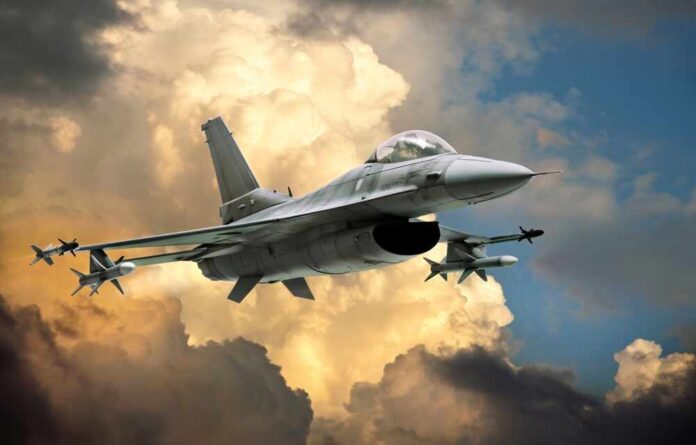
Within hours of Trump’s warning, U.S. Central Command announced that American forces had begun “self-defense strikes” against Iran.[2][5][9] The military said fighter jets targeted Iranian air defense systems, ground control stations, and surveillance radar sites around Bandar Abbas and Qeshm Island, key areas near the narrow Strait of Hormuz that Iran has used to pressure global shipping.[1][5][6][9] Central Command described the action as “a proportional response to unjustified Iranian aggression” and said the goal was to protect U.S. troops and commercial ships in regional waters.[1][5][7][9]
Iran Fires Back At U.S. Partners Across The Region
After the American strikes, Iran followed through on its vows to respond by targeting nearby countries that host U.S. forces.[1][6][8] Iranian officials and state media reported missile and drone attacks on Bahrain and Kuwait, and claimed strikes on an air base in Jordan that is used by U.S. troops.[1][6][8] Reports from the region described explosions on Qeshm Island and damage to infrastructure near the Strait of Hormuz, while Iranian television said U.S. missiles also hit sites like water tanks in Iran’s Hormozgan Province.[1][2] These exchanges risk shattering cease-fire efforts and drag allied governments deeper into conflict.[2][3]
Tehran’s public message has tried to downplay blame while warning foreign militaries to stay away from Iran’s borders.[11] Iranian officials have suggested the Apache crash could have resulted from “human error, accidents, or crossfire,” rather than a deliberate attack, and argue that U.S. strikes are illegal aggression dressed up as self-defense.[11] Iran’s foreign ministry has signaled it may “reassess” or freeze talks with Washington after this latest round of strikes, which could shut down remaining diplomatic paths.[2] That stance puts regional partners in a tough spot, as they host U.S. forces but fear becoming targets when Iran lashes out.[1][8]
Self-Defense Or Overreach? The Legal And Strategic Fight
American commanders and the White House insist the strikes fit the clear right of self-defense under international law because the Apache was downed during lawful patrols and U.S. forces face ongoing threats from Iranian drones and missiles.[5][7][8] Similar language has been used in past U.S. and Israeli actions against Iran, where officials point to Article 51 of the United Nations Charter, which recognizes self-defense against armed attack. Supporters argue that targeting radar, drone control, and missile sites is a focused way to deter future attacks without a full-scale war.[1][3]
U.S. Launches Strikes on Iran After Downing of Army Helicopter, Prompting Retaliation
The U.S. military launched multiple "self-defense strikes" at Iranian air defense sites, ground-control stations and surveillance radar near the Strait of Hormuz in response to the downing of a…
— Special Situations 🌐 Research Newsletter (Jay) (@SpecialSitsNews) June 10, 2026
Many legal experts, including some who generally back strong Western defense, warn that Washington’s self-defense claims are not automatic.[11] Analysts at Just Security and British universities note a pattern where the United States quickly labels strikes on Iran as “self-defense” even when facts about the triggering incident are still under investigation.[11] They stress that lawful self-defense must be necessary, respond to an actual or truly imminent attack, and be strictly proportional, not a cover for broader goals like regime pressure or nuclear bargaining.[11] That debate will shape how allies and foes judge Trump’s response.
What This Means For U.S. Strength, Energy, And Security
For many American conservatives, the episode raises two big questions: Are we hitting Iran hard enough to restore deterrence, and are we doing it in a way that keeps our troops and energy supply safe? The Strait of Hormuz is a choke point where much of the world’s oil moves, and Iran has already disrupted shipping there during this war.[3][6] If Tehran believes it can bring down U.S. aircraft and then hide behind legal word games, it may feel free to keep pushing, threatening both American service members and global energy prices.[3][6][8]
At the same time, endless “limited strikes” risk turning into a slow, open-ended conflict that bleeds resources and keeps our military tied down while China and Russia watch.[3] Conservative principles of strong defense and limited government both point to the same demand: clear goals, honest facts about what brought down that helicopter, and a strategy that protects American lives and wallets without sliding into another forever war. Congress, the Pentagon, and the Trump administration will have to answer tough questions about where the red lines are—and what mission success really looks like in dealing with the Iranian regime.[3][4]
Sources:
[1] Web – US Strikes Iran After Blaming Tehran for Helicopter Crash. Iran Fires …
[2] Web – U.S. prepares for new military strikes against Iran
[3] Web – US Launches Strikes Against Iran After Helicopter Shot Down
[4] Web – 2026 Iran war | Explained, United States, Israel, Strait of Hormuz …
[5] Web – 2026 Iran war – Wikipedia
[6] Web – List of attacks during the 2026 Iran war – Wikipedia
[7] YouTube – U.S. military launches new strikes on Iranian drones
[8] Web – U.S. says it carried out ‘self-defense’ strikes in Iran, including …
[9] Web – U.S. Launches ‘Self-Defense’ Strikes on Iran – Foreign Policy
[10] YouTube – US begins new ‘self-defense strikes’ against Iran after Apache …
[11] YouTube – U.S. launches ‘self-defense strikes’ against Iran after …