New York’s socialist mayor is openly exploring whether he can use a foreign court’s warrant to have a visiting world leader arrested on American soil.
Story Snapshot
- New York City Mayor Zohran Mamdani says he is actively reviewing how to arrest Israeli Prime Minister Benjamin Netanyahu if he visits the city.
- Mamdani bases his threat on an International Criminal Court warrant for alleged war crimes in Gaza, calling Netanyahu a “war criminal” who belongs in The Hague.
- Legal experts and New York’s governor say a mayor has no power to arrest a sitting foreign leader under a foreign court’s order.
- The clash highlights a growing gap between local moral activism and federal control over foreign policy and international law.
Mamdani doubles down on promise to arrest Netanyahu
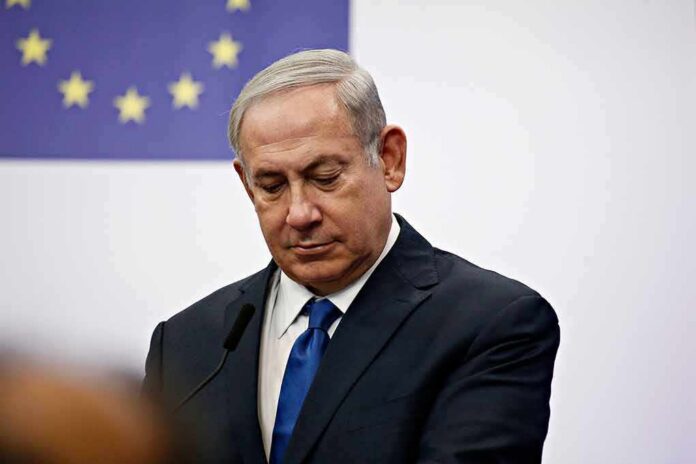
New York City Mayor Zohran Mamdani has repeated that he will try to have Israeli Prime Minister Benjamin Netanyahu arrested if the prime minister comes to New York, including for the United Nations General Assembly this fall. Mamdani campaigned on this pledge and now says his administration is in “active conversation” with the city’s law department about whether he has the authority to order the New York Police Department to detain Netanyahu. He has framed the vow as both a legal duty and a moral obligation.
In interviews, Mamdani describes Netanyahu as a “war criminal” responsible for what he calls genocide in Gaza, and insists New York should honor the International Criminal Court’s arrest warrant for him. The International Criminal Court issued that warrant in November 2024, accusing Netanyahu of war crimes and crimes against humanity tied to Israel’s actions in Gaza after the Hamas-led attacks of October 2023. Mamdani argues that, because the warrant exists, New York should treat its airports and streets as places where international law is enforced.
Legal reality: why experts say the threat is unenforceable
Constitutional and international law experts across the spectrum say Mamdani’s plan is almost certainly impossible under current United States law. The United States is not a member of the International Criminal Court and has passed several federal laws limiting any cooperation with it, especially when it targets American allies. One federal statute bars state and local governments from helping the court, while another protects foreign officials, including sitting heads of state, from arrest or obstruction during official visits.
New York Governor Kathy Hochul has publicly rejected Mamdani’s claim of authority, stating “the New York City mayor does not have the power to do that.” Legal scholars note that foreign policy and the treatment of visiting leaders are matters controlled by the federal government, not cities or states. A law professor at Syracuse University said Mamdani’s statement should be understood as “political, not legal,” because Supreme Court decisions give Washington clear primacy when local actions conflict with national diplomatic commitments.
ICC warrants, head-of-state immunity, and local activism
Mamdani’s threat fits a wider pattern: local officials using International Criminal Court warrants to signal moral opposition to foreign leaders, even when they lack real enforcement power. The International Criminal Court itself says only national governments can execute its arrest warrants. In rare cases, former leaders such as Chile’s Augusto Pinochet have been detained abroad under universal jurisdiction, but no sitting head of government has ever been arrested in a country that does not recognize the court’s authority, like the United States.
Legal analysts warn that a mayor ordering police to seize a visiting prime minister would collide with long-standing rules on head-of-state immunity. Those rules protect sitting leaders from arrest while on official trips, especially to bodies like the United Nations. Experts also point out that Netanyahu’s visits to New York often center on the UN, and agreements between the United States and the UN guarantee safe passage and diplomatic protections for visiting leaders, further blocking any local attempt to detain them.
Why this fight resonates with frustrated Americans
The dispute taps into deep anger on both the left and right about elites and unaccountable power. Many progressive voters see the International Criminal Court warrant as overdue justice for Palestinian civilians and view Washington’s refusal to act as proof that powerful allies are above the law. For them, Mamdani’s stance shows a local leader trying to do what they believe the federal government will not: hold a foreign leader responsible for civilian deaths in a long, brutal conflict.
New York City Mayor Zohran Mamdani on Saturday said that his administration is reviewing whether it has the legal authority to arrest Israeli Prime Minister Benjamin Netanyahu if he visits the city for the UN General Assembly in September, according to The New York Times, Anadolu… pic.twitter.com/N6drEoeT6D
— Middle East Monitor (@MiddleEastMnt) July 18, 2026
Many conservatives and centrists, meanwhile, see a different problem: a big-city socialist mayor trying to hijack foreign policy for ideology while core local issues like crime, housing, and economic strain go unresolved. They point to legal opinions showing Mamdani has no real authority and see the pledge as another symbolic stunt that risks diplomatic chaos without helping ordinary New Yorkers. Both sides, however, share a common worry that government leaders are playing politics while real accountability and basic governance fall through the cracks.
Congress and the Trump administration push back
The fight is not limited to New York City. In Washington, members of Congress have moved to punish or block local officials who try to enforce International Criminal Court warrants against Israeli leaders. One House Republican leader introduced the “Sovereign Enforcement Integrity Act” to stop Mamdani’s plan, arguing that allowing mayors to arrest allied leaders on foreign court orders would threaten national sovereignty and foreign relations. This push aligns with the Trump administration’s broader stance against the International Criminal Court since it targeted Israel’s leadership.
The conflict highlights a bigger trend in today’s politics: local figures using bold, often legally shaky promises to energize supporters who feel the system has failed them, while federal leaders tighten control to protect their own power and international ties. Whether one sees Mamdani as a truth-teller or a grandstander, the episode shows how easily foreign policy, human rights, and domestic frustration can collide, leaving average Americans watching powerful actors on all sides talk tough while the rules stay stacked in favor of the global and national elite.
Sources:
redstate.com, jpost.com, abc.net.au, timesofisrael.com, youtube.com, yahoo.com, jns.org, reddit.com, en.abna24.com