Cuba-linked activists are now being tied to protest plans aimed at United States military bases, Immigration and Customs Enforcement sites, and federal buildings.
Quick Take
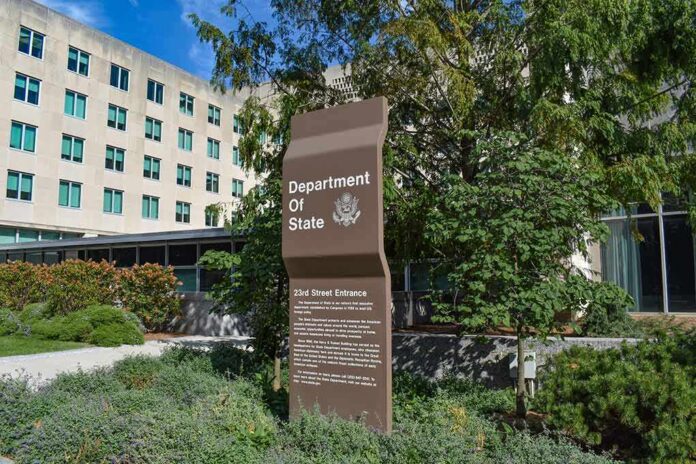
- A State Department report says a publicly posted protest plan was spread by the National Network on Cuba.
- The report links that network to the Cuban Institute of Friendship with the Peoples, or ICAP.
- The report also names six U.S. groups and says their ties raise foreign influence concerns.
- Supporters call the plan a lawful anti-war effort, while critics call the report political.
What the report claims
The State Department says the June “National Rapid Response Plan” was distributed by the National Network on Cuba, a coalition of more than 60 organizations. The report says the plan calls for protests at military bases, immigration offices, and federal buildings if the United States moves against Cuba. It also says the network works closely with ICAP, which the department describes as a Cuban government entity sanctioned in June for alleged support to Cuban intelligence activities.
Fox News reporting says the State Department sees the plan as part of a wider Cuban influence effort, not a one-off protest flyer. The same reporting says ICAP is treated as the center of Cuba’s overseas influence work and that it has ties to a broad web of solidarity groups. Those claims matter because they shift the story from a single activist event to a possible foreign-backed political network inside the United States.
The U.S. groups named in the report
The report highlights six organizations that it says overlap with Cuban outreach and left-wing activism. Among them are the People’s Forum, Code Pink, and the National Lawyers Guild. The document says Manolo de los Santos of the People’s Forum has traveled to Cuba since at least 2009 and has appeared often in official Cuban media. It also says Code Pink has received about 25 percent of its funding since 2017 from organizations linked to Neville Roy Singham.
The National Lawyers Guild also drew attention after adopting a 2026 resolution that pledged cooperation with the National Network on Cuba and the broader Cuba solidarity movement. Taken together, the report presents these groups as part of an overlapping ecosystem, not separate and unrelated activists. That kind of claim will draw sharp debate because it sits at the line between protected political speech and foreign influence concerns.
What remains unclear
The strongest challenge to the report is also its weakest point: the State Department does not show direct orders from Cuba to organize these protests. The research package says the report relies on overlap, travel, funding links, and shared networks rather than public proof of command from Cuban officials. It also says the level of each group’s role in the rapid response plan is not fully clear, which leaves room for criticism from civil liberties groups and the activists named.
State Department Report: Cuba-Linked Activists Now Planning Protests at US Bases, ICE Siteshttps://t.co/nHk22kKKib
— RedState (@RedState) July 20, 2026
Fox News also reports that the Department of Justice and the Department of the Treasury are investigating 145 nonprofits and activists for possible coordination with Cuban officials. That investigation is still described as alleged and unconfirmed, so it does not prove guilt. Even so, the inquiry shows that federal officials are treating the issue as more than a messaging dispute. It also fits a broader pattern in Washington, where foreign influence claims now meet deep distrust on both left and right.
Why this story matters
The larger issue goes beyond Cuba. The dispute shows how fast activism, foreign policy, and national security can collide in the same story. Supporters of the report see proof that outside governments are trying to shape U.S. protest politics. Critics see a Trump-era push that could chill dissent and label normal activism as subversive. Both sides are reacting to the same fear: that powerful actors are using ordinary Americans as tools in a bigger fight.
Sources:
redstate.com, foxnews.com, en.cibercuba.com, state.gov, washingtontimes.com