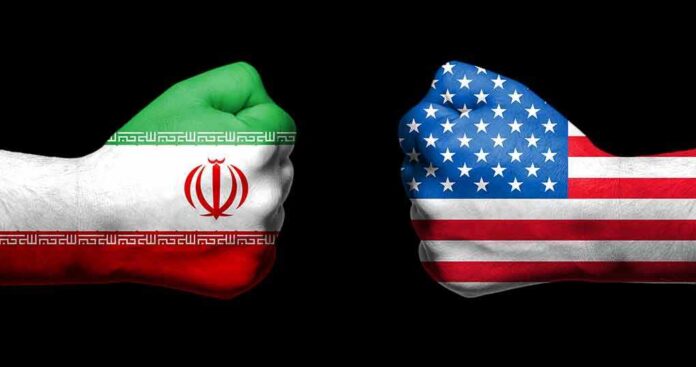
Less than a month after Washington and Tehran signed a peace memorandum promising to stop all fighting, Iran now says that deal is dead as its missiles slam into a United States base in Jordan and American strikes continue across the region.
Story Snapshot
- The United States–Iran memorandum promised an immediate stop to military action on “all fronts,” including Lebanon and the Strait of Hormuz.
- The United States launched new strikes in Iran after accusing Tehran of attacking ships and breaking the deal, while calling its actions “self-defense.”
- Iran answered with missiles on United States-linked targets in Jordan and the Gulf, then said the peace memorandum was void because Washington broke its promises.
- Both sides now blame each other for wrecking a fragile ceasefire, feeding public anger at elites and a sense that the system will not protect ordinary people.
The Peace Memorandum’s Big Promises
The June 2026 United States–Iran memorandum of understanding was sold as a reset after months of war that hammered energy prices and global markets. The 14-point text ordered an “immediate and lasting” end to military actions on all fronts, including Lebanon, and said both sides must stop threatening or attacking one another. It also told the United States to start lifting its naval blockade and to remove forces near Iran after a final deal, while Iran was to reopen the Strait of Hormuz to safe, toll-free shipping for 60 days. For many Americans and Iranians, this looked less like real peace and more like a short pause managed by distant leaders and foreign mediators, with no guarantee the shooting would truly stop.
The deal also promised talks on nuclear issues and sanctions over a 60-day window, but left core fights, like Iran’s missile program and support for proxy groups, for later. Analysts quickly warned that this made the memorandum more of a temporary framework than a binding peace treaty, because it pushed the hardest questions down the road. Iran, for its part, pointed out that many of its early demands made it into the text, such as language on respecting sovereignty and easing economic pressure. That fed a story in Tehran that Iran had forced a desperate Washington to accept its terms, a claim that worried both hawks and doves in the United States who already doubt whether any deal with Iran will be honored.
From “Stand Down” to New Strikes
On paper, fighting was supposed to end right away after the memorandum was signed, and the United States even said it had agreed to “stand down” following a first round of strikes and counter-strikes. But within weeks, United States Central Command announced new air attacks across Iran, hitting runways, missile launchers, and other military sites, and released video of the strikes. United States officials called these “self-defense” operations meant to stop Iran from targeting commercial ships and civilian crews in and near the Strait of Hormuz. President Donald Trump then told reporters that the ceasefire was “over” for him and that he no longer felt bound by the peace deal, language that made it sound like Washington was walking away from its own signatures.
Tehran answered with its own escalation. Iranian forces and allied groups struck at United States-linked targets in Gulf Arab states, and Iran’s leaders warned Jordan it would be punished for hosting United States troops. Iranian media and officials claimed that 12 missiles hit a United States base in Jordan, damaging communications and fuel sites used by American forces. Outside analysis later estimated that Iranian strikes on bases used by the United States caused hundreds of millions of dollars in damage, reinforcing the idea that this was no minor flare-up but a serious blow in a wider war. Yet detailed public casualty reports from the United States side have been limited, leaving many citizens guessing about what really happened and who is telling the truth.
Iran Declares the Memorandum “Void”
As the exchange of strikes grew, Iran’s Ministry of Foreign Affairs said the United States attacks had “voided” the memorandum and that Tehran was abandoning its commitments because Washington had reneged on its side of the deal. Iranian officials pointed to the first clause, which clearly orders an immediate and permanent stop to military operations and bans the threat or use of force, arguing that ongoing United States strikes broke that promise. They also noted that the United States had moved to reassert control over the Strait of Hormuz instead of fully ending its blockade within the promised 30 days, which Iran views as another violation of the text. To many in Iran, this looked like yet another example of America signing a deal and then changing the terms when it felt strong enough to do so.
Washington’s answer has been to stress Iranian blame. United States officials say Tehran used the ceasefire to keep attacking shipping and regional targets, and that American strikes are a reaction to those moves, not a breach of the memorandum’s spirit. Military leaders highlight that their targets are clearly military — missile sites, airfields, and command systems — to argue they are staying within international law and trying to avoid civilian harm. Supporters of the administration also say the memorandum was never a full peace treaty, just a short-term framework tied to Iran’s “performance,” and that benefits like sanctions relief were always meant to be conditional. This legal language may convince lawyers and think tanks, but it does little to calm regular Americans who mostly see more war, more risk, and no clear plan to protect them.
A Fragile Deal in a Distrusted System
Outside observers across the political spectrum describe the Islamabad memorandum as a fragile ceasefire that could easily collapse, and many now say that moment has arrived. Reports show mediators urging both sides to honor the text even as missiles fly, a sign that the diplomatic class is scrambling to save a process that ordinary people never fully trusted. History also weighs heavy here: studies of United States–Iran relations list repeated cycles of promises, pressure, and broken agreements, from the nuclear deal to various ceasefires, feeding a growing belief that elites treat war and peace as tools, not moral duties. For conservatives and liberals alike who feel the “deep state” puts global games above national well-being, this episode fits a depressing pattern.
At home, Americans watch leaders trade blame while none of the country’s deeper problems are solved. Older conservatives see another chapter of costly foreign entanglement, energy shocks, and a federal government that talks tough but cannot secure borders or lower prices. Older liberals see civilian risk, regional chaos, and a White House that shrugs off agreements while cutting social spending and fueling inequality. Both sides see missiles flying after a promise of peace and feel the same thing: a system run by distant elites that signs memorandums, breaks them, and leaves regular people to live with the fallout. The collapse of this deal is not just about Iran and Jordan; it is another warning that America’s foreign policy machine is out of touch with the very citizens it claims to defend.
Sources:
redstate.com, bbc.com, news.cgtn.com, youtube.com, en.wikipedia.org, reuters.com, atlanticcouncil.org, npr.org, thestandard.com.hk, my.rusi.org, newsweek.com, eurasiareview.com