
On a cold Dover tarmac, six flag‑draped coffins from the Iran war forced Americans to ask again whether Washington’s leaders honor sacrifice or exploit it.
Story Snapshot
- President Trump attended a dignified transfer at Dover Air Force Base for six troops killed in an Iranian drone strike in Kuwait.
- The ceremony highlighted how presidents use these somber rituals to signal respect for the military during controversial wars.
- Families and citizens across the political spectrum worry that such moments can become stage‑managed optics instead of real accountability.
- The Dover ritual shows both the real human cost of the Iran conflict and the growing sense that America’s elites are failing those who serve.
What Happened On The Dover Tarmac
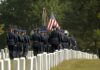
On Saturday, President Donald Trump flew to Dover Air Force Base in Delaware to witness the return of six U.S. service members killed in the war with Iran. The Pentagon said an Iranian drone struck a U.S. command facility in Port Shuaiba, Kuwait, killing six reservists from the 103rd Sustainment Command. During the dignified transfer, troops carried American flag‑draped transfer cases from the aircraft into waiting vehicles while Trump, his senior aides, and grieving families looked on in silence.
The fallen service members were identified as Capt. Cody A. Khork, Sgt. 1st Class Noah L. Tietjens, Sgt. 1st Class Nicole M. Amor, Sgt. Declan J. Coady, Maj. Jeffrey O’Brien, and Chief Warrant Officer 3 Robert M. Marzan, ranging in age from 20 to 54. All belonged to a unit that handles vital supplies like food, fuel, and ammunition for troops in the field, underscoring how even support units face deadly risk in modern wars. The White House framed Trump’s trip as an effort to “honor our heroes” and comfort their families in person.
What A Dignified Transfer Means
A dignified transfer is a formal military procedure that brings home the remains of service members killed overseas, treating each step as a solemn act of respect. At Dover, service members from the same branch carry the flag‑covered transfer cases off the plane in silence as the commander in chief, top military leaders, and families watch. This ritual is not a big public ceremony with speeches; it is a quiet moment meant to recognize that real people, not just numbers, paid the price for national decisions.
Over the past several decades, presidents have used these transfers to show how seriously they take the cost of war. Barack Obama’s late‑night visit in 2009, Joe Biden’s trips during the Afghanistan withdrawal, and Trump’s appearances each carried different messages about leadership and responsibility. Analysts note that the dignified transfer has become one of the most somber and politically charged duties of any president, since it visually links the White House’s choices to coffins returning from foreign battlefields.
Honor, Optics, And A Distrusted Federal Government
Trump’s presence at Dover came amid a wider Iran conflict that many Americans see as another example of Washington sending ordinary people to fight while political elites argue from a safe distance. Supporters viewed his attendance, salute, and brief words to families as signs that he respects the troops and their sacrifice. Critics, who already distrust the “America First” agenda or past comments about soldiers, questioned whether any president can truly honor the fallen while still pushing wars that many citizens never asked for.
3 PM Bottom-of-the-Hour News
A solemn scene unfolded today at Dover Air Force Base as the nation honored four fallen service members. WWNN's Stacy Lyn reports:: “President Trump, Defense Secretary Pete Hegseth, and senior military leaders stood in silence as the dignified… pic.twitter.com/y1Od0WYXRa
— Worldwide News Network (@WorldwideNNX) July 22, 2026
This tension speaks to a deeper frustration shared by older conservatives and liberals alike: the sense that the federal government serves itself, not the people who wear the uniform or pay the taxes. Many on the right remember years of “endless wars,” globalist promises, and rising costs at home, while many on the left see growing inequality, strained social programs, and repeated conflicts that hit poor and middle‑class families hardest. Dover’s quiet runway turns those abstract complaints into something painfully concrete—six coffins, six families, and a question about who in Washington will truly be held to account.
How Dover Fits A Larger Pattern Of Presidential Ritual
Observers point out that presidents often “stumble” in this solemn task, not because the ritual itself is unclear, but because the broader system around them is broken. When a commander in chief appears at Dover, cameras, commentators, and political operatives quickly rush to frame the moment as proof of either deep respect or deep hypocrisy. That pattern feeds the belief on both sides that the so‑called deep state and political class care more about managing images than fixing the policies that put troops in harm’s way.
In that sense, Trump’s dignified transfer visit tells two stories at once. One story is about real honor: trained professionals following strict protocol, a president and families sharing a grief‑filled ritual, and a nation pausing to acknowledge cost. The other story is about a system many citizens no longer trust, where war decisions, energy prices, immigration fights, and budget battles feel driven by elites who rarely bear the direct risk that these six Americans did. Dover does not answer which story is truer—but it does make it impossible to ignore either one.
Sources:
cbsnews.com, theguardian.com, abcnews.com, youtube.com, bbc.com