An Australian beach blast alarm and a frantic rescue show how fast danger can strike when officials trust warnings and act.
Story Snapshot
- A 35-year-old woman suffered critical arm and leg injuries at Sydney’s Coogee Beach [1].
- Beachgoers pulled her from the water as emergency crews rushed to the scene around late morning [2].
- Authorities closed the beach and launched air and sea monitoring after the attack [2].
- Reports mentioned shark sightings earlier that morning, adding urgency to the response [10].
Critical Incident: What Happened At Coogee Beach
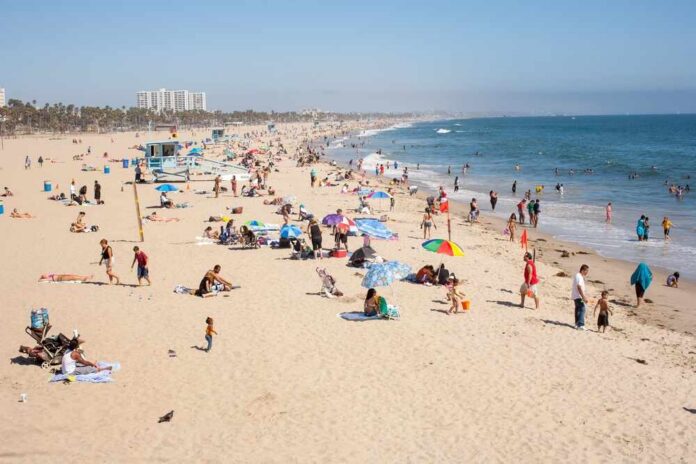
Australian police said a 35-year-old woman was mauled by a shark late morning near the flags at Sydney’s Coogee Beach. The woman suffered severe injuries to her arms and legs and was listed in critical condition. Witnesses described a chaotic scene as alarms blared and swimmers sprinted from the surf. The attack occurred close to shore during normal patrol hours. First responders treated the victim on the sand before transport to a hospital for emergency care [1].
Local news reported that emergency services received calls shortly before or around 11:15 a.m., after bystanders pulled the woman from the water. Paramedics and police converged on the beach within minutes. Officials then shut down swimming and began active monitoring from the air and the shore. Early reports did not confirm the shark species, which left risk details unclear for the public. But the severe injuries and location led to an immediate safety-focused response [2].
Why Officials Closed The Beach And Increased Patrols
Authorities often close beaches after a single severe attack because the risk is immediate and unknown. This case fit that pattern. The attack happened near swimmers in daylight, and rescuers said it unfolded fast. Safety leaders must act on the facts they have, not the facts they wish they had. With a critical injury and possible repeat risk, they closed the beach and increased aerial sweeps to protect families and tourists from another strike the same day [2].
Social posts and local reports said a shark alarm rang earlier after several sightings, pushing swimmers back to shore. That detail suggests a known hazard window, which can justify extra caution that follows. When alarms and sightings stack up, leaders err on the side of life. Even when species or numbers are unclear, the duty is to shield the public first. Officials can update rules after more data comes in. But they cannot undo a second attack that proper caution might have prevented [10].
Single Tragedy Or Ongoing Threat? What We Do And Do Not Know
Reporters stressed that this was one attack involving one woman at one beach. They did not show a clear trend at Coogee. That matters for longer-term policy. A one-off event does not prove a lasting pattern. It does demand quick action that day. Going forward, the key questions are shark species, size, and whether bait, runoff, or weather changed nearshore behavior. Those answers guide risk steps that are strong but not heavy-handed [9].
Some outlets noted that officials had not identified the shark when they ordered the closure. That gap limits broad claims about persistent danger. It also explains the careful framing by police and medics. They focused on the facts they could confirm: time, place, injuries, and the immediate closure. That is sound incident management. It protects the public while keeping space for better data and a measured plan for reopening and future patrols [2].
Lessons For American Beach Safety And Sensible Policy
American readers know this balance well. Leaders must protect life without using fear to justify endless bans or new red tape. Low-frequency but severe events demand fast, targeted steps. That means clear warnings, quick closures, and visible patrols when danger spikes. It also means honest updates, quick reopening when conditions are safe, and smart use of patrol tech. Families deserve safety, freedom, and the truth. That is how trust is built, and how liberty and common sense hold together.
🇦🇺 Woman in her 30s in critical condition after shark mauling
The swimmer, aged in her 30s, suffered serious arm and leg injuries at Coogee Beach in Sydney's eastern suburbs just before 11.15am on Saturday. pic.twitter.com/jWBDr40QkR— NYC News 24 🗞️ (@NYCNews24) June 13, 2026
This case shows good first steps: rescue, triage, closure, and monitoring. It also shows why data matters. If future reviews find a specific lure, like bait fish or storm runoff, then managers can adjust hours, nets, or patrols. If not, they can stand down broad limits and keep focused on rapid alerts instead. That approach respects life and choice. It avoids mission creep, and it keeps government in its proper lane: protect, inform, and then let people live free.
Sources:
[1] Web – WATCH: A shark alarm blares across a popular beach in Australia after …
[2] Web – Woman mauled by shark off Sydney beach grabs onto a …
[9] Web – A woman is fighting for life after a terrifying shark attack at …
[10] Web – Woman critically injured after shark attack at Sydney beach – 1News