Federal prosecutors say Matthew Perry’s ketamine circle was not medicine gone wrong, but a criminal supply chain that kept pushing a powerful drug despite obvious danger.
Quick Take
- Justice Department reporting says former physician Salvador Plasencia pleaded guilty to distributing ketamine to Perry and later surrendered his California medical license.[1]
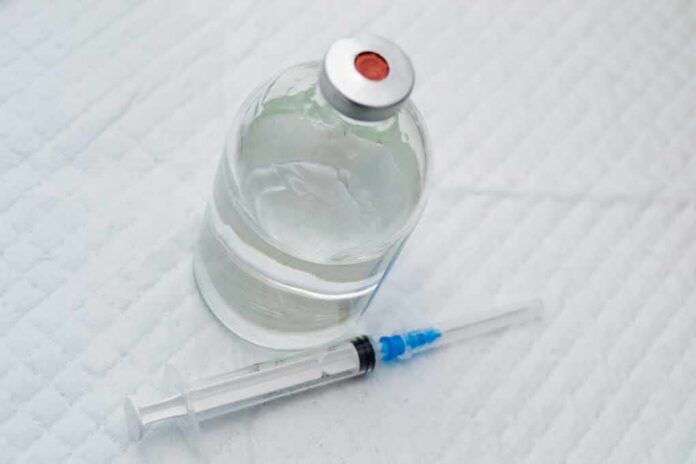
- Drug Enforcement Administration reporting says Jasveen Sangha worked with Erik Fleming to distribute ketamine into Perry’s circle, including 51 vials tied to the case.[2]
- Officials say Perry’s personal assistant administered ketamine without medical training or supervision, a fact that undercuts any claim of responsible care.[1]
- The public record supports criminal distribution, but it does not fully prove the viral $55,000-in-one-month figure without primary financial records.[1][2]
A Supply Chain Prosecutors Say Crossed the Line
Federal prosecutors in California say Plasencia repeatedly sold ketamine to Perry despite knowing about Perry’s well-documented addiction history and despite knowing the drug was being given by an untrained personal assistant.[1] That matters because the case is not just about a celebrity death; it is about how easily controlled substances can move from a clinic setting into a cash-driven underground market. For readers who value accountability, the central issue is whether anyone in this chain acted like a doctor at all.
The Justice Department says Plasencia pleaded guilty on July 23 to four counts of distribution of ketamine and later surrendered his California medical license in September 2025.[1] Those facts do not prove every dollar exchanged was part of a profit scheme, but they do show authorities treated his conduct as criminal distribution, not legitimate treatment. In plain English, the government says a physician stepped outside the oath, then kept selling anyway after Perry’s addiction history was already clear.
What the Government Says Happened
The Drug Enforcement Administration says Sangha worked with Fleming to knowingly distribute ketamine to Perry and that the network sold 51 vials into his orbit.[2] The same federal reporting says Sangha had earlier sold ketamine to another man, Cody McLaury, who died hours later from a drug overdose.[2] That background helps explain why prosecutors view the Perry case as part of a larger trafficking pattern, not an isolated lapse. When drug sellers keep operating after a death, the public should expect hard questions.
Official reporting also says Perry’s assistant administered ketamine without medical training or supervision, while the medical examiner’s findings pointed to the acute effects of ketamine as the cause of death, with drowning and other factors contributing.[1][3] That combination is grim because it shows how a sedating drug, water, and poor oversight can become lethal in minutes. The conservative takeaway is straightforward: a culture that treats dangerous substances casually will eventually produce preventable tragedy, and this case appears to fit that warning.
What Still Is Not Proven
The loudest headline attached to the case is the claim that Perry paid $55,000 in one month for ketamine, but the materials in this research package do not include bank records, invoices, or court exhibits proving that exact amount.[1][2] That means the figure may reflect documentary framing, but it is not yet established here as a documented fact. The same caution applies to broader claims about motive: the available releases prove illegal distribution, but they do not fully document internal profit-sharing or exact billing practices.
Matthew Perry paid doctors roughly $55,000 in less than a month for ketamine treatments. Investigators later uncovered worrisome text messages.
Watch “Hollywood Demons” Monday on ID and stream on @HBOMax.#HollywoodDemons pic.twitter.com/Wgv0bNbpFQ
— Investigation Discovery (@DiscoveryID) May 16, 2026
Even with that limitation, the evidence still points to a dangerous breakdown in judgment. Federal reporting says Plasencia knew about Perry’s addiction, yet kept supplying the drug; DEA reporting says the supply chain ran through multiple people; and the assistant’s role shows how far the process drifted from responsible medical care.[1][2] For families who believe in personal responsibility and lawful medicine, the lesson is not complicated. Controlled drugs demand supervision, honesty, and restraint, not improvisation, secrecy, and cash.
Why This Case Still Resonates
The Perry story keeps drawing attention because it sits at the ugly intersection of celebrity, addiction, and medical abuse of a powerful drug.[1][2] Publicly available material shows both legitimate ketamine therapy in some settings and a separate illegal network in Perry’s case, which is why blanket statements can mislead readers.[4] The important distinction is whether a treatment plan remains supervised and documented, or whether it mutates into uncontrolled distribution. In this case, federal authorities say it became the latter.
Sources:
[1] Web – Former Physician Who Ran Calabasas Clinic Sentenced to 2 ½ …
[2] Web – North Hollywood Drug Dealer Who Sold Ketamine that Killed Actor …
[3] YouTube – Doctor pleads guilty to selling Matthew Perry ketamine weeks before …
[4] Web – Doctor who helped sell ketamine to actor Matthew Perry before his …