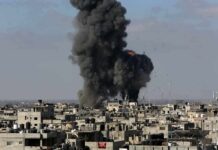
Russia’s latest mass missile and drone barrage on Kyiv shows how high-tech war can still leave ordinary families completely exposed while global leaders talk and the death toll keeps climbing.
Story Snapshot
- Russia launched hundreds of missiles and drones at Kyiv and across Ukraine in early July, with all ballistic missiles reportedly hitting their targets.
- Casualty counts range from about a dozen to 30 dead, showing how chaotic and unclear the facts remain even days later.
- Russia says it is striking weapons plants and energy sites in retaliation for Ukrainian drone attacks on Russian infrastructure.
- Ukraine warns that gaps in air defenses are growing, even as the United States and NATO debate what to send and when.
What We Know About The Latest Barrage On Kyiv
Ukrainian officials say Russia has hit Kyiv with some of the largest missile and drone attacks of the war, killing civilians and damaging homes and workplaces. In one overnight strike, Ukraine’s air force reported about 68 missiles and 351 drones fired at the country, with Kyiv as the main target. They said all 29 ballistic missiles reached their targets, which shows how badly Ukraine needs more modern interceptors. Video from the city shows apartment blocks torn open and rescue crews digging through rubble as families wait for news.
Different news outlets and local officials give different death tolls for these July attacks, which is common after mass strikes. Some reports put the number of dead in Kyiv and the region at 22, others at 26, and one major strike earlier in the week is described as killing at least 30 people. Emergency workers say more bodies are often found in collapsed buildings days later, so numbers keep changing. This confusion makes it hard for citizens abroad to know exactly what happened, but it does not change the basic reality: many people were killed and injured.
Russia’s Stated Targets And Ukraine’s Reality On The Ground
Russia’s Defense Ministry claims these “massive” attacks used long-range, high-precision weapons to hit military and energy facilities in Kyiv and other regions, including drone and missile factories and fuel infrastructure. Moscow also frames the strikes as retaliation for Ukrainian drone attacks on Russian oil and other civilian infrastructure. Ukrainian officials, however, report that several residential buildings and ordinary workplaces were destroyed or badly damaged, and local images show collapsed apartments and burned-out cars far from clear front-line positions. So far, there is no neutral international body confirming exactly which claimed military sites were hit.
This clash between Russia’s official story and damage seen on the ground feeds a wider anger many Americans feel about modern war. People who lean conservative see another example of global conflict tied to energy, borders, and elite interests, while everyday families pay the price. People who lean liberal see ordinary civilians trapped again between large states, with little say and less protection. Both sides can look at burned homes in Kyiv and feel that powerful governments everywhere are playing with lives while claiming it is all about “precision” and “deterrence.”
Air Defense Shortages, NATO Politics, And Fears Of A Long War
Ukraine’s leaders say these barrages expose growing gaps in their air defenses more than four years into the full-scale war with Russia. Reports from Kyiv note that none of the ballistic missiles in at least one major strike were intercepted, even as many slower drones and cruise missiles were shot down. President Volodymyr Zelenskyy is pushing hard for more Patriot missiles from the United States and other NATO members and plans to raise the issue at the upcoming summit in Ankara. That meeting is also tied to President Trump’s second-term push to reshape NATO policy, which adds more political drama around each attack.
For many Americans, this looks like another case where foreign policy and alliance talk drag on while weapons and money still flow and regular people still die. Some on the right question why the United States keeps sending expensive systems overseas when our own border, debt, and cities feel ignored. Some on the left worry that defense firms and political insiders gain influence and profits from a war that seems to have no clear end. The strikes on Kyiv do not answer those concerns; they underline them.
Information Gaps, Media Framing, And The “Deep State” Feeling
One troubling pattern in the Kyiv coverage is how hard it is to get independent proof of specific claims. Most numbers and descriptions come from Ukrainian officials, Russian ministries, and large Western outlets. There is little publicly available satellite tracking, very limited forensic reporting on missile debris, and no clear international investigation yet. That does not mean the attacks did not happen, but it means citizens must again trust secondhand sources that often have their own goals.
Russia launched another overnight missile strike on Ukraine's capital, Kyiv, killing at least one person and injuring two others, according to local authorities.
The attack triggered massive fires across the city, with missiles striking warehouse complexes on opposite sides of… pic.twitter.com/GWFWHVgkgq
— Ocean News (@OceanNewsUK) July 8, 2026
Major media stories tend to highlight Russian “terror” and civilian deaths, while giving less space to Russia’s claim that it is striking drone plants built to hit Russian cities. Social platforms sometimes limit posts that present Moscow’s view, especially when they look like propaganda. For many Americans who already suspect a “deep state” and connected elites shape what we see, this mix of real horror, unclear facts, and filtered narratives deepens the sense that ordinary people are not getting the full picture. The missiles over Kyiv are a reminder that in global crises, truth can become another battlefield.
Sources:
theatlantic.com, reuters.com, nbcnews.com, npr.org, cnn.com, abcnews.com