On a weekend meant for fireworks and family, parts of Milwaukee sounded more like a battlefield than a holiday celebration.
Story Snapshot
- Multiple separate shootings and a fatal crash hit Milwaukee over the July 4 holiday weekend, adding to a growing sense of lawlessness.
- One man was killed and another wounded in two early-morning shootings Saturday, while at least three more non‑fatal shootings followed later that night and into Sunday.
- Gunfire has been rising in Milwaukee for years, and experts say pandemic-era violence more than doubled in parts of the city.
- Residents across the political spectrum see these events as more proof that leaders and institutions are failing to keep basic public safety promises.
What Actually Happened Over Milwaukee’s July 4 Weekend
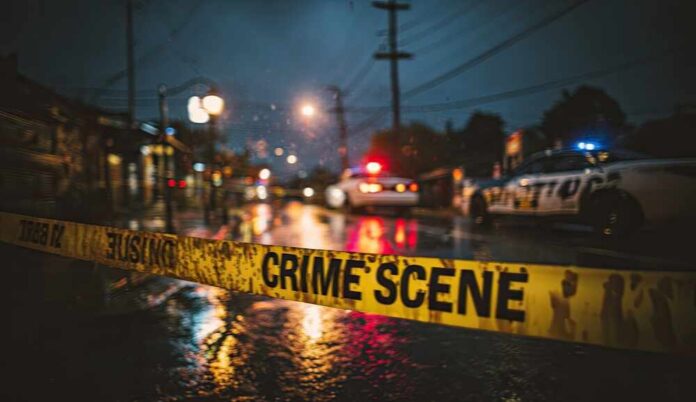
Milwaukee Police reported a string of separate incidents over the July 4, 2026 holiday period, including multiple shootings and a deadly collision. Officers said these incidents were “not related,” but together they painted a grim picture of life in the city during a time that was supposed to be festive. Early Saturday, a 44‑year‑old man was shot near 19th and Capitol and went to a hospital for treatment. Later that afternoon, a 19‑year‑old was shot near 36th and Thurston and died at the scene.
Police also confirmed a non‑fatal shooting at about 9:45 p.m. on July 4 in the 1600 block of West Clark Street, where a 40‑year‑old man was shot and survived. Two more non‑fatal shootings followed that night: one around 10:40 p.m. in the 4500 block of North 40th Street, and another at about 11:44 p.m. in the 2700 block of North 16th Street, each sending young adults to local hospitals. Just days earlier, officers had already been investigating another shooting near North 8th Street and West Galena Street on July 1.
Why Some Call It a “War Zone” — And What the Data Shows
Conservative media framed Milwaukee and nearby blue communities as “war zones” over the holiday weekend, using the cluster of shootings to argue that urban leaders have lost control. That language is strong, but it taps into real fear among many residents who hear gunfire far more often than they should. Milwaukee Police dispatchers were already overwhelmed by “dozens of shots fired calls” just minutes after midnight on January 1, 2026, showing how common celebratory or reckless gunfire has become.
Long‑term numbers back up the sense that violence is not just a one‑weekend story. A review of Milwaukee Police call logs found that gunfire more than doubled during the pandemic in much of the city. A 2024 assessment reported that from 2010 to 2016, firearm homicides rose 76 percent and non‑fatal shootings climbed 38 percent, and that in recent years Milwaukee has averaged around 193 homicides and 862 injury shootings annually. For families in these neighborhoods, every holiday now carries worry that someone will not make it home.
What This Means for Ordinary People Across the Political Spectrum
For many conservatives, these holiday shootings feel like the latest proof that years of “soft‑on‑crime” policies, talk about defunding police, and focus on national culture fights have left basic public safety behind. For many liberals, the same events highlight deep inequality, lack of investment in poor neighborhoods, and a system that seems to accept constant trauma in certain communities while wealthier areas stay relatively safe. Both sides, in different ways, see a government that talks more than it solves.
Gun violence also drains city resources and harms long‑term opportunity. One detailed study estimated that each fatal shooting in Milwaukee carries direct and indirect costs of about $2 million, with nearly a billion dollars in yearly costs tied to homicides and injury shootings. Businesses leave, property values drop, and children grow up used to sirens and sidewalk memorials. When leaders offer little more than press releases after yet another violent holiday, it reinforces the belief that the “elites” are insulated from the danger and the bill.
Beyond the Headlines: Systems, Silence, and Accountability
Police statements on this July 4 weekend stress that the shootings were “not related,” but they say little about why so many people keep turning to guns in the first place. Local leaders have at times called violence a public health crisis, yet there is no sign of a swift, coordinated response tied directly to this holiday weekend. That silence feeds anger among residents who feel stuck between crime on one side and distant, slow government on the other.
Chicago also saw holiday bloodshed, with preliminary reports saying at least nine people were shot and two killed over its July 4 weekend. Comparing one city’s numbers to another can blur important local details, but it does show a shared national problem: large urban areas with long‑running gun violence, failing trust in institutions, and communities that feel ignored until the cameras arrive. Whether people blame “woke” policies or “America First” cuts, many agree that the basic promise of a safe neighborhood on a holiday is slipping away.
Sources:
townhall.com, fox32chicago.com, urbanmilwaukee.com, youtube.com, facebook.com, fox6now.com, law.marquette.edu, wpr.org, mcw.edu