Reports claiming President Trump aims to “rule the world” twist hard-nosed America First bargaining into a caricature—while raising real questions about force, diplomacy, and constitutional guardrails that conservatives must watch closely.
Story Snapshot
- Media characterize Greenland talk and Venezuela actions as expansionist; facts show coercive bargaining and law-enforcement framing, not declared conquest [1][2][3].
- Executive Order language puts State Department on notice to execute the President’s America First policy or face discipline, tightening accountability [5].
- Analysts say tariffs and bilateral deals replaced multilateral drift, reflecting leverage-first strategy serving domestic goals [1][2].
- Counter-analysts argue material guardrails—cheap oil and debt—constrain any grandiose designs, tempering sensational claims [4].
What The Records Actually Say About Greenland And Force
ABC News reported that President Trump “called for the U.S. to own Greenland,” ratcheted tensions with European allies, and “has not ruled out” taking the island by force. Those phrases portray maximal stakes but rely on press characterization rather than a released transcript or formal doctrine. Without the direct text, context, or conditions, the report supports seriousness yet leaves ambiguity about intent, timelines, or lawful pathways for any territorial move [1].
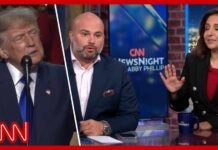
CNN’s discussion, summarized in a video description, said Trump’s Greenland rhetoric strained the transatlantic relationship, suggesting allies took it seriously. Treating rhetoric as credible pressure is not the same as proof of a conquest program. Conservatives can recognize that signaling strength to extract better terms often unsettles Brussels. But absent a primary-source directive or treaty plan, the record shows leverage-based bargaining rather than a codified annexation policy [3].
Cross-Border Actions Framed As Law Enforcement
ABC News also described an on-the-ground operation to seize Venezuela’s Nicolás Maduro and bring him to the United States to face charges. Analysts at the European Union Institute for Security Studies said the administration framed the use of force in the Caribbean and the removal of Maduro as law-enforcement operations tied to domestic goals, including strikes against suspected traffickers. That framework reflects a hemispheric crime-fighting posture, not a formal territorial expansion doctrine [1].
The same analysis argues Trump’s team explicitly linked foreign-policy tools—tariffs, aid leverage, targeted strikes—to domestic priorities such as border security, drug interdiction, and economic revival. That integration looks aggressive because it rejects multilateral timidity, but the evidence shows issue-specific coercion and operational tempo rather than a single blueprint for domination. The strongest motives alleged by critics are interpretive, not proven by primary operational orders released to the public [2].
Executive Direction And Bureaucratic Accountability
A policy summary of Executive Order 14211 says foreign-service implementation must align with an America First foreign policy, warning that failure to faithfully implement the President’s policy is grounds for professional discipline, including separation. Supporters will call this long-overdue accountability for an entrenched bureaucracy; critics will call it centralization. The text signals command clarity but does not, by itself, authorize unlawful coercion abroad or suspend constitutional checks [5].
ABC News reported sweeping tariffs and a pivot to “90 deals in 90 days,” while the European Union Institute analysis described a shift from sprawling multilateralism to bilateral deals built on leverage. That approach startled allies accustomed to U.S. deference inside international bodies. For readers paying higher prices from past globalist experiments, a negotiation-first strategy that serves American workers is not imperial reach—it is a course correction with sharper elbows at the table [1][2].
Separating Sensation From Strategy
Geopolitical Monitor contends that the second Trump administration’s foreign policy may look chaotic but is constrained by three dictates, including cheap oil and cheap debt. Those guardrails point to practical outcomes rather than empire-building. When legacy media press sensational frames, conservatives should demand documents: transcripts of Greenland remarks, legal memos on Venezuela actions, and clear rules of engagement. Hard records, not pundit spin, should anchor judgments about intent and legality [4].
If the following happens. Everybody needs to walk away from Donald J Trump because he's in bed with foreign interest. This is not America first and anybody who thinks it is? stop the group think, your gaslighted or brainwashed, go get some help. I have supported Donald Trump… https://t.co/LXA3FzXt0P
— Mama Butter Bean (@MamaButterBean) May 18, 2026
The available materials include notable weaknesses: reliance on reporting language like “has not ruled out,” absence of operational legal memoranda, and the merging of unrelated issues into claims of a unified master plan. That said, vigilance is warranted. Power concentrates in crises; Congress must assert war-powers oversight, and agencies should publish lawful justifications for cross-border actions. A strong America does not mean a blank check. It means principled strength, transparent authority, and results that put U.S. families first [1][2][5].
Sources:
[1] Web – 1 year into Trump’s 2nd term, here are some of the seismic shifts in …
[2] Web – The Foreign Policy-First President? US external action under Trump …
[3] YouTube – How Trump’s Second Term Is Changing the World Order
[4] Web – Foreign Policy Guardrails of the Second Trump Administration
[5] Web – Executive and Regulatory Actions Under the Second Trump …