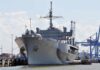
A deadly hantavirus outbreak aboard an expedition cruise ship has claimed three lives and infected five passengers, forcing authorities to anchor the vessel off Spain’s Canary Islands while coordinating an emergency international evacuation—raising urgent questions about disease control on remote voyages and government transparency amid public health concerns.
At a Glance
- MV Hondius, operated by Oceanwide Expeditions, arrived at Tenerife with 140+ passengers and crew following a hantavirus outbreak that killed three people
- Five passengers who disembarked earlier tested positive for hantavirus; all 140+ currently aboard show no symptoms
- Spanish authorities and WHO assess local transmission risk as low, yet residents express concerns about public health safeguards
- International evacuation underway Sunday through Monday with multiple nations coordinating repatriation flights and medical screening
- Ship remains anchored offshore rather than docked, reflecting precautionary measures balancing humanitarian obligations with disease containment
A Rare Maritime Health Crisis Unfolds
Hantavirus outbreaks on cruise ships are extraordinarily uncommon, making the MV Hondius incident a significant public health event. The virus, transmitted primarily through contact with infected rodent droppings, urine, or saliva, carries a mortality rate of 38-50 percent for Hantavirus Pulmonary Syndrome. The three confirmed deaths aboard the vessel underscore the severity of exposure during the expedition cruise to remote destinations where rodent contact becomes more likely than on conventional voyages.
Coordinated International Response Demonstrates Crisis Management
Spanish authorities, the World Health Organization, and multiple nations have mobilized a coordinated evacuation operation, with the UK designating a northern England hospital to receive passengers and other countries organizing dedicated repatriation flights. The decision to anchor the vessel at Granadilla port rather than permit docking reflects appropriate precautionary measures while authorities implement medical screening and disembarkation procedures. This multilateral coordination demonstrates how maritime disease outbreaks trigger international protocols designed to protect both passengers and local populations.
Official Risk Assessment Versus Public Concern
Spain’s Director General stated that “the risk to the local population is low” based on the disease’s transmission characteristics and government preparations. The WHO concurred with this assessment. However, residents of nearby towns have expressed concerns about public health safeguards, revealing a communication gap between official reassurance and community perception. This tension reflects broader frustrations that citizens across the political spectrum share: uncertainty about whether government officials and health authorities are fully transparent about emerging threats or primarily focused on managing public panic.
Expedition Cruises and Inherent Disease Exposure Risks
Oceanwide Expeditions operates polar and expedition cruises to remote Arctic, Antarctic, and expedition routes where passengers encounter environments with greater disease exposure than conventional cruise ships. The MV Hondius outbreak raises questions about pre-voyage health screening protocols, vessel sanitation procedures, and rodent control measures aboard expedition vessels. Maritime health experts suggest that enhanced screening procedures and operational reviews may become necessary for future expeditions, particularly as cruise lines expand remote destination offerings.
Hantavirus-stricken cruise ship arrives at Tenerife in Spain’s Canary Islands https://t.co/pPe90gY4tY
— The Algiers Herald (@AlgiersHerald) May 10, 2026
The incident establishes precedent for maritime hantavirus response protocols. WHO monitoring will track whether additional cases emerge among the 140+ evacuees during the one-to-eight-week incubation period, while epidemiologists investigate the outbreak’s origin aboard the vessel. Spain’s handling of this crisis will influence international perceptions of its crisis management capability and commitment to maritime law obligations—demonstrating that even rare disease outbreaks carry diplomatic significance in an interconnected world.
Sources:
Hantavirus-hit cruise ship on way to Canary Islands after …
Hantavirus-hit cruise ship arrives in Spain’s Canary Islands
Hantavirus-stricken cruise ship arrives at Tenerife in …
Spain readies to evacuate 140 passengers from hantavirus …