A fragile two-week ceasefire is exposing how fast global trade and American security can be held hostage when the Strait of Hormuz becomes a bargaining chip.
Quick Take
- President Trump and Iranian officials confirmed a new two-week ceasefire even as fresh attacks and retaliations raised questions about enforcement.
- World leaders publicly urged Tehran to “stick to diplomacy” after reported clashes near the Strait of Hormuz and Iranian strikes on the UAE.
- Europe and key regional states tied the ceasefire’s success to reopening Hormuz and stabilizing energy and shipping routes.
- Disputes over whether Lebanon is covered by the pause, and continued strikes there, underscore how limited ceasefires can fail without clear terms.
Ceasefire Announced, Then Immediately Stress-Tested
President Donald Trump announced a two-week ceasefire with Iran on Tuesday, May 5, 2026, and Iranian officials also confirmed the agreement. The pause arrived after days of dangerous escalation, including fire exchanges involving the United States and Iran around the Strait of Hormuz and reported Iranian attacks on the United Arab Emirates—the first such strikes since an earlier truce began nearly a month earlier. Diplomatic relief was real, but it was quickly tempered by events on the ground.
Gulf-state reporting and subsequent updates described additional drone and missile activity after the announcement, complicating claims that the ceasefire was fully “holding.” The basic problem is structural: a short-term pause can stop immediate bloodshed, but it can also become a political timeout where each side tries to improve leverage. Without credible verification and clear consequences for violations, a two-week window risks becoming less a bridge to peace than a countdown to the next round.
Hormuz Remains the High-Stakes Pressure Point
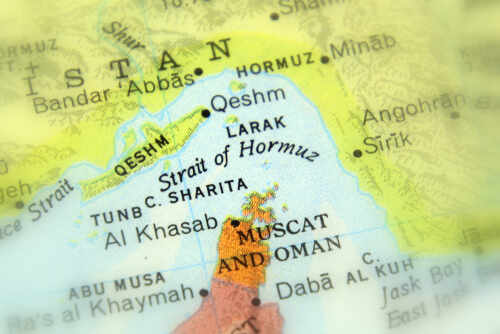
The Strait of Hormuz is a narrow maritime chokepoint that global energy markets depend on, and leaders treated its status as a central measure of whether the ceasefire means anything in practical terms. Public statements from European and regional capitals emphasized keeping sea lanes open and restoring normal navigation. That focus is not abstract: when Hormuz is threatened or blocked, prices, insurance costs, and shipping schedules can spike quickly—costs that ultimately reach American families through higher energy and goods prices.
For U.S. voters already frustrated by years of inflation and policy-driven cost increases, Hormuz instability is the kind of foreign-policy risk that hits household budgets with little warning. The ceasefire therefore has two tracks: a security track that reduces the chance of direct U.S.-Iran conflict, and an economic track that reduces the chance of global supply shocks. The research available here does not provide concrete reopening timelines for Hormuz, only that leaders publicly pressed for it.
World Leaders Press Tehran—and Reveal How Thin the Deal Is
International pressure focused heavily on Iran’s decisions after the reported ceasefire erosion and the strikes attributed to Tehran. European leaders broadly welcomed the pause while urging negotiations. Several comments paired hope with caution: some leaders described the moment as relief, while others warned against treating a temporary pause as proof the wider conflict is resolving. The common demand was diplomatic follow-through—because a ceasefire without talks often becomes a pause without a plan.
Regional governments also leaned into a familiar message: halt attacks, protect neighbors, and avoid moves that could expand the war. Those calls matter because they show how many countries view the conflict less as a distant rivalry and more as an immediate threat to domestic stability and economic continuity. At the same time, the research includes limited independently verified operational details on each alleged strike, so the clearest verified fact is the surge in diplomatic messaging tied to renewed violence.
Lebanon Dispute Shows the Limits of “Partial” Peace
Confusion over whether the ceasefire extends to Lebanon became an early stress test. Some leaders indicated Lebanon should be included, while Israel’s government disputed that claim, and strikes were reported to continue there. France’s president criticized both Hezbollah’s attacks and Israel’s longer-term approach, illustrating how quickly a single front can unravel a broader regional pause. If one theater remains active, the incentives for retaliation and escalation persist across the entire map.
World leaders pressure Iran as ceasefire on brink https://t.co/76pTF7Xzgu pic.twitter.com/Sh58OxBQSE
— Euractiv (@Euractiv) May 5, 2026
Pakistan’s plan to host talks in Islamabad on Friday adds a path forward, but the fundamentals remain unresolved: who enforces compliance, what counts as a violation, and whether the parties are willing to trade military leverage for negotiated constraints. For Americans, the conservative lesson is straightforward and rooted in recent experience: peace requires enforceable terms and credible deterrence, not just carefully worded statements. The coming days will show whether this pause becomes diplomacy—or merely intermission.
Sources:
World leaders pressure Iran as ceasefire on brink
‘Momentary relief’: World leaders react to US-Iran ceasefire