
New York’s response to antisemitic vandalism in Queens is now being judged less by arrests and more by whether leaders can answer hard questions without resorting to cheap social-media jabs.
Quick Take
- Swastikas were painted on homes and synagogues in Queens, including a plaque honoring Kristallnacht survivors, prompting public outrage.
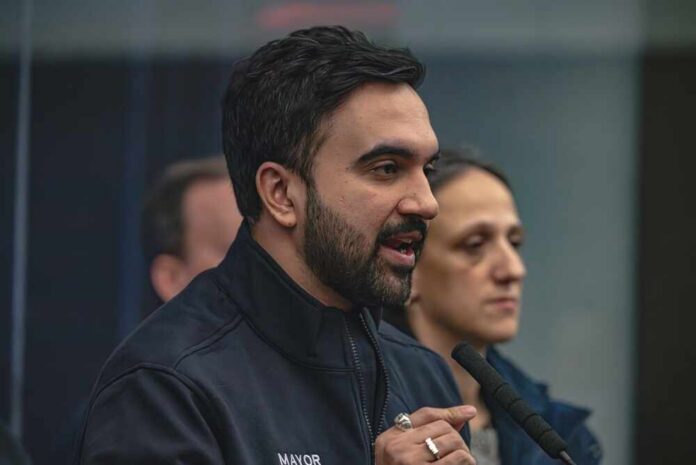
- NYC Mayor Zohran Kwame Mamdani condemned the vandalism, calling it “deliberate” antisemitic hatred meant to instill fear.
- Barstool Sports founder Dave Portnoy publicly questioned the mayor’s sincerity and pointed to allegations about the mayor’s wife’s prior antisemitic content.
- Gov. Kathy Hochul’s press office responded online by attacking Portnoy personally rather than addressing the underlying credibility questions.
Queens vandalism triggers a political test of credibility
Queens residents woke to a scene that shouldn’t be normal in America: swastikas painted on homes and synagogues, including on a plaque honoring Kristallnacht survivors. Mayor Zohran Kwame Mamdani issued a statement describing the vandalism as “a deliberate act of antisemitic hatred meant to instill fear” and saying there is “no place for antisemitism.” The available reporting does not include law-enforcement updates, suspect information, or arrests.
Dave Portnoy, the founder of Barstool Sports with a large online following, quickly turned the story from a local hate-crime incident into a broader accountability dispute. According to the reporting summarized in the research, Portnoy questioned whether Mamdani’s condemnation was genuine or prompted by public pressure. He also referenced claims about the mayor’s wife having a documented history of antisemitic posts and illustrations, though the specific examples and titles are not detailed in the provided materials.
What Portnoy alleged—and what remains unverified in public reporting
The core factual dispute is not whether the vandalism occurred, but whether political leaders are viewed as credible messengers against antisemitism. The research indicates Portnoy suggested a possible connection between antisemitic sentiment and the mayor’s household because of the wife’s alleged prior content. At the same time, the research notes important gaps: it does not provide the underlying posts, images, publication details, or a clear timeline showing when that content appeared or how directly it relates to the Queens vandalism.
Those limits matter because public trust is built on evidence, not innuendo. A mayor can rightly condemn hate crimes while still facing fair questions about the standards applied inside his own orbit. But when allegations are not laid out in verifiable detail, the public is left navigating claims, counterclaims, and viral snippets. That dynamic has become common across American politics, where social-media amplification can outpace the slower, more methodical work of investigation and documentation.
Hochul’s press office goes personal, not substantive
Governor Kathy Hochul’s press office then entered the public back-and-forth on social media. The research describes the response as age-based and dismissive of Portnoy, characterizing his criticism as “ridiculous” and focusing on his credibility rather than addressing the substance of what he raised. The research also states the press office did not rebut the wife-related allegations with factual detail. The result is that the state’s messaging appeared aimed at winning an online exchange, not reassuring communities targeted by hate.
Why this episode resonates beyond New York
Antisemitic vandalism is a straightforward moral issue—public officials should condemn it, investigate it, and protect targeted communities. The political complication comes when official communications offices treat serious incidents as content opportunities. For many Americans, especially older voters already skeptical of “elite” institutions, an ad hominem response from a government press operation reinforces the sense that the system prioritizes optics over action. The limited public information on investigative progress only increases that skepticism.
Dave Portnoy Bodies Mamdani on Antisemitic Vandalism — Hochul’s Press Office Jumps In With Lamest Burn https://t.co/Mz6jV6FIMG
— Woodrow Williams (@Woodrow17165268) May 6, 2026
The research also points to a larger national backdrop of rising antisemitism, with heightened tensions in the post-October 2023 environment. That context makes clarity and transparency more important, not less. If leaders want trust, they need two things at once: consistent moral clarity against antisemitism and a willingness to answer legitimate credibility questions with verifiable facts. Without that, politics fills the vacuum, and the people most directly threatened by hate are left wondering who is focused on protection rather than performance.
Sources:
Weekly Report — November 13, 2025