While Washington declares “mission accomplished” on military recruiting, the fine print shows a force that is growing on paper faster than most Americans can track whether it is actually ready to fight.
Story Snapshot
- The Army says it hit its 2025 recruiting goal four months early, signing over 61,000 new active-duty contracts and even exceeding its target by year’s end.
- Defense officials now tout 2025 as the best recruiting year in 15 years, with all active-duty branches meeting or beating their missions.
- Buried Army data show reserve recruiting badly lagging, raising questions about how complete this “rebound” really is.
- Contract numbers do not reveal how many recruits finish training, stay in uniform, or translate into real battlefield readiness.
Early Recruiting Wins: What the Pentagon Is Celebrating
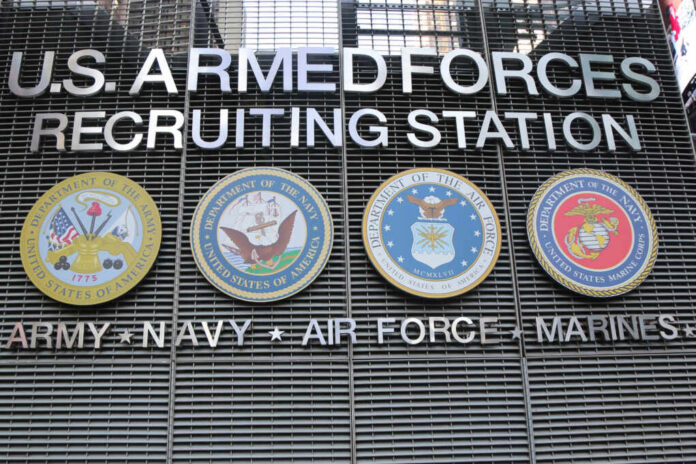
United States Army leaders report that they met their fiscal year 2025 recruiting goal four months early by signing 61,000 contracts for new active-duty soldiers, an achievement highlighted in both Army public affairs and outside coverage.[1] Subsequent Defense Department reporting claims the Army ultimately reached 62,050 recruits for the year, or about 101.7 percent of its target, framing 2025 as a high-water mark for enlistment performance.[3] These figures underpin viral claims of a “massive recruiting win” circulated by political allies online.
Army officials present this surge as evidence that recent reforms and quality-of-life improvements are paying off, explicitly tying recruiting momentum to efforts to “improve Soldier experience.” Statements emphasize that this year’s goal was higher than previous targets, portraying success as more than just hitting an easier mark.[2] For citizens who watched years of headlines about a “recruiting crisis,” the narrative of a force suddenly turning people away can sound like a dramatic reversal. But the government’s own numbers invite a more cautious reading.
Beyond the Slogans: Contracts, Components, and a Mixed Picture
The Department of War’s summary of 2025 recruiting goes further, declaring it the best year in a decade and a half and asserting that all five active-duty branches met or exceeded their missions with an average completion rate of roughly 103 percent.[3] The Air Force and the newly formed Space Force likewise reported hitting their annual goals five months ahead of schedule, jointly enlisting about 32,000 new airmen and guardians. These cross-service wins support what Pentagon communicators describe as a broad recruiting rebound.
Yet the Army’s own recruiting command “facts and figures” sheet shows a more uneven reality when broken down by component. Regular Army accessions are listed at 57,606, rounding out to 100 percent of a 57,500-soldier goal, but the Army Reserve shows 11,686 accessions, just 73.6 percent of a 15,875 goal. That gap undercuts any simple claim that recruiting strength is uniform across the force. For families who have heard for years that reserves and Guard units carry much of the real-world deployment load, a shortfall there raises obvious concerns about how deep the apparent recovery truly runs.
From “Tip of the Spear” to Trained Unit: The Missing Readiness Story
Every branch describes its success primarily in terms of contracts signed or accessions, metrics that are relatively easy to count and present to Congress or the public.[1][3] None of the sources provided, however, detail how many of these new soldiers, sailors, airmen, or guardians have actually shipped to basic training, completed that training, and remained in the force long enough to fill operational units. Analysts across the spectrum have warned for years that focusing on contract numbers can mask attrition, lowered standards, or bottlenecks in the training pipeline.
🚨The US Army just CRUSHED its 2026 recruiting goal, 4 months early! SecDef Pete Hegseth: "Just two days ago, the US Army met its 2026 recruiting goals four months early, a second RECORD year in a row. You're about to train this group right here and lead 61,500 new soldiers. And… pic.twitter.com/4dPprekZox
— Dear Patriot (@Dear_Patriot) May 23, 2026
For Americans skeptical of government spin—whether they distrust “woke generals” or fear an unaccountable security state—this gap between headline and hard readiness data lands on familiar ground. Official narratives celebrate early goals as proof of national renewal, while offering no independent audits tying those figures to deployable strength, unit manning, or combat proficiency.[3] Without transparent reporting on graduation rates, waiver usage, and first-term retention, citizens are asked to accept on faith that a surge of contracts equals a stronger military, even as other Pentagon data quietly acknowledge serious shortfalls in key reserve components.
Sources:
[1] Web – Army hits recruiting goal of 61,000 soldiers 4 months early
[2] Web – Army Hits Recruiting Goal 4 Months Early – AUSA
[3] Web – FY25 Sees Best Recruiting Numbers in 15 Years