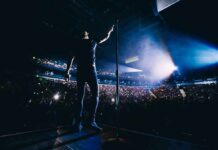
When an Italian official can shut down two Kanye West arena shows over “public order” fears days after 120,000 fans packed an Istanbul stadium, it raises hard questions about who really controls cultural speech in Western democracies and why.
Story Snapshot
- Italian authorities cancelled two Kanye West and Travis Scott shows citing safety and counter‑protest risks, without releasing the full official order.[1]
- The decision followed formal complaints from a consumer group and local Jewish community leaders, not a concrete security incident at the venue.[1]
- Days earlier, Kanye West drew well over 100,000 fans to Istanbul’s Ataturk Olympic Stadium, demonstrating massive ongoing demand.[1][2]
- The case fits a wider trend where governments use “public order” language to rein in controversial artists, fueling shared fears of an unaccountable elite.[1]
Italian Prefect Pulls the Plug on Reggio Emilia Mega‑Shows
The prefect of Reggio Emilia, Salvatore Angieri, ordered the cancellation of two Kanye West and Travis Scott concerts scheduled for 17 and 18 July at the RCF Arena, formally citing public‑order and safety concerns.[1] Authorities pointed to a venue capacity of about 103,000 and expected attendance of more than 100,000 fans as part of the risk calculus.[1] Officials argued that managing a crowd of that size, combined with possible protests, could overwhelm local security arrangements and emergency services.[1]
Euronews reports that the provincial public‑order committee met on 25 May after receiving requests from the Italian consumer association Codacons and the Jewish community of Modena and Reggio Emilia, indicating that external complaints helped trigger official scrutiny.[1] Complex likewise attributes the cancellation to security and protest concerns raised in that meeting. However, neither outlet provides the underlying prefectural decree or a detailed police threat assessment, leaving the exact legal and factual basis partly opaque.[1]
Counter‑Protests, Community Pressure, and a Thin Public Record
News coverage states that officials acted to avoid a “very real risk of counter‑protests,” framing the move as a preventive step rather than a response to an actual violent incident.[1] Reports mention backlash from segments of the local Jewish community concerned about Kanye West’s previous antisemitic statements, suggesting reputational and moral objections blended with security language.[1][2] Secondary commentary on YouTube further amplifies claims about community pressure and social‑media outrage, but it does not qualify as primary documentation.[2]
Side B of the debate stresses that there is no public evidence the prefect’s safety rationale was false, only that it has not been fully documented.[1] Critics note that authorities have not released the full administrative record: no detailed risk matrix, police intelligence summary, or written explanation quantifying the protest threat.[1] That vacuum allows both supporters and opponents to project their own narratives, which is exactly how many citizens come to see “public order” as a flexible label the state can stretch to fit political convenience.[1]
Massive Istanbul Crowd Highlights Demand and Double Standards Concerns
Only days before the Italian cancellation, Istanbul’s Ataturk Olympic Stadium was “overwhelmed” as organisers expected around 120,000 fans for Kanye West’s concert, with long lines forming hours before the show.[1] A separate video report notes that more than 100,000 people attended, marking his first European stadium performance since 2014.[2] Despite the huge crowd and strain on transportation and public spaces, Turkish authorities managed the event rather than banning it outright, underscoring that large numbers alone do not automatically require cancellation.[1][2]
‘The state is becoming more interventionist.’
Paul Cox and Alice Grant react to the cancellation of a Kanye West concert in Italy due to public order and security concerns, discussing the role of the state in intervening in art and popular culture. pic.twitter.com/ih7aDClYfz
— GB News (@GBNEWS) June 1, 2026
This contrast feeds into a broader pattern described by researchers: governments in democratic countries increasingly treat cultural events by controversial figures as security problems, using public‑order tools to limit or reshape them.[1] From the perspective of many Americans on both the right and the left, that looks less like neutral policing and more like elite gatekeeping—where unelected officials decide which voices are too risky for the public to hear, while rarely exposing their evidence or accepting real accountability.[1]
What This Signals About Power, Speech, and Public Distrust
For conservatives frustrated by “cancel culture” and for liberals worried about state overreach, the Italian case illustrates how easily security language can be used to sideline unpopular or polarizing artists.[1] Officials can point to crowd size and hypothetical protests, yet avoid demonstrating why ordinary policing, clear rules, and personal responsibility are not sufficient. When authorities routinely take the most restrictive option, ordinary people see confirmation that powerful institutions would rather control risk from above than trust citizens to choose what shows to attend.[1]
The deeper issue is not whether Kanye West deserves criticism; it is whether governments should quietly convert controversy into a pretext for denying access to public culture on a massive scale.[1] Without transparent threat assessments, clear legal standards, and avenues for public challenge, “public order” decisions risk becoming another tool of a distant administrative class—one that answers more to media pressure and interest groups than to the people whose freedoms they manage. That worry bridges ideological lines and strengthens the shared sense that the system serves itself first.[1]
Sources:
[1] Web – Kanye West Show Cancelled by Italian City Days After Rapper Breaks …
[2] Web – Kanye West and Travis Scott concerts in Italy cancelled | Euronews