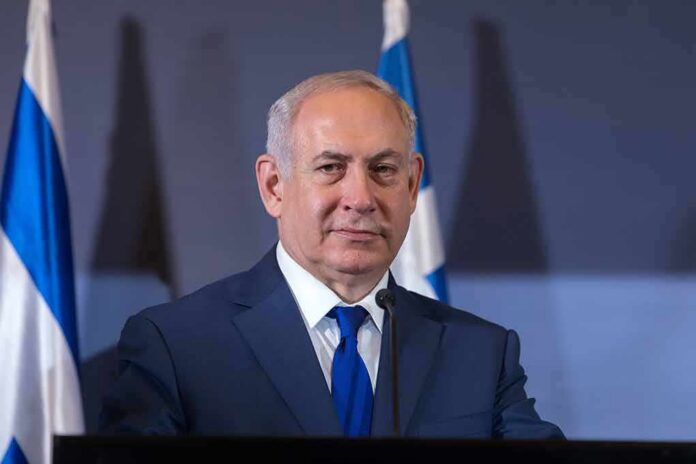
Israel’s prime minister says a “war for truth” now targets Israel and America alike, elevating online influence to an “eighth front” of conflict.
Story Highlights
- Netanyahu calls misinformation a new “eighth front” and urges allies to join a “battle for truth”.
- Analysts say information warfare now shapes public views and policy during modern wars.
- Reports describe both hostile foreign campaigns and Israel-linked influence efforts.
- The scale of alleged foreign funding behind anti-Israel narratives remains unclear in public records.
Netanyahu’s “Eighth Front” Claim and Why It Matters
Prime Minister Benjamin Netanyahu told American audiences that Israel is fighting not only Iran and its proxy groups but also an information war he calls the “eighth front”. He thanked supportive outlets and framed the contest as a fight of facts versus lies. He used similar language at faith-based events, urging unity against what he called global misinformation. The message seeks to rally allies in the United States, where public opinion and policy debates can shape aid, diplomacy, and deterrence.
Netanyahu’s frame resonates in a media environment that moves faster than governments can respond. Digital platforms can spread images and claims within minutes, often without full context. That speed can harden views before facts are checked. Leaders argue this harms both truth and security. In the United States, where Congress and the White House weigh military aid and sanctions, narratives can impact votes, funding, and how Americans judge allies and adversaries.
What Research Says About Modern Information Warfare
Security scholars describe today’s information battles as a core part of war, not a side show. They say the goal is to sow confusion, polarize societies, and push decision makers off balance, often by mixing truths with falsehoods. Studies on the Israel–Gaza conflict note that competing sides use social media, video, and graphics to frame events and assign blame, aiming at Western voters and leaders who control key levers like aid and weapons flows. This environment makes citizens doubt institutions and facts.
Think tanks and military analysts also document hostile campaigns by state and proxy actors. A leading Israeli research institute reported that Russia has waged large, multi-country influence operations that included Israeli audiences, relying on fake media articles and social platforms to push tailored narratives. Such campaigns exploit open speech rules and weak authentication online. The tactic is cheap, fast, and hard to attribute in real time. That creates room for doubt and delay, which can be the point.
Competing Claims and Evidence Gaps
Netanyahu’s rhetoric suggests vast foreign spending behind anti-Israel narratives. The public record cited here confirms his “eighth front” message and the broad problem of weaponized information. But it does not document the “billions” he implies, or a specific ledger of hostile funding. That gap matters for American readers who want proof before policy shifts. Solid claims need verifiable numbers, clear attribution, and names behind the money. Those details are not fully available in these sources.
At the same time, reporting has exposed influence efforts tied to Israel or its supporters. Investigations said fake accounts pushed messages at more than 120 United States lawmakers, boosting pro-Israel lines and attacking Palestinian rights groups. Analysts also flagged Russian-linked influence against Israeli audiences. These findings show that influence operations run on many sides. They do not disprove an anti-Israel campaign; they show a messy field where many actors push hard to shape what Americans see and believe.
Why This Hits Home for Americans Across the Aisle
American readers across right and left worry that elites game the information space while working families face rising costs and falling trust. Claims of shadow campaigns, whether by foreign states or allies, feed a shared concern: voices with money and access steer the story while citizens get noise. That fear grows when government seems slow to give hard facts. Voters want transparency on who is paying for influence, what platforms allow, and how leaders check claims before acting.
NETANYAHU’S MESSAGE TO THE WORLD
Benjamin Netanyahu went before the United Nations with a very clear argument:
Israel believes its fight is larger than Israel.
He described October 7, 2023 as the darkest day in Israel’s history and presented the nearly three years since as a…
— Stan McWilliams (@StanMcwilliamd) September 24, 2026
Concrete steps can help. Congress can press for fast, public reporting on foreign influence that targets Americans online. Agencies can publish plain-language updates on known campaigns and their methods, with examples people can spot. Platforms can label state-tied media and enforce clear rules on fake networks. None of this picks a side in Middle East politics. It backs a basic civic value: Americans deserve to know who is trying to shape their views, with proof strong enough to trust.
Sources:
facebook.com, blogs.timesofisrael.com, cbn.com, jewishpress.com, transcend.org, time.com