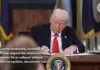
President Trump vowed to “absolutely prohibit” Sharia law nationwide, reviving a long-running legal and cultural fight over how American courts handle religion and foreign law.
Story Snapshot
- Trump said he would ban Sharia law and claimed “pockets” exist in the United States.
- Past court rulings blocked state measures that singled out Sharia as unconstitutional.
- Studies show U.S. courts sometimes consider Islamic law in narrow civil disputes.
- The clash centers on one legal system versus religious freedom and equal treatment.
What Trump Said And Why It Matters Now
President Trump told host Glenn Beck he would “absolutely prohibit” Sharia law in the United States and said there are “pockets” of it “happening in this country a little bit”. The promise speaks to a core concern on the right and left: many feel the rules are not applied fairly and leaders ignore basic law and order. Supporters hear a pledge for one clear legal standard. Critics hear a plan that risks singling out one faith for special limits.
Trump’s statement lands in a country already split by culture and class. Many conservatives see courts and agencies as too willing to bend rules for elites. Many liberals fear the government uses power to target minorities. Both sides think Washington often protects its own. This fight over Sharia taps into that anger. It raises a basic test: can the government defend one law for all without punishing a religion in the process?
How U.S. Courts Have Actually Handled Sharia
Legal records show some American courts have faced cases touching Islamic law in family or contract disputes. A study cited examples where courts considered Sharia-related terms under normal conflict-of-law rules, and sometimes found them applicable, often in private agreements. These were not parallel legal systems. They were narrow civil matters, like marriages, divorces, or deals. Judges still had to reject any term that violated the Constitution or state public policy.
That pattern fits a broader rule: courts may weigh foreign or religious rules if parties agreed to them, but only when those rules do not break American law. Congress’s research service and legal scholars have framed these clashes as routine questions of choice-of-law and religious arbitration, not as zones under separate rule. In short, judges can look at outside rules, but cannot enforce terms that deny basic rights.
Why State Bans Have Struggled In Court
Efforts to ban Sharia by name have hit a constitutional wall. In a key case from Oklahoma, a federal appeals court upheld an order blocking a state amendment that targeted Sharia. The court said the measure likely violated the First Amendment’s Establishment Clause because it singled out Islam for special disfavor and the state did not show an actual problem it solved. That ruling became a roadmap for challengers in other states.
Civil liberties groups argued that broad bans on “Sharia” and “international law” would bar judges from doing normal legal work and would stigmatize Muslim citizens. Legal experts warned such bans could also disrupt contracts and arbitration that use foreign law in limited ways, which U.S. courts sometimes honor when consistent with public policy. The lesson has been clear: blanket bans that name one faith are likely to fail in federal court.
The Policy Stakes For One-Law-For-All
Trump’s vow points to a major policy choice. Congress and states can reaffirm that only the Constitution and U.S. statutes govern. They can also direct courts to reject any term—religious or foreign—that violates basic rights. That approach aims at conduct, not creed. It protects equal treatment under the law while avoiding a rule that targets one religion by name, which courts have found suspect.
For many Americans, the deeper worry is trust. They see chaos at the border, rising costs, and a system that works for insiders. They want clarity and fairness. A focus on one neutral legal standard may help if written carefully. The record shows targeted bans struggle, but guardrails that block any rights-violating rule, from any source, have strong footing and keep faith with the Constitution.
Sources:
fedsoc-cms-public.s3.amazonaws.com, yahoo.com, ing.org, everycrsreport.com, ocpathink.org