The US’s decision to revoke Colombian President Gustavo Petro’s visa signals a firm stance against foreign leaders who challenge American authority.
Story Highlights
- Colombian President Petro’s visa was revoked after urging US soldiers to disobey President Trump’s orders.
- Petro’s remarks at a pro-Palestinian rally in New York led to diplomatic tensions with the United States.
- The US State Department cited “reckless and incendiary actions” as reasons for the visa revocation.
- Petro dismissed the revocation, citing international law and his immunity as a head of state.
Petro’s Controversial Remarks and Their Impact
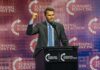
Colombian President Gustavo Petro recently found himself at the center of a storm after making controversial remarks at a pro-Palestinian rally in New York. During his speech, Petro accused President Donald Trump of complicity in genocide and urged US soldiers to disobey orders concerning the Israel-Gaza conflict. These statements, made outside the United Nations, sparked immediate backlash and resulted in the US State Department revoking his visa, citing his “reckless and incendiary actions.”
Petro’s actions have been perceived as a direct challenge to US authority and have raised questions about the propriety of a foreign leader encouraging disobedience among American military personnel. This unprecedented move by Petro highlights the tensions between his administration and the Trump administration, which has taken a hardline stance on foreign policy issues, especially regarding support for Israel.
Watch: US Revokes Colombia’s Petro’s Visa After He Asks Soldiers To Disobey Trump | Firstpost America |N18G
US-Colombia Relations Under Strain
The relationship between the United States and Colombia, traditionally strong, is now under significant strain. Petro’s leftist government has frequently criticized US foreign policy, and this latest incident only adds fuel to an already tense diplomatic relationship. The US’s decision to revoke Petro’s visa underscores the seriousness with which it views his actions and serves as a warning to other foreign leaders who might consider similar rhetoric.
Historically, such visa revocations are rare, particularly concerning sitting heads of state. This decision reflects the Trump administration’s broader strategy of maintaining strict discipline and support for its policies among allies. For Colombia, this could mean a reevaluation of its diplomatic strategies, balancing its relations with the US while adhering to Petro’s political stance and domestic interests.
The State Department announced it was revoking a visa for Colombian President Gustavo Petro after he participated in a New York protest where he called on American soldiers to disobey President Donald Trump’s orders. https://t.co/fBUSkhJf6e
— Stars and Stripes (@starsandstripes) September 28, 2025
Implications and Potential Consequences
The revocation of Petro’s visa could have far-reaching implications for both bilateral relations and international diplomatic norms. It raises critical questions about the use of visa policies as tools of foreign policy and the potential precedent it sets for future diplomatic interactions. For Colombia, the impact could be both economic and political, affecting US investment and aid, as well as internal political dynamics in the country.
While Petro has publicly downplayed the significance of the visa revocation, asserting his immunity as a head of state, the incident has sparked debate among international law experts. The unilateral action by the US challenges the norms of diplomatic immunity and could influence how other nations engage with American policies in the future.
Sources: