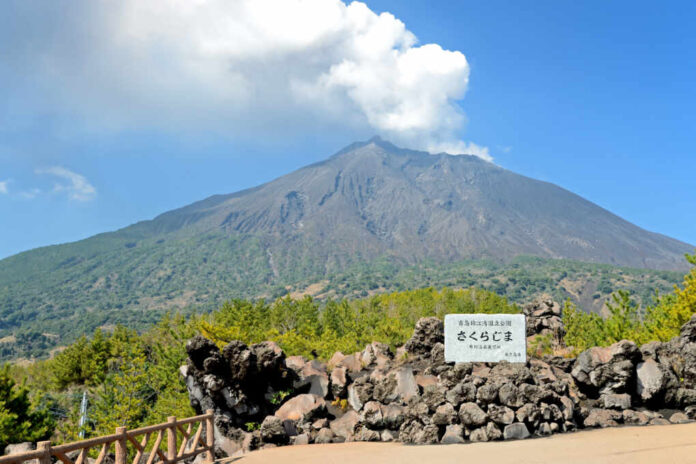
As multiple eruptions from Sakurajima volcano send ash thousands of meters into the sky, residents of Kagoshima face renewed threats to their safety and disruptions in air travel.
Story Snapshot
- Sakurajima erupted multiple times on November 16, 2025, with ash plumes reaching up to 4,400 meters.
- Over 30 flights were canceled due to ashfall and visibility concerns.
- Local alerts have been issued, urging residents to remain vigilant.
- This is the first eruption of this magnitude in over a year.
Volcanic Eruptions Disrupt Daily Life in Kagoshima
On November 16, 2025, Sakurajima volcano, located on Kyushu island near Kagoshima city, erupted multiple times, sending ash plumes up to 4,400 meters high. This eruption led to significant ashfall, local alerts, and the cancellation of dozens of flights in and out of Kagoshima Airport. The Japan Meteorological Agency (JMA) confirmed the eruptions and issued advisories for ashfall and potential pyroclastic flows.
These eruptions are notable as the first to reach such heights in over a year, disrupting air travel and prompting heightened alert statuses. Local authorities issued warnings, and residents are advised to remain vigilant. Airlines, facing operational challenges, have prioritized passenger safety, leading to at least 30 flight cancellations due to ashfall and visibility concerns.
Japan's Sakurajima volcano erupted near Kagoshima spewing a massive ash plume that disrupted air travel and marked the first eruption of this height in over a year https://t.co/TIhoyaFYWi pic.twitter.com/wlMZ5Wwaij
— Reuters (@Reuters) November 17, 2025
The Historical Significance of Sakurajima
Sakurajima has been one of Japan’s most active volcanoes, erupting almost continuously since 1955. It was originally an island but became connected to the mainland after lava flows in 1914. The volcano’s proximity to the densely populated Kagoshima city makes its eruptions a significant public safety concern. The JMA and local observatories closely monitor the volcanic activity, providing timely warnings and alerts.
In recent years, the frequency of eruptions has increased, with notable instances occurring in 2015, 2016, 2020, 2022, 2023, and 2024. These events have led to increasing alert levels and evacuation orders, emphasizing the need for ongoing vigilance and preparedness. Scientific warnings since 2016 have highlighted the potential for a major eruption within the next few decades.
Implications for the Future
The recent eruptions underscore the importance of robust monitoring and disaster preparedness in the region. In the short term, the disruption of air travel and ashfall affects local infrastructure, while the heightened alert status poses potential evacuation scenarios. Long-term implications include the continued risk of major eruptions, ongoing need for monitoring, and potential economic impacts on tourism and local businesses.
Local residents and businesses, along with travelers and airlines operating through Kagoshima Airport, are directly affected by these disruptions. The aviation sector faces operational challenges, while the tourism industry may see reduced activity due to safety concerns. These events place political pressure on authorities to maintain effective disaster response and preparedness measures.
Sources:
Sakurajima – Wikipedia
Locals on alert as Sakurajima volcano in Japan spews ash and smoke sky-high – AP Newsroom