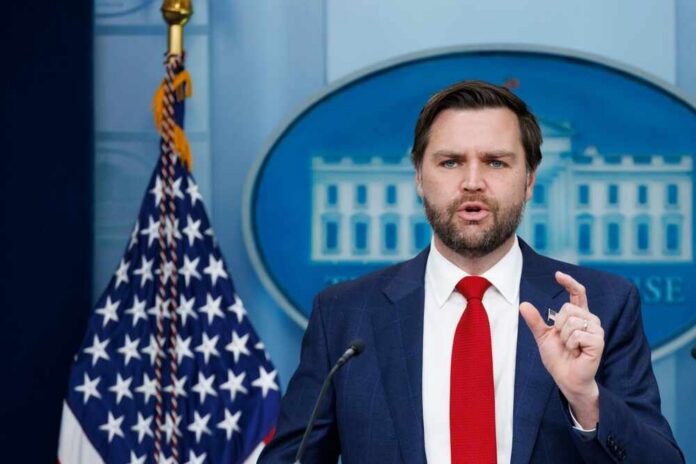
With gas prices and global security hanging on a fragile ceasefire, Vice President JD Vance landed in Pakistan to test whether Iran will negotiate—or stall while keeping its leverage over the world’s most important oil chokepoint.
Quick Take
- Vance arrived in Islamabad on April 11, 2026, as Pakistan hosts U.S.-Iran peace efforts after six weeks of war and a shaky, roughly two-week truce.
- The U.S. delegation includes Special Envoy Steve Witkoff and Jared Kushner, underscoring direct Trump-world involvement in the diplomacy.
- Iran is signaling talks may not start without a Lebanon ceasefire, tying the negotiations to regional proxy conflict.
- Core sticking points include the Strait of Hormuz, Iran’s uranium stockpile, and whether any ceasefire framework can hold.
Why Pakistan Is Suddenly the Center of U.S.-Iran Diplomacy
Vice President JD Vance arrived in Islamabad early Saturday, April 11, for talks meant to extend or solidify a ceasefire after weeks of U.S.-Iran fighting triggered by the U.S. launch of Operation Epic Fury on Feb. 28. Pakistani Prime Minister Shehbaz Sharif, who helped broker the current truce, is hosting the diplomacy as a neutral intermediary with relationships on both sides. As of mid-afternoon, no direct U.S.-Iran meeting had been confirmed.
Pakistan’s role matters because the stakes go beyond battlefield calm. The Strait of Hormuz remains the world’s most sensitive energy choke point, and disruptions there ripple straight into American household costs. That reality is why this set of talks is being watched closely by voters who feel every spike at the pump—and by taxpayers who have grown skeptical that Washington can manage foreign crises without drifting into open-ended commitments and spending.
Who’s at the Table—and What Each Side Wants
The U.S. team includes Vance, Special Envoy Steve Witkoff, and Jared Kushner, a notable presence signaling President Trump’s close personal attention to the outcome. Pakistani leaders received the delegation, and Vance held a bilateral meeting with Sharif. Iran sent a delegation led by Parliament Speaker Mohammad Bagher Qalibaf, who met Sharif separately. A U.S. official said no agreements had been reached by midday, reinforcing how preliminary the process remained.
Substantively, the agenda is narrow and hard. U.S. priorities center on securing passage through the Strait of Hormuz, limiting Iran’s uranium stockpile, and reducing the risk of wider regional conflict, including tensions connected to Lebanon. Iran, by contrast, is pressing preconditions—particularly a Lebanon ceasefire—and is reported to have conveyed “red lines” to Pakistan’s leadership. The structure of separate meetings underscores that this is still, at best, indirect diplomacy.
The Ceasefire Is Holding—But the Timeline Is Still Murky
Reporting around the ceasefire’s exact duration has varied, with descriptions ranging from a second week of truce to references that suggest a shorter span. What is clear is that the fighting lasted about six weeks before the current pause, and all sides appear to be treating the moment as fragile. That uncertainty matters because markets and militaries price risk based on what comes next: a real extension, a negotiated framework, or a return to escalation.
Trump’s Leverage: Diplomacy Backed by Readiness
President Trump and Vance have framed the talks as an “open hand” offered only if Iran negotiates in good faith, while also signaling consequences if Tehran attempts to delay or manipulate the process. Trump has also indicated the U.S. military is prepared to reload and continue operations if diplomacy fails. For many conservatives, that blend—talking while staying ready—aligns with a deterrence-first approach that aims to end conflict without projecting weakness or inviting more proxy pressure.
What This Means for Americans Watching a Tired System
For Americans across the political spectrum who believe government too often mismanages major challenges, the Islamabad talks are another test of whether Washington can secure tangible outcomes: stable energy flows, constrained nuclear risk, and fewer demands for sustained U.S. military engagement. The immediate consequences could show up quickly in oil and gasoline volatility if Hormuz security deteriorates. The longer-term question is whether any agreement can outlast politics, proxies, and preconditions on all sides.
NEW: Vice President JD Vance arrives in Pakistan ahead of critical peace talks with Iran. pic.twitter.com/jBMCRtpKKn
— Fox News (@FoxNews) April 11, 2026
As of April 11, the reality is simple: Vance’s arrival signals seriousness, but seriousness is not the same as a deal. Pakistan can host and shuttle messages, but it cannot force Tehran and Washington to compromise on uranium, maritime security, or Lebanon-linked demands. Until direct engagement produces verifiable commitments, Americans should expect continued uncertainty—and should judge success by measurable results rather than optimistic headlines.
Sources:
Vance meets with Iranian and Pakistani officials for direct …
US and Iran meet directly for peace talks in Pakistan …
Iran War Live Updates: U.S. and Iran Hold Historic High …
Vice President JD Vance arrived in Islamabad Saturday for …