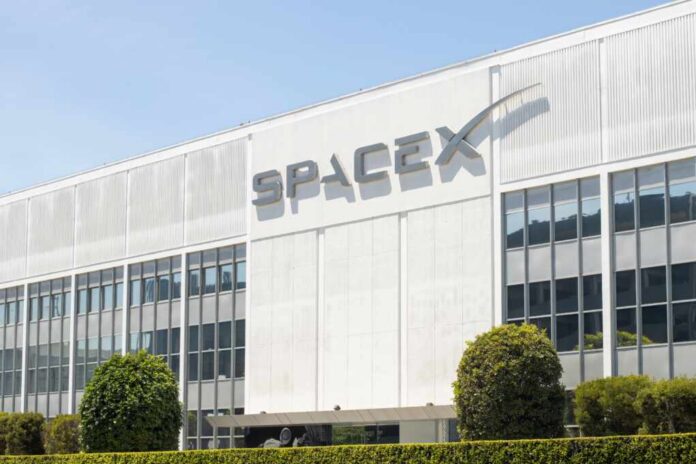
As SpaceX prepares to light the biggest rocket in history again, Starship V3’s debut is shaping up as both a technological gamble and a revealing test of how much we still trust the people running the show.
Story Snapshot
- Starship Flight 12 is slated to be the first launch of SpaceX’s redesigned V3 megarocket from Pad 2 at Starbase, Texas.
- The mission plan stacks high‑risk objectives: booster and ship splashdowns, payload deployment, and an engine relight in space.
- Launch trackers and Space.com list a 90‑minute evening window on May 21, with live coverage starting about 45 minutes before liftoff.
- Years of Starship test failures and opaque documentation fuel public skepticism about whether this is real progress or just more spectacle.
What Starship Flight 12 Is Supposed To Do
SpaceX’s twelfth Starship test flight is billed as the first outing for the company’s Version 3 hardware, flying from the new Orbital Launch Pad 2 at Starbase in South Texas.[2][3][4] Launch trackers describe a fully redesigned Starship spacecraft and Super Heavy booster, both labeled V3, with substantial modifications over earlier versions.[3] Space.com reporting says this debut V3 mission is not a simple repeat; it is planned as a test of upgraded performance and new mission capabilities rather than a bare‑bones hop.[4]
According to contemporaneous coverage, Flight 12 is designed to carry 22 dummy Starlink Version 2 satellite simulators, testing Starship’s ability to handle a real‑world style payload deployment.[4] Reporting also describes a plan for the upper stage to relight one of its Raptor engines in space and to capture imagery of the vehicle’s heat shield during reentry using the final two dummy payloads.[4] Both the booster and the ship are slated for controlled splashdowns rather than full reuse, with soft water landings targeted in the Gulf of Mexico and downrange ocean areas.[2][4]
When And How This Giant Rocket Is Expected To Launch
Multiple independent launch‑tracking sites and news outlets converge on a similar schedule for Starship Flight 12. RocketLaunch.org lists the mission for May 21 at 22:30 Coordinated Universal Time from Starbase’s Pad 2, describing it as a suborbital test flight with an ocean landing for the booster.[2] Space.com reports that SpaceX has a 90‑minute launch window opening at 6:30 p.m. Eastern time, with liftoff sometime between 6:30 p.m. and 8 p.m. Eastern if weather and systems cooperate.[1][4]
Space.com further notes that SpaceX plans to start its official livestream approximately 45 minutes before liftoff, giving viewers time to follow fueling, final checks, and any last‑minute scrubs.[1] The same reporting recounts that this launch has already slipped from an earlier internal target of May 19, underscoring how quickly timelines move in this program.[1][4] Backup dates around May 22 are mentioned in launch‑tracking and community coverage, but there is no formal public SpaceX press release in this set of documents, which limits independent confirmation of every detail.[1][2][4]
Why V3 Matters After A String Of Failures
Next Spaceflight and other trackers characterize V3 as more than a tweak, calling it the first flight of a significantly modified Starship stack, including the booster and ship.[3] YouTube analysis of SpaceX communications reports that on May 7 the company conducted a full‑duration static fire of all 33 Raptor 3 engines on Booster 19, claiming roughly 8,250 tons of thrust and demonstrating that the redesigned thrust structure and pad hardware survived the load.[1] If accurate, that kind of ground test would indicate real progress toward routine heavy‑lift operations.
At the same time, the broader record for Starship shows why many citizens on both left and right remain wary of grand promises. Prior test flights repeatedly ended in explosions, breakup during ascent, or loss of the upper stage before splashdown, as documented in public launch lists and earlier coverage.[5][6] Reports on Flight 9, for example, describe a damaged pressurization‑system diffuser and a methane pressure spike in the nose as the root of a loss of control, problems that had to be painstakingly replicated and studied on the ground. Against that history, Flight 12’s stacked objectives look ambitious and risky, not guaranteed.
Hype, Secrecy, And The Deep‑State‑Style Trust Problem
Most of what the public knows about Flight 12’s mission profile comes through mediated channels: edited SpaceX descriptions, YouTube breakdowns, and launch‑tracking sites that summarize company statements.[1][3][4] Detailed claims about Version 3 performance, such as exact power figures or structural margins, appear mainly in creator commentary rather than in official engineering documentation accessible to taxpayers and investors.[1] That imbalance forces people to either take corporate and government‑aligned narratives on faith or tune them out as more elite‑driven hype.
Starship Flight 12 is locked in for liftoff no earlier than 6:30 p.m. EDT on May 20 from SpaceX’s Starbase in South Texas. 🚀
This marks the debut of the next-gen Starship V3, the most powerful version yet, and the first test flight in over seven months.
–
–
–#SpaceX #starship pic.twitter.com/EqQPEandx4— SpaceZE (@SpaceZEcom) May 19, 2026
For Americans already suspicious that the federal government and its favored contractors answer more to boardrooms and bureaucrats than to citizens, Starship V3’s debut fits a familiar pattern. Politicians will cheer the launch as proof of national greatness, while regulators at the Federal Aviation Administration quietly manage the risk calculus, and ordinary people are left guessing how safe the system really is and who pays if something goes wrong.[4][5] Until full mission briefings, licenses, and post‑flight data are made public, Flight 12 will remain both a genuine engineering milestone and another reminder that transparency in twenty‑first‑century megaprojects still lags far behind the spectacle.
Sources:
[1] YouTube – LIVE: SpaceX Starship Flight 12 from Starbase, TX
[2] YouTube – SpaceX Starship V3 megarocket prepped for first-ever launch
[3] Web – Starship Flight 12 – Next Spaceflight
[4] Web – SpaceX’s Starship V3 megarocket finally has a debut launch date …
[5] Web – SpaceX Starship – Wikipedia
[6] Web – List of Starship launches – Wikipedia