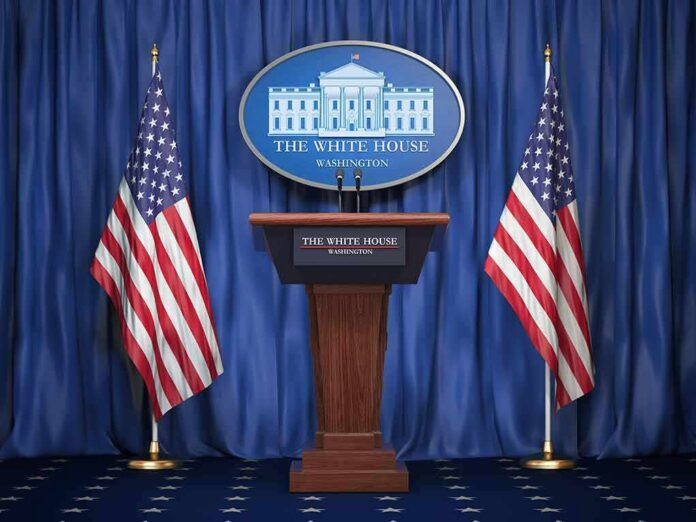
A front-page report says the White House is steering press access and suing critics while claiming to “restore” free speech—an approach that spotlights how power can chill speech even without formal bans.
Story Snapshot
- The New York Times reports the White House now controls key press access and has sued major outlets.
- Past and current lawsuits claim government retaliation against critics violates the First Amendment.
- President Trump’s executive order says he is ending federal censorship, citing prior government pressure on platforms.
- Courts continue to police retaliation, underscoring legal limits on using state power against speech.
What The New York Times Reports About White House Press Control
The New York Times reports that the White House has taken control of the previously independent press pool that tracks the president and is deciding which outlets can participate. The report also says President Trump has sued major news organizations over coverage he disputes. These actions matter because access rules and big-ticket lawsuits can raise costs for critical reporting. Press advocates have long warned that these tools can chill speech without a formal gag order.
President Trump has publicly argued that overwhelmingly negative coverage of him is “no longer free speech,” and has suggested such coverage is unlawful. That view conflicts with long-settled First Amendment principles that protect harsh criticism of public officials. When top officials frame criticism as illegitimate, that message can shape how lower-level staff handle briefings, invitations, and credentials. That is where soft pressure can become a hard edge for reporters who rely on routine access.
How The Law Evaluates Government Retaliation Against Speech
Courts apply a straightforward test for retaliation: protected speech, followed by adverse government action, motivated by that speech. That standard has appeared in many decisions and treatises on press freedom and government reprisals. The key question is not whether the official speaks back, but whether the government uses tools of state power to punish or deter the speaker. Denials of access, regulatory threats, and targeted penalties can all qualify if tied to viewpoint.
Past litigation supports the risk outlined in the Times report. In PEN American Center v. Trump, the plaintiffs alleged official acts aimed at stifling speech and the free press; a federal court allowed the case to proceed on standing and set a path for review. The case later settled, leaving that ruling intact. These outcomes signal that courts are alert to retaliation concerns. They also show that legal exposure rises when officials’ words blend with concrete steps that change access or impose costs.
Trump’s “End Federal Censorship” Order, And The Tension It Creates
On day one of his second term, President Trump signed an order titled “Restoring Freedom of Speech and Ending Federal Censorship.” The order declares that the previous administration infringed speech rights by pressuring platforms to suppress content and bars federal employees from using resources to abridge speech. The Justice Department has since settled related litigation that accused prior officials of inducing platform moderation, implementing this policy direction. Supporters call this a win against censorship-by-proxy.
FIRE is defending pollster J. Ann Selzer against Trump's lawsuit over her Iowa poll, which is mentioned in this NYT article. People like @DougJBalloon routinely falsely claim @TheFIREorg does not concern itself with combatting free-speech suppression from the right.
Otherwise, I… https://t.co/uWEFUKKKi5
— Benjamin Ryan (@benryanwriter) September 13, 2026
That stance sits beside actions critics view as suppressive. The Times reports the White House now decides who can join the presidential press pool, and notes lawsuits against major outlets. Courts have also pushed back on speech restrictions tied to funding or status. A federal judge ruled that parts of an order to defund public broadcasters violated free speech rights, calling it unlawful and unenforceable. Together, these moves and rulings show a live tension: anti-censorship rhetoric paired with selective pressure on disfavored speakers.
Why This Matters To Readers Across The Spectrum
People on the right and left worry that elites use government levers to shape what we can say and see. Conservatives recall social media pressure campaigns and black-box moderation. Liberals see crackdowns against journalists, students, and nonprofits as payback. The common thread is power. When any administration rewards friends and freezes out critics, the public loses trusted information. That harms families trying to navigate costs, safety, and opportunity in a country already strained by distrust.
Here is the bottom line. Courts can and do check retaliation, but they act only after harm begins. Control over press access, heavy lawsuits, and funding threats work in real time. The New York Times report, the PEN America litigation record, and recent rulings all point to the same civic rule: government may argue, but it may not punish speech because of viewpoint. Citizens should track not just what leaders say about free speech, but how they use the machinery of the state.
Sources:
mediaite.com, justice.gov, reuters.com, globalfreedomofexpression.columbia.edu, aljazeera.com, reason.com, nytimes.com, law.yale.edu, nbcnews.com