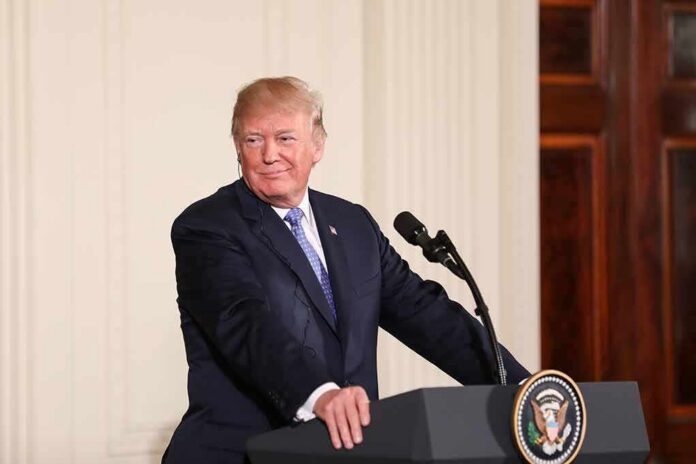
At the United Nations, President Trump said the United States “totally rejects” any global plan to control artificial intelligence, turning a policy fight into a test of national power and trust.
Story Highlights
- Trump rejected a centralized international authority over artificial intelligence at the United Nations.
- The White House framed artificial intelligence as a race the United States must win against China.
- The United Nations chief urged global guardrails, warning risks are moving faster than rules.
- The clash reflects a larger struggle between national control and global cooperation on fast-moving tech.
What Trump Said At The United Nations
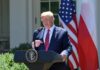
President Trump told the United Nations General Assembly that the United States will not accept an international body that writes the rules for artificial intelligence. He said the country “totally rejects any attempt to construct a globalist scheme to control” the technology, tying his stance to national sovereignty and U.S. leadership. Reports from the event say he argued against new global oversight and against slowing frontier development that could help rivals gain ground.
Trump also cast artificial intelligence as a strategic race. He warned that whoever leads the field will shape global power. He said the United States must keep its edge over China and should avoid rules that slow innovation or restrict advanced model work. Outlets covering the speech quoted him saying the U.S. cannot afford to fall behind and that innovation speed matters for national security and the economy.
Why This Clash Matters For Ordinary Americans
Artificial intelligence now touches jobs, news, health, finance, and national defense. Many Americans already worry about deepfakes, scams, biased tools, and job loss. Others worry that heavy rules will kill new companies and push good jobs overseas. This fight at the United Nations puts those fears on a world stage. It asks who should set the guardrails, and whether those rules help families and small businesses or serve the same elites people say have failed them.
Supporters of Trump’s stance say Washington should not hand power to unelected global bodies. They argue past global deals often raised costs, slowed industry, and gave advantage to countries that ignore rules. They see artificial intelligence as a lever to cut prices, boost productivity, and onshore work, if the United States moves fast. They fear a centralized rulebook could lock in the lead of large foreign players and blunt U.S. energy and momentum.
What The United Nations And Allies Are Asking For
United Nations Secretary‑General António Guterres pushed for shared safety rules, saying risks from fast‑moving systems “cannot be ignored.” He urged countries to share information on dangers, test high‑risk systems, and set guardrails that protect people, including children. His case is that threats do not stop at borders, so no single nation can manage them alone. He placed Trump’s view at odds with broad calls for global coordination.
United Nations outlets describe years of work to build common understanding on safety, rights, and fair access. They point to frameworks and human‑rights principles that many members already endorse. To them, “responsibility” means clear oversight and transparency so people can trust how systems are used. They argue that trust is a base for real innovation, not a brake on it, and that shared standards can prevent the worst harms while markets grow.
The Real Policy Gaps And What Comes Next
Public reports document Trump’s quotes and posture, but they do not include a formal treaty text he rejected or a White House memo that lays out a full plan. That leaves two open items. First, what exact global model was on the table in New York. Second, what domestic guardrails the administration backs if it refuses a centralized international rulebook. Those answers will shape how companies build and how other nations respond.
It's possible that no human will ever understand all dangers of AI, but I'm sure Trump and most members of Congress have absolutely no clue, so any regulation of AI must be designed by experts. That's problematic in an administration that routinely ignores scientific expertise.
— David Matheny (@DavidMatheny1) September 22, 2026
For citizens, the stakes are simple but high. Weak rules could invite fraud, bias, and dangerous tools. Overly broad rules could smother new services and raise costs. A balanced path could pair fast innovation with clear duties for the highest‑risk uses. Congress and allies can still pursue joint testing, cross‑border incident reporting, and export controls, while keeping core choices at home. Voters will judge which mix protects freedom, safety, and a fair shot at the American Dream.
Sources:
insiderpaper.com, livemint.com, nzherald.co.nz, politico.com, nbcnews.com, ground.news, foxbusiness.com