Hundreds of displaced Palestinians in Deir al-Balah are lining up for scarce water and food as community kitchens shut down and aid stalls.
Story Snapshot
- Displaced families in central Gaza report shrinking food lines and empty water tanks.
- United Nations teams warn disease is spreading amid crowding and poor sanitation.
- Over 70 percent of Gaza depends on trucked water that funding gaps now threaten.
- Aid groups say crossings and access limits keep supplies from meeting daily needs.
What families in Deir al-Balah describe today
Associated Press footage from Deir al-Balah shows crowded tents and long lines for basic goods. Local residents say charity kitchens have closed, and people now compete for small rations. Families report many people sharing one tent and searching daily for clean water. Parents line up before dawn hoping for bread or a water refill. These accounts match months of warnings from aid groups about shrinking aid and rising need in central Gaza.
United Nations reports describe the same strain across the strip. Officials say aid flows through limited crossings do not keep up with demand. Stocks of food and medical items run low, and many families depend on what little arrives. Reporters have seen long bread lines and shuttered kitchens before. The pattern now shows up again in Deir al-Balah, where people say the last open services cannot reach everyone who fled to the area.
Water access has become the breaking point
United Nations humanitarian updates state that more than 70 percent of people in Gaza now rely on trucked water. Those trucks need steady fuel and funding. Both are tight, which puts deliveries at risk. When trucks slow, families turn to salty or unsafe sources. Health experts warn that this drop in safe water triggers stomach illness and skin disease, especially in crowded shelters and tent camps across the strip.
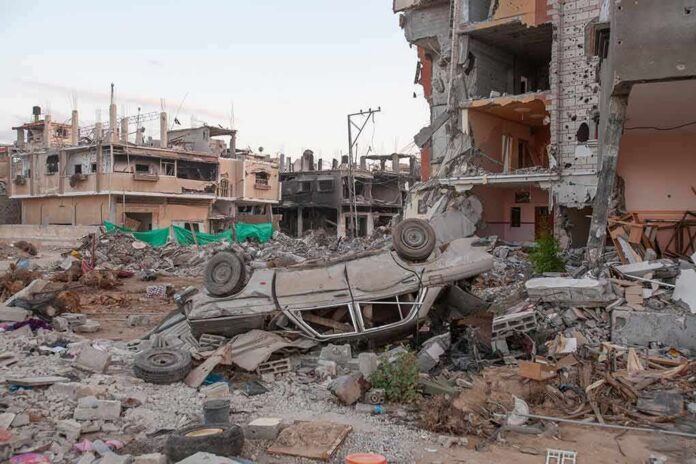
United Nations coordination offices also detail repeated damage and shutdowns on main supply lines into Gaza City and other areas. When pipes fail or power goes out, neighborhoods see taps run dry. Aid partners try to patch gaps with more trucking and small filling points, but these stopgaps cannot meet growing demand. The result is a daily scramble for drinking water and a sharp rise in the price of every clean liter that makes it through.
Disease risks rise as sanitation fails
United Nations humanitarian monitors report the spread of acute watery diarrhea and skin disease in Gaza. They link this to crowding, dirty water, and weak sanitation. Families who share latrines and lack soap face higher risk of outbreaks. Children and older adults get hit first and hardest. Health workers warn that even when enough calories arrive, unsafe water can still push malnutrition and illness higher, especially among the very young.
Aug 15, 2026 @AP
"100's of displaced Palestinians have taken shelter in the Gaza city of Deir al-Balah & currently fighting for common needs like water & food w/a decline in the number of charity kitchens serving -in the war-ravaged Gaza Strip."https://t.co/rSofFoFEIC— Digital Missionist (@DMissionist1) August 15, 2026
Relief agencies say the crisis is not only about today’s shortages. Years of conflict and damage to water and sewage systems set the stage for collapse. Each new wave of displacement then overloads what remains. With aid trucks limited and repairs slow, people live from one delivery to the next. That cycle fuels anger and fear on all sides because it shows systems built to serve civilians are not working when they are needed most.
Why this matters beyond Gaza
American readers see a familiar pattern in this story: leaders debate while families wait in line. The details are local, but the warning is wider. When basic systems fail, the poorest suffer first, and the bill comes due later in disease and instability. Clear goals could help: reliable access routes for aid, steady fuel and funding for water trucking, and safe windows for repair crews. Without those steps, the crisis in Deir al-Balah will spread further and last longer.
Sources:
youtube.com, apnews.com, un.org, ochaopt.org