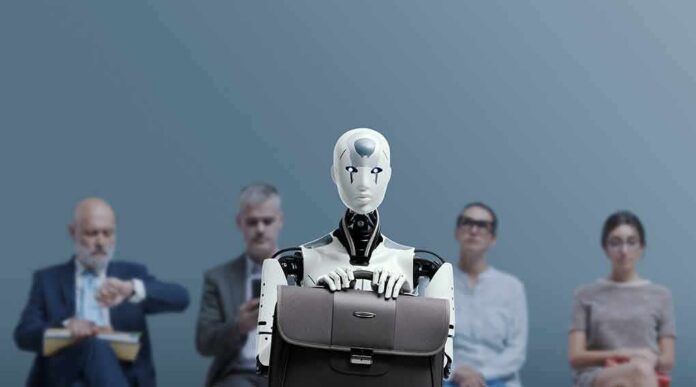
A Chinese automaker just said a humanoid robot “walked off” a new production line, pushing factory bots from hype toward storefront reality.
Story Highlights
- XPeng says its IRON humanoid robot rolled from a newly commissioned production line in China.
- XPeng targets high automation on the line and plans deployments before broader deliveries in 2027.
- Unitree unveiled an upgraded G1 Plus with added vision and touch sensing for real tasks.
- Reports note this is a step toward mass deployment, not proof of full-scale autonomy yet.
XPeng Commissions Humanoid Production Line in China
XPeng announced that its humanoid robot production lines are now commissioned and that the first IRON unit “autonomously walked off the lines.” The company framed this as a world-first for an advanced humanoid built on active production equipment, not a lab floor. XPeng also said more than 80 percent of the line’s core processes are automated, signaling a push for consistent quality and speed as it shifts from prototypes to planned field use.
Reporting on the announcement places the milestone in a larger rollout plan. XPeng aims to move toward mass production by the end of 2026, start real deployments in its own stores and campuses, and pursue deliveries in China and overseas in 2027. Outlets covering the news stressed that commissioning a line is an early phase. It prepares for higher output but is not the same as steady, high-volume manufacturing in practice.
What “From Line to Store” Could Mean for Daily Life
XPeng’s plan to place humanoids in showrooms and company sites suggests clear first jobs. Tasks could include greeting, guiding, stocking light items, or moving goods between back rooms. Companies often start in controlled spaces they own because layouts are known and risks are easier to manage. If these pilots work, they can scale to more sites. That path mirrors how self-checkout, warehouse scanners, and delivery bots entered work life over time.
For everyday people, the shift matters because service work is where most of us meet automation. If humanoids can follow rules, read rooms, and stay safe around crowds, they will change how stores, campuses, and clinics run. If they cannot, they will drain budgets and time. The stakes are not just cool tech. They touch jobs, prices, and how fast help arrives when lines are long or staff is thin. Careful trials will shape that outcome.
Unitree Pushes Sensors and Training for Real Tasks
Unitree, another major player, launched the G1 Plus with a binocular and wide-angle dual vision setup, touch sensors in the head shell, and a removable battery for about two hours of work. The company also described a foundation model trained on millions of examples and thousands of hours of real robot data to support dozens of tasks. These moves aim at better hand-eye use, grasp control, and recovery when scenes change fast.
Better cameras and touch can help robots judge depth, feel slip, and avoid bumping people or shelves. Still, sensors are only one piece. Control software must fuse vision and touch into clear next steps under pressure. Battery swaps must be quick so units stay useful across a shift. Training data must reflect messy aisles and human traffic. Unitree’s push shows vendors know these gaps. The question is how well upgrades handle noise outside staged demos.
From Demos to Deployments: Why This Step Matters
The record now shows more tests outside labs, with planned placements in stores and campuses rather than only on trade show floors. That shift matters because performance in real buildings, with glare, crowds, and clutter, exposes weak points fast. These pilots can prove whether humanoids help or hinder staff. They also reveal costs that press on budgets, like downtime, repairs, and human supervision that can erase labor savings if too high.
At the same time, coverage reminds readers that a commissioned line is not yet mass production, and mass production is not proof of reliable autonomy. Those are separate milestones. Today’s news is about building capacity and taking the next step toward field work. The next checkpoints are endurance, operator intervention rates, and safety near people. Clear, public benchmarks would help buyers compare claims across brands before signing big contracts.
Why Americans Across the Aisle Should Care
American families watch prices, job security, and service quality. If humanoids lower costs and wait times, shoppers and patients benefit. If they replace workers without better services, the gains flow to a few firms. Citizens left and right already doubt that big promises match real results. Transparent trials, clear safety rules, and honest cost math can prevent another case where hype races ahead while the public pays for fixes after problems appear.
Sources:
reason.com, xpeng.com, cnevpost.com, benzinga.com, technode.com, blog.robo2u.com