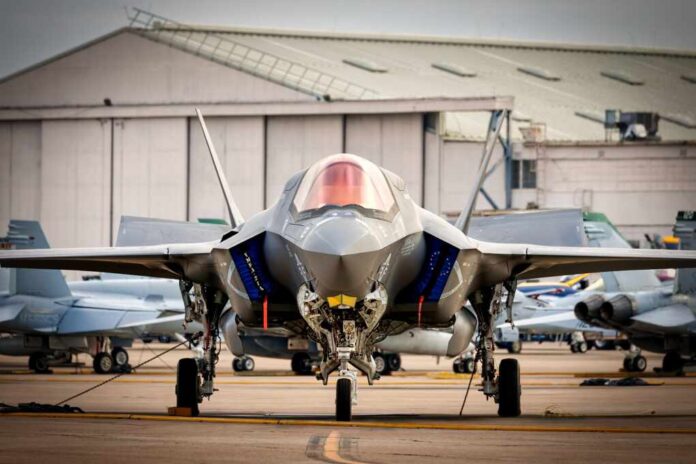
Israel is pressing the Trump administration to use America’s most advanced military technology—the F-35 stealth fighter jet—as a powerful bargaining chip in Middle East diplomacy. Jerusalem is demanding that the kingdom of Saudi Arabia normalize relations with Israel by formally joining the Abraham Accords before any sale of the sophisticated aircraft is approved. This high-stakes strategy aims to link U.S. defense exports directly to Israel’s long-sought goal of expanded regional peace, putting the Trump administration in a difficult position between honoring a key ally’s security concerns and advancing new diplomatic possibilities.
Story Highlights
- Israel wants F-35 sales to Saudi Arabia conditioned on normalizing relations with Jerusalem.
- The strategy involves linking America’s most advanced fighter jet technology to Middle East diplomacy.
- Saudi Arabia would need to join the Abraham Accords as part of any normalization deal.
- Trump administration faces pressure to use military sales as diplomatic leverage.
Israeli Diplomatic Strategy Emerges
Israeli officials are actively lobbying the Trump administration to attach strict diplomatic conditions to any potential F-35 sale to Saudi Arabia. The strategy represents a calculated attempt to use America’s most sophisticated military technology as leverage for achieving long-sought normalization between Israel and the Saudi kingdom. This approach demonstrates how foreign allies can influence U.S. defense export policies to advance their own strategic interests.
Israel urges US to approve F-35 sale to Saudi Arabia only if Riyadh agrees to full diplomatic normalisation pic.twitter.com/qrYM4HunYz
— Geopolitic Feed (@GeopoliticFeed) November 16, 2025
Abraham Accords Expansion at Stake
The normalization proposal would require Saudi Arabia to formally join the Abraham Accords, the groundbreaking 2020 peace framework that established diplomatic relations between Israel and several Arab nations. Israeli leadership views Saudi participation as the ultimate prize in Middle East diplomacy, given the kingdom’s influence throughout the Muslim world. The F-35 sale represents unprecedented leverage, as Saudi Arabia has long sought access to America’s most advanced fighter aircraft.
Strategic Implications for American Interests
This lobbying effort places the Trump administration in a complex position where foreign policy intersects with defense industry interests. While expanded Abraham Accords would strengthen regional stability and counter Iranian influence, conditioning military sales creates precedent for diplomatic coercion. The decision will test whether America prioritizes strategic partnerships with existing allies over potential new relationships in the volatile Middle East region.
Regional Power Balance Considerations
The F-35 sale to Saudi Arabia would significantly alter regional military capabilities, providing the kingdom with stealth technology capable of penetrating advanced air defense systems. Israeli concerns about maintaining qualitative military edge drive their insistence on diplomatic concessions before approving such transfers. The outcome will likely influence future U.S. arms sales policies and demonstrate how allied nations can shape American foreign policy through strategic lobbying efforts.
Watch the report: Axios: Israel wants U.S. F-35 sale conditioned on Saudi normalization
Sources:
Scoop: Israel wants Trump to condition F-35 sale to Saudi Arabia on Israel normalization
Palestinian Officials: Saudi Arabia Will Not Normalize Ties With Israel Under Netanyahu Gov’t
Israel wants F-35 sale to Saudis conditioned on normalization — report
Saudi Arabia seeks regional dominance with F-35 deal, expert says