

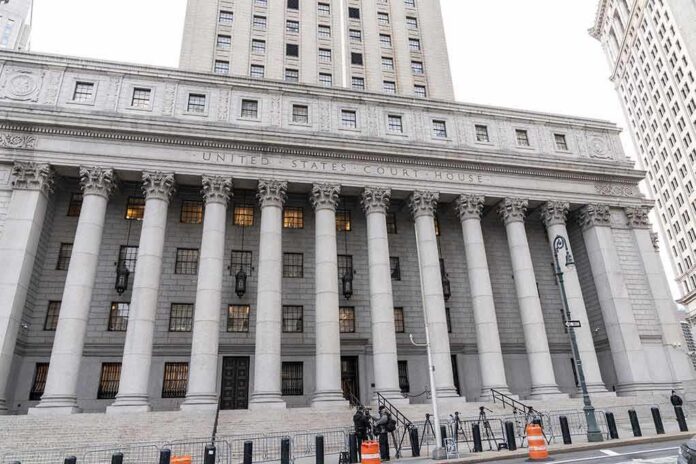
A federal judge ordered New York City to give Immigration and Customs Enforcement a filtered list of shelter residents tied to serious crimes, signaling the courts will press cities to cooperate on targeted immigration enforcement.
Story Snapshot
- A federal court compelled New York City to comply with an Immigration and Customs Enforcement subpoena, as narrowed.
- The order directs use of a special master to share only names and birth dates linked to serious criminal histories.
- Judge Lewis A. Kaplan ruled the city did not prove the production would be unduly burdensome.
- The case highlights a growing clash between federal enforcement and local sanctuary rules.
What The Judge Ordered And Why It Matters
Judge Lewis A. Kaplan of the Southern District of New York ordered New York City to comply with an Immigration and Customs Enforcement administrative subpoena, as modified by the court. The order says the request is relevant to an investigation into whether certain residents are subject to deportation, and that the court had “no choice but to compel the subpoena’s enforcement,” with limits to protect scope. The court applied the legal standard for administrative subpoenas and found the request met relevance and procedure tests.
The ruling rejects New York City’s broader effort to block disclosure from a Bronx shelter. The judge concluded the city had not shown that producing the list would be unduly burdensome, a key hurdle in subpoena fights. The court-approved process narrows the data to names and birth dates of residents who match specified serious criminal histories and uses a special master to screen and transmit only the qualifying names to Immigration and Customs Enforcement.
How The Request Was Narrowed
Immigration and Customs Enforcement first issued a subpoena in August 2025, seeking names and birth dates of residents at two city shelters, according to reports. After the city objected, the government narrowed its ask to residents associated with certain serious criminal histories, and agreed to involve a special master to filter results. The final order centers on a Bronx shelter and confirms the court’s focus on specific identifying data—names and dates of birth—rather than full shelter files.
The judge’s approach blends enforcement with limits. The special master screens shelter rosters and shares only matches that meet the serious-crime criteria. This step aims to reduce overreach and protect non-implicated residents. Still, the record does not spell out the full list of qualifying offenses or how evidence thresholds are applied. The public documents also do not explain data quality checks for errors, duplicates, or turnover in shelter rosters.
The Clash With Sanctuary Policies
Mayor Zohran Mamdani’s administration argues the federal government is using subpoena power to get around the city’s sanctuary rules. City policy says information gathered for city services should not be shared with federal immigration authorities unless the law requires it, and bars non-local law enforcement from non-public city spaces without a judicial warrant. City officials warn that sharing shelter data can scare people from seeking help and turn city staff into de facto deportation agents.
Mamdani lost.
New York City fought to keep shelter records from ICE, even after the federal government accepted a screening process focused on people with serious criminal histories. On November 6, Judge Lewis Kaplan ordered enforcement of the subpoena through a special master.
— Fay Moore (@MooreFay) November 9, 2026
The court’s order does not decide any person’s immigration status or deportation outcome. It enforces a process to share limited data for an ongoing investigation. That line matters for both sides. Federal authorities gain a path to pursue leads tied to serious crimes. City leaders keep some protections through the special master and a narrowed scope. The tension remains: federal law expects cooperation on relevant records, while local policies aim to protect access to services.
Broader Trend: Federal–Local Standoff
This fight echoes a larger pattern seen across several states. When local governments decline voluntary cooperation, Immigration and Customs Enforcement turns to administrative subpoenas to obtain records it says are relevant to removal cases. Past efforts targeted information like criminal records, addresses, and photographs for people suspected of violating immigration law. The New York case shows courts will enforce these subpoenas if the agency shows a lawful purpose and reasonable relevance.
What To Watch Next
Key unknowns could shape outcomes. The public record does not specify the full offense list used by the special master, how errors will be caught, or how often the roster will be updated as residents move in and out. The court’s order sets a legal path, but the real-world impact depends on data accuracy and follow-through by all sides. Future filings or reports may show how many names are sent, and what enforcement actions, if any, follow.
Sources:
zerohedge.com, nydailynews.com, politico.com, law.justia.com, immigration-analytics.com