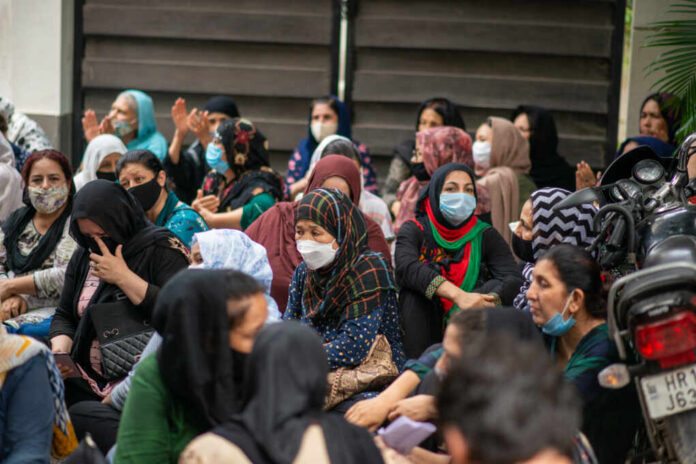
Pakistan’s mass expulsion of Afghan refugees—1.6 million departed since 2023, with 132,000 forcibly deported—exposes how open-border policies collapse when security threats mount, vindicating concerns that uncontrolled migration strains resources and destabilizes nations.
Story Snapshot
- Pakistan has expelled approximately 1.6 million Afghan refugees since September 2023, including those registered with the UN, marking a drastic policy shift.
- The policy is driven by a severe security crisis linked to Pakistani Taliban (TTP) militants allegedly operating from Afghan sanctuaries.
- The deportations, which include 132,000 forcibly deported individuals, are justified by the government as necessary for national security and economic stability.
- Critics condemn the expulsions as violations of the non-refoulement principle under international law.
Pakistan Prioritizes National Security Over Humanitarian Frameworks
The Government of Pakistan initiated a policy shift in September 2023 that has resulted in the mass deportation of Afghan refugees. Approximately 1.6 million Afghan refugees have departed since the policy began, including 132,000 forcibly deported individuals. This dramatic action is publicly justified by the government as a necessary measure to address an acute domestic security crisis. Pakistan’s military and government attribute a surge in terrorist attacks—including a death toll of over 1,500 Pakistanis in 2024 alone—to the Tehrik-e-Taliban Pakistan (TTP), which they accuse Afghanistan’s Taliban government of harboring.
The escalation of cross-border tensions, including Pakistani air strikes on Kabul and Kandahar in October 2025, demonstrates the military dimension of this security threat. Pakistan maintains that the presence of the large refugee population complicates security operations and provides potential cover for militants.
🚨🇵🇰 Pakistan accelerates efforts to expel Afghans amid rising tension: media
Pakistan has either deported or forced nearly 1 million of the roughly 3 million Afghan refugees in the country to return to Afghanistan this year. pic.twitter.com/W2SKo4QRUb
— Sputnik India (@Sputnik_India) November 30, 2025
Scope and Mechanism of Mass Deportation
The deportation policy initially targeted undocumented migrants but was expanded in September 2025 to include UN-registered refugees holding Proof of Registration (PoR) cards, a group comprising approximately 1.5 million people. This policy shift reflects the government’s determination to reduce the total refugee population of 2.8 million Afghans, regardless of international legal frameworks.
The deportations are enabled by Pakistan’s status as a non-ratifying state of the Geneva Convention, meaning it is not bound by the international legal norm of non-refoulement (prohibiting the return of individuals to countries where they face persecution). The government has systematized the process by shutting down 54 refugee camps and establishing citizen reporting systems in Punjab province to identify individuals without legal status.
Resource Strain and Violation of International Norms
The security crisis is compounded by Pakistan’s severe economic challenges, including high inflation and currency devaluation. The government has prioritized citizen welfare, arguing that the economic burden of supporting 2.8 million refugees—coupled with the security threat—is unsustainable.
International organizations, including Amnesty International and the UN Office of the High Commissioner for Human Rights, have strongly condemned the deportations. They assert that the policy violates international humanitarian principles and creates severe risks for the individuals being returned to Taliban-controlled Afghanistan. The failure of international refugee frameworks to enforce compliance without state cooperation is highlighted by Pakistan’s successful defiance, setting a precedent that other nations may observe and potentially follow.
Sources:
The Endless Exile of Afghan Refugees in Pakistan
Refugee Council Australia: Marking Four Years of Taliban Oppression
RFE/RL: Refugees’ Toll: Afghan-Taliban Pakistan Tensions