Six Flags retired its headline X2 roller coaster after months of closure and a wave of brain-injury lawsuits, sharpening questions about who protects riders when thrills go wrong.
Story Snapshot
- Three new lawsuits allege X2 caused traumatic brain injuries and was defectively designed.
- Six Flags says X2 passed many safety tests but was retired after guest confidence dropped.
- A prior wrongful-death case over X2 settled; the medical examiner found blunt head trauma.
- California opened an inspection after a July incident; the ride stayed closed since July 12.
What Changed: Retirement After Lawsuits And A Months-Long Shutdown
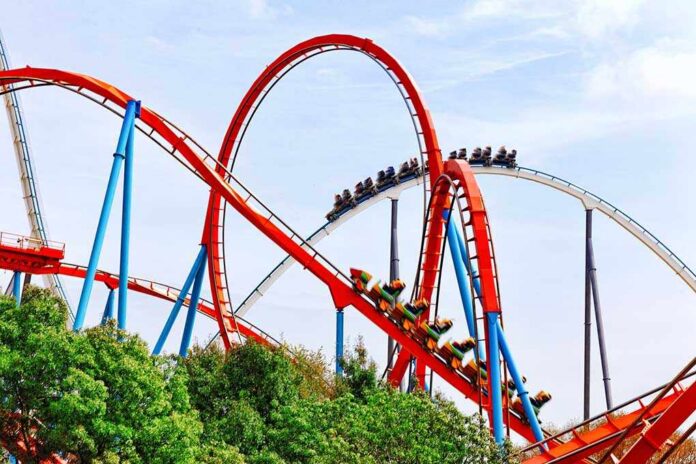
Six Flags Magic Mountain said it would permanently retire X2 after keeping the ride closed since July 12. Park leadership said the coaster had passed many safety checks. They said closing it was “the right thing to do” because guest trust had suffered. The move followed three new lawsuits that claimed the ride’s design caused traumatic brain injuries. Company statements said it would not comment on ongoing cases while stressing its broader, multi-layer safety program.
Reporters also tied the retirement to a pattern of alleged injuries over several years. The recent suits describe riders who collapsed, needed surgery, or were hospitalized after riding. Plaintiffs’ lawyers say they now represent more than 100 people who report brain injuries linked to X2, though that figure comes from the firm itself. The ride’s theme included rotating seats and head-first drops that marketed intense motion. That branding fed claims that the experience exposed riders to unsafe rotational forces.
The Legal Landscape: Allegations, A Settlement, And A Dispute Over Science
Three new complaints filed in California accuse Six Flags and the ride’s manufacturer of a defective design and failure to warn. The filings name riders who say they suffered serious neurological harm and lasting effects. A separate wrongful-death case tied to a 2022 ride ended in an August settlement. In that matter, the county medical examiner found death from blunt head trauma and listed an amusement-ride accident as the cause, adding weight to claims of severe risk even though no trial verdict set legal fault.
Defense voices dispute the injury mechanism. A manufacturer-linked biomechanical expert cited in coverage said the coaster could not have produced the forces claimed in at least one case. Six Flags points to third-party inspections, insurance reviews, in-house engineering checks, and trained operators. That clash previews a core question for any jury: did X2’s motion profile load the brain beyond safe limits, or are these rare, tragic outcomes within normal ride risk? For now, the public record shows claims and counterclaims, not a final ruling.
Regulators And Oversight: Why States, Not Washington, Call The Shots
California’s workplace safety agency opened an inspection after a reported July incident. The state-focused process helps explain why news breaks through lawsuits, not federal findings. In the United States, the Consumer Product Safety Commission oversees mobile rides like traveling carnivals. But fixed rides in permanent parks fall to states. That patchwork can leave families guessing about standards, testing, and who steps in when something looks wrong.
Six Flags Magic Mountain is retiring its famous X2 roller coaster amid lawsuits alleging serious brain injury caused by the ride. https://t.co/pj2atjPUcy
— The Boston Globe (@BostonGlobe) September 29, 2026
Industry groups point to very low injury rates at permanent parks across millions of rides each year. They cite layers of engineering controls, redundant systems, and strict training. Yet outlier events still matter when the harm is severe. People on the right and left see a common problem here: big operators and insurers control the data, while victims fight case by case to surface facts. Trust erodes when answers sit behind legal walls and confidential settlements.
What To Watch Next: Evidence, Engineering, And Public Trust
Court discovery will be key. Lawyers can seek design drawings, maintenance logs, and safety memos. They can request expert reports on rotational forces, restraint design, and seat geometry. Medical records and imaging could show whether injuries match a specific motion pattern. Independent ride-forensics modeling could test claims about angular loads. If a clear defect path emerges, expect pressure for changes beyond one park. If not, the debate may shift back to rare risk versus fear.
For families, one lesson stands out. Flashy claims of “more extreme” can mask complex physics. Riders trust that engineering, inspections, and regulators set a safe line. When that trust breaks, companies often choose retirement over a long public fight, even while denying fault. That choice may reduce risk today, but it leaves a bigger civic question: in a system run by powerful interests and slow institutions, who ensures safety is proven, not assumed?
Sources:
washingtontimes.com, nbcnews.com, 6abc.com, lawcommentary.com, bostonglobe.com, cnn.com, hollywoodreporter.com, foxla.com, huffpost.com, abcnews.com, theguardian.com, courts.wa.gov, caselaw.findlaw.com