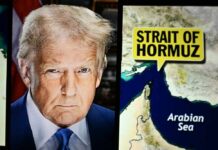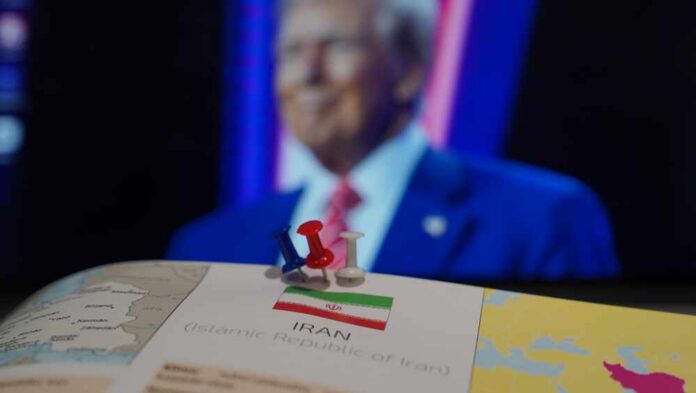
Iran’s decision to cut off direct talks with the U.S. after Trump’s “whole civilization” warning shows how fast a high-stakes showdown can slide from diplomacy into raw power politics—right as the world’s most critical oil chokepoint hangs in the balance.
Quick Take
- Iran suspended direct diplomatic communications with the United States after President Trump issued escalating threats tied to a deadline to reopen the Strait of Hormuz.
- Multiple reports say indirect negotiations continue through mediators including Pakistan, Egypt, and Türkiye, even as direct channels go dark.
- U.S. strikes reportedly hit Kharg Island and bridges in Iran, followed by Iranian retaliation targeting U.S. partners in the region.
- Conflicting accounts remain about whether Iran also shut down indirect message exchanges, underscoring fog-of-war uncertainty.
- Iran’s internal internet shutdown has limited independent verification, increasing the risk of misinformation driving public pressure and policy.
Iran Cuts Direct U.S. Contact as Trump’s Hormuz Deadline Nears
Iran suspended direct communication with the United States after President Donald Trump publicly threatened catastrophic consequences if Tehran did not meet a stated deadline to reopen the Strait of Hormuz. Several outlets described the cutoff as a response to Trump’s rhetoric, not necessarily a total collapse of diplomacy. The practical result is a thinner margin for error: fewer trusted channels to clarify intentions, deconflict military activity, and prevent miscalculation in a rapidly escalating confrontation.
Mediators have become the central nervous system of any remaining negotiations. Reporting identified Pakistan as a primary go-between, with Egypt and Türkiye also involved. U.S. Vice President JD Vance and special envoy Steve Witkoff were cited as engaged in the backchannel process. That structure matters because it shifts crisis management away from direct state-to-state contact and toward message relays—slower, easier to distort, and more vulnerable to political posturing on all sides.
Strikes, Retaliation, and the Strategic Weight of Kharg Island
Military activity reportedly continued even as diplomats searched for off-ramps. U.S. forces were described as striking Kharg Island—widely known as Iran’s main oil export hub—along with bridges across the country. Iran, in turn, launched missiles toward Israel, Saudi Arabia, and Bahrain, according to regional reporting, and the UAE was reported to have intercepted incoming missiles and drones. Each step widens the conflict’s footprint and forces more governments into immediate defense decisions.
The Strait of Hormuz is the pressure point that turns a regional fight into a global economic shock. When shipping lanes face disruption—whether by threat, sabotage, or escalation—energy prices can spike quickly, with ripple effects on inflation and household costs. For Americans already wary of high prices and policy-driven energy scarcity, the episode highlights a hard reality: foreign crises still reach Main Street fast, and the U.S. government’s choices can either limit or amplify that pain.
Conflicting Claims About “All Channels” and What’s Knowable Right Now
Not every report aligned on what Iran actually shut down. One account relayed claims from Iran’s state-run Tehran Times suggesting Iran halted “all diplomatic and indirect channels,” while other reporting indicated indirect talks remained active through mediators. This is more than a technical dispute. If indirect channels are truly frozen, the risk of accidental escalation rises sharply. If they remain open, the cutoff may function as symbolic leverage—signaling defiance while keeping bargaining options alive.
Internet Blackout and the Domestic Politics of War Messaging
Iran’s reported internet shutdown has limited outside reporting and independent verification from inside the country. Information constraints can protect a regime’s narrative during crisis, but they also increase uncertainty for everyone else—markets, allies, and adversaries alike. In a media environment already saturated with viral clips and partisan spin, reduced visibility makes it easier for worst-case assumptions to dominate. That dynamic can push leaders toward tougher public lines, even when private talks might still be viable.
Here We Go: Iran Cuts Off Direct Communication With US, Report of Iranians at Bridgehttps://t.co/udpE8JE9y5
— RedState (@RedState) April 7, 2026
For the Trump administration, the episode tests an approach that mixes maximal pressure with conditional openness to negotiation. Trump was reported to have left the “door open” while demanding major concessions, including surrender of enriched uranium and commitments tied to enrichment going forward. Iran, meanwhile, reportedly offered a 10-point counterproposal featuring an end to hostilities, compensation, and sanctions relief. With both sides signaling strength, mediators may be the only remaining path to prevent an energy and security crisis from hardening into a longer war.
Sources:
Iran Cuts Direct U.S. Communications After Trump Threat as Cease-Fire Talks Continue
Trump leaves door open as Iran cuts off direct contact ahead of 8 p.m. deadline
Iran cuts off direct communications with US – WSJ
Iran-US Diplomatic Ties Cut After Trump Threat Over Strait Of Hormuz; Israel-Iran War Live Updates
Iran media say pressure not talks led to US u-turn
Iran cuts direct diplomacy with US amid rising tensions ahead of Trump’s deadline
Iran cuts direct diplomacy with US: Wall Street Journal
Iran’s internet blackout and authoritarian playbook