
A pro-Trump “inside job” narrative now faces a courtroom test after a former Capitol Police officer says a conservative outlet falsely branded her the Jan. 6 pipe bomber.
Quick Take
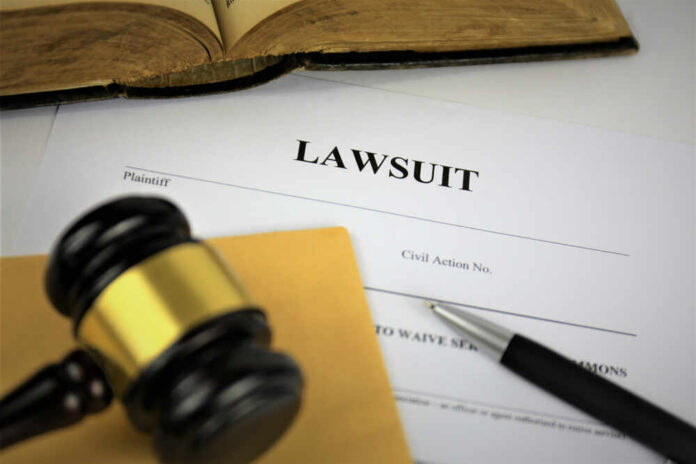
- Former U.S. Capitol Police officer Shauni Kerkhoff filed a 127-page defamation lawsuit on April 21, 2026, against Blaze Media and several individuals tied to its reporting.
- The Blaze’s earlier stories alleged a “forensic gait analysis” match linking Kerkhoff to the Jan. 5, 2021 pipe bombs near the RNC and DNC—claims later retracted after an arrest.
- Kerkhoff says the accusation triggered threats, a law-enforcement search of her home, and career disruption, including CIA administrative leave before she was reinstated.
- Federal prosecutors charged Brian Cole Jr. in December 2025; he pleaded not guilty and has cited Blaze reporting as part of his defense strategy.
A defamation case that collides with Jan. 6 conspiracy culture
Shauni Kerkhoff, a former U.S. Capitol Police officer who later worked in CIA campus security, sued Blaze Media on April 21, 2026, arguing the outlet’s reporting wrongly identified her as the person who planted pipe bombs near the Republican and Democratic national committee offices on Jan. 5, 2021. Her complaint names Blaze, former Blaze reporter Steve Baker, writer Joseph Hanneman, and Veritas Regnat LLC, seeking damages to be determined at trial.
The case matters beyond one newsroom because it sits at the intersection of high-stakes national security, political media incentives, and public distrust in federal institutions. Conservatives have watched government failures pile up for years, while many liberals see Jan. 6 as proof of extremist danger. When partisan media turns suspicion into certainty without hard evidence, it can harden both sides into a shared cynicism: that “the system” is either corrupt or incompetent.
What the Blaze reporting claimed—and what the lawsuit says was missing
Blaze Media’s articles alleged Kerkhoff was a forensic match to surveillance footage of the pipe-bomb suspect, leaning on an anonymous “gait analysis” assessment described as reaching an “up to 98 percent match.” The reporting also suggested the bombs were part of a diversion meant to thin Capitol defenses ahead of the Jan. 6 riot. Kerkhoff’s lawsuit counters that the theory ignored basic checks, including her alibi evidence and the lack of corroboration tying her to explosives.
Public reporting described Kerkhoff as being at home and capturing video of her dog around the relevant timeframe, while also noting that she was on duty defending the Capitol on Jan. 6 and used non-lethal munitions during clashes. The lawsuit argues that, despite the seriousness of accusing a law-enforcement officer of domestic terrorism, the Blaze story elevated a speculative identification method over verifiable timeline evidence. Those are the kinds of editorial choices that often decide defamation cases.
The human and institutional fallout: threats, searches, and career damage
Kerkhoff says the accusations detonated a chain reaction that had nothing to do with online politics and everything to do with real-world consequences. According to reporting on the lawsuit, she faced threats, harassment, and aggressive attention that disrupted her life for weeks, including the need to protect herself while she tried to stay out of sight. She also describes reputational damage that spilled onto her family, including grotesque online targeting tied to a relative’s obituary.
The lawsuit also describes how the Blaze allegations helped trigger official scrutiny. Reporting says the FBI investigated Kerkhoff after the Blaze stories circulated, including searches involving agents and dogs, and that the CIA placed her on administrative leave. Kerkhoff was later reinstated after she was cleared, but the episode raises a point that resonates across ideologies: when unverified claims steer official action, ordinary citizens can get ground down between bureaucracy and the media outrage cycle.
The arrest of a suspect—and why the story didn’t simply end there
Federal authorities arrested Brian Cole Jr. of Woodbridge, Virginia, in December 2025 and charged him with serious crimes tied to the pipe bombs, including transporting explosives and using a weapon of mass destruction. He pleaded not guilty, and reporting says he has referenced Blaze’s prior allegations as part of his defense posture. That detail underscores how media narratives can echo in courtrooms long after editors post retractions and move on.
Federal cop sues right-wing outlet the Blaze after they falsely accused her of planting Jan 6 pipe bombs https://t.co/gTwqaIetCs
— Andrew Feinberg (@AndrewFeinberg) April 21, 2026
For conservatives who already distrust “deep state” institutions, the temptation is to treat any government-adjacent figure as suspicious until proven otherwise. For liberals, the temptation is to treat conservative media’s mistakes as proof the entire movement is reckless. The available reporting supports neither blanket conclusion. What it does show is a familiar American failure mode: incentives reward speed, drama, and tribal confirmation, while accountability arrives slowly, through courts and investigations.
Sources:
January 6 attack pipe bomber lawsuit
Capitol police officer sues Blaze over Jan. 6 pipe bomb accusation