Iran’s leaders may have handed Washington a rare opening: Gulf states that once tolerated Tehran’s money games are now helping the U.S. choke off the regime’s cash.
Quick Take
- Treasury Secretary Scott Bessent says Iran’s attacks on Gulf neighbors triggered new GCC cooperation that helps the U.S. trace and freeze Iranian funds.
- The Trump administration is escalating “maximum pressure” tactics with tighter banking scrutiny and threats of secondary sanctions on oil buyers and facilitators.
- Iran’s economy has been under severe strain since late 2025, with a collapsing rial, inflation, and unrest that multiple reports say has produced high and disputed death tolls.
- Claims that regime insiders are moving “millions” abroad fit a familiar pattern, but independent confirmation of exact volumes remains limited.
Gulf cooperation turns sanctions into a financial dragnet
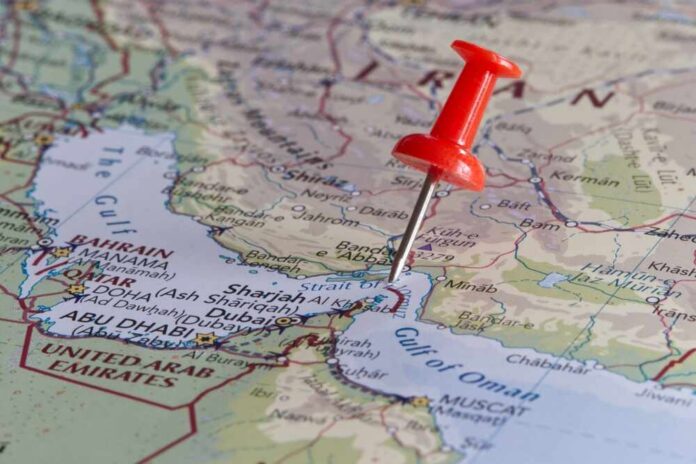
U.S. Treasury Secretary Scott Bessent is framing Iran’s recent strikes on Gulf neighbors as a strategic blunder that changed regional behavior in Washington’s favor. According to reporting on the new sanctions push, Gulf Cooperation Council partners are providing more transparency and cooperation on financial flows, giving U.S. investigators better visibility into accounts, intermediaries, and networks tied to Iran and the IRGC. That shift matters because modern sanctions enforcement is largely an intelligence and compliance game, not just a press release.
The practical effect of deeper Gulf buy-in is that sanctions can hit closer to the regime’s decision-makers. When local banks, regulators, and trade hubs cooperate, Iran’s ability to route payments through “shadow” channels narrows, and asset freezes become easier to execute. This is also where secondary sanctions become a major lever: the U.S. can pressure third-country buyers, shippers, insurers, and financial facilitators by threatening their access to the dollar system if they keep doing business with sanctioned entities.
Iran’s currency crisis and unrest provide the backdrop
The sanctions escalation is landing on an Iranian economy already described as buckling under dollar shortages and a collapsing currency. A fact-checking review of the crisis narrative points to late-2025 financial stress, a sliding rial, and inflationary pressure that made daily life more expensive while limiting imports. In early 2026, Bessent publicly discussed the mechanics of the squeeze—reduced dollar access and disrupted trade finance—arguing that these constraints can grind down a government’s capacity to pay bills and stabilize markets.
Social instability is a central part of why this episode is drawing attention, but the numbers remain contested. Multiple reports cite severe crackdowns and large death toll estimates tied to protests, with wide variation depending on the source and the difficulty of verifying events inside Iran. The key point for U.S. policymakers is less the exact tally and more the direction of travel: economic pain, political anger, and state violence together create volatility that can either force concessions, harden repression, or accelerate internal fractures.
“Economic fury” vs. war: pressure without a vote in Congress
Bessent and allied commentators have compared the financial offensive to military action in its intended impact, describing economic statecraft as the functional equivalent of striking a regime’s capabilities. That framing will resonate with many Americans who prefer to avoid another open-ended Middle East war while still demanding consequences for aggression. It also raises a constitutional and strategic tension: sanctions can be intensified quickly through executive power, yet their spillover effects—energy markets, regional retaliation risks, humanitarian harm—can be as real as those of kinetic force.
What’s credible, what’s not fully proven, and what to watch next
Several claims in circulation deserve careful weighting. Reports that Iranian elites are moving “millions” or “tens of millions” abroad align with patterns seen in other collapsing or sanctioned systems, but independent verification of precise amounts is thin in the public record. By contrast, the broader scaffolding is well-established: Iran’s oil revenue and dollar access are the regime’s lifelines, and tighter enforcement—especially with Gulf cooperation—can disrupt both. The next indicators to watch are enforcement actions against facilitators, measurable reductions in oil receipts, and any sign that China-facing workarounds are being throttled.
https://twitter.com/RedState/status/2044594124200796265
Politically, this episode also speaks to a broader American frustration that crosses party lines: the sense that unelected systems—banks, regulators, global compliance networks—can move faster than legislatures and often shape outcomes without much public debate. Conservatives will see a welcome use of American financial power to defend allies and punish aggression without nation-building. Liberals who distrust “maximum pressure” may still agree that the public deserves clearer benchmarks, transparency on humanitarian impacts, and a defined end state that doesn’t drift into yet another costly conflict.
Sources:
Checkmate for Tehran? US Treasury Moves to Sever Iran’s Banking Ties
Iran economic sanctions and currency crisis: What we know about Bessent, Trump and the rial
Report: Iran regime faces escalating protests and economic collapse amid pressure campaign