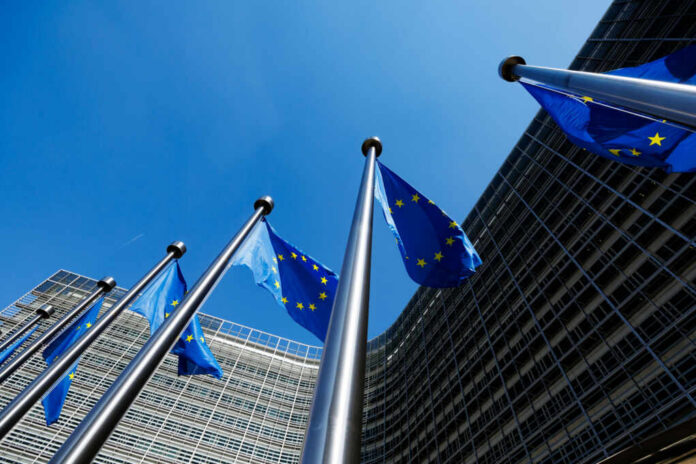
A top European court has now said that even a single unpaid repost of Russian state media can be treated like running a banned TV channel.
Story Snapshot
- The Court of Justice of the European Union ruled that people who share Russia Today (RT) videos can face criminal charges under EU sanctions.
- The court defined “operator” so broadly that it can cover ordinary bloggers and site owners who repost RT content, even without making money.
- The EU’s RT ban is a blanket rule: all RT material is blocked “regardless of content, duration, or format,” from full shows to short clips.
- The ruling fits a wider EU trend where “disinformation” and foreign propaganda are treated as “illegal content” that platforms and users must not spread.
What exactly did Europe’s top court decide about reposting RT?
The Court of Justice of the European Union answered a question from a German criminal case involving three people who ran an alternative news blog that shared RT Deutsch videos. German prosecutors said these reposts broke the 2022 European Union sanctions that suspended RT and Sputnik broadcasting in Europe. The court ruled that those sanctions do not only hit big TV operators. They also reach any person who makes RT content available to the public on a website or platform.
The judges said the word “operator” in the sanctions covers “any person responsible, directly or indirectly, for making the prohibited content available,” even if the activity is unpaid or funded only by donations. That means a volunteer blogger or small site admin can fall under the same ban as a cable company. The case now goes back to German courts to decide guilt and punishment under national law, but the legal door to criminal charges is clearly open.
A blanket ban that does not care what the RT clip says
The sanctions being applied here are not limited to clearly false or hateful clips. European Union rules say the ban applies to “all materials regardless of their content, duration, or format.” In plain terms, that means a weather report, a sports clip, or even a short quote from an RT segment is treated the same as a full propaganda show. The court stressed that neither how long the video is, nor how many people watch it, changes the legal ban.
This blanket approach grew out of the 2022 decision to suspend RT and Sputnik after Russia’s invasion of Ukraine, when the European Union said these outlets were part of “hybrid warfare” and pro-war propaganda. That regulation barred any operator from broadcasting or helping to broadcast RT in the bloc and warned against any attempt to dodge the rules. At the same time, it said RT staff could still do research and interviews in Europe, which shows how narrow and technical the ban is: the signal is blocked, the journalists are not.
From “fake news” laws to sanctions: a wider clampdown on speech
This ruling does not stand alone. It fits a broader pattern in Europe where content labeled “disinformation” or “propaganda” is turned into “illegal content” with real legal risk. Under the Digital Services Act, large platforms must act fast when authorities or “trusted flaggers” say something is illegal, or they can face big fines. Legal scholars warn this creates strong pressure to delete political speech, satire, and criticism once it is flagged, even if the content might be lawful in another system like the United States.
Research on national “fake news” laws finds that many European Union countries already treat disinformation as a criminal matter, with tools like heavy fines, prison time, and state-ordered corrections. A separate study on European media restrictions notes that RT and Sputnik licenses were first suspended as part of war-time policy, but that the definition of “circumvention” of those bans is broad and still evolving. Critics fear that when governments, regulators, and courts keep widening these rules, they hand powerful tools to whoever controls the state tomorrow.
Why this alarms both conservatives and liberals who distrust elites
For many Americans watching from across the Atlantic, this fight hits nerves on both the right and the left. Conservatives who already fear “woke” speech policing see a Western government criminalizing people for sharing foreign news, even when they are not paid and do not agree with the message. Liberals who worry about corporate power and surveillance see judges, regulators, and giant platforms teaming up to decide what people are allowed to see and share online.
💬 MFA Spox #Zakharova:
The EU Court of Justice has effectively legalised prosecution for reposting “banned” Russian media, including RT.
This is censorship dressed up as justice, aimed at locking Europeans inside Brussels-approved information bubbles.https://t.co/h3xqvv5byT pic.twitter.com/hVlpuBFARg
— MFA Russia 🇷🇺 (@mfa_russia) July 3, 2026
Supporters of the ruling say Russia uses RT as a weapon and that blocking its spread is needed to protect security and public order. But the court did not squarely tackle how this blanket ban lines up with Article 11 of the European Union’s own Charter of Fundamental Rights, which protects freedom of expression. That gap fuels the fear that “disinformation” rules will first hit foreign state media, then domestic critics, and finally ordinary citizens who post the wrong link at the wrong time.
Sources:
reason.com, x.com, ua.news, mezha.net, europeanpapers.eu, cjil.uchicago.edu, policyreview.info, lickslegal.com