
As Venezuela digs through rubble after twin mega-quakes, the chaos on the ground is exposing just how fragile today’s global disaster system—and the governments that run it—really are.
Story Snapshot
- Two powerful earthquakes hit Venezuela seconds apart, causing massive damage and a confusing, shifting death toll.
- Rescue crews, including U.S. military teams, race to find survivors while hospitals and morgues struggle to cope.
- Millions already depended on aid before the quakes, turning a natural disaster into a deeper crisis of government failure.
- Conflicting numbers and TV images of staged “aid events” fuel anger toward elites and mistrust of official narratives.
Back-to-back quakes and a country already on the brink
On June 24, 2026, two very strong earthquakes slammed northern Venezuela less than a minute apart, forming what scientists call a “doublet” event.[8] The United States Geological Survey (USGS) measured the first at magnitude 7.2 and the second at 7.5, with the mainshock centered near Morón and Yumare, west of Caracas.[2][8] Shaking hit the capital and nearby states, bringing down buildings in Caracas and La Guaira and knocking out power to wide areas.[1][3] For everyday Venezuelans, already living through years of economic crisis, the quakes turned hardship into catastrophe almost overnight.[1]
Initial government reports spoke of 188 dead and about 1,500 injured, but later updates and independent counts pushed the figures far higher.[2][3] Different news outlets now cite numbers ranging from a few hundred to well over 900 deaths, with tens of thousands still missing.[4][7][9] One widely referenced tracking site lists more than 46,000 people unaccounted for, though that database has not been fully verified.[1] This messy data picture fits a pattern seen often in Latin American disasters, where weak state capacity and political pressure make clear numbers hard to trust.[14]
La Guaira’s destruction and the race to rescue survivors
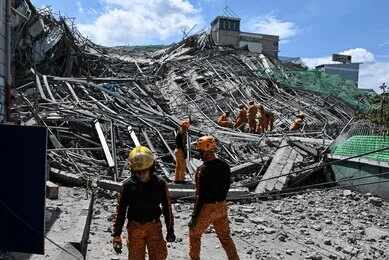
The coastal state of La Guaira appears to be the worst hit, described by Venezuela’s acting president Delcy Rodríguez as a “disaster zone” and “a real tragedy.”[1][3] Local reports speak of more than 250 collapsed buildings and thousands feared trapped under rubble, especially in older neighborhoods and informal housing.[3] The USGS warned early on that “high casualties and extensive damage are probable,” estimating a large risk that deaths could reach into the tens of thousands if building failures were widespread.[7][3] For families waiting outside ruined apartment blocks, these are not abstract numbers—they are missing parents, children, and neighbors.
Rescue teams from Venezuela’s civil protection forces work alongside volunteers using basic tools, sometimes even hands and improvised gear, to dig through debris.[2] Hospitals near Caracas and La Guaira are overwhelmed, with staff treating patients in hallways and parking lots.[1] Reports describe morgues filled to capacity and bodies placed along roadsides because there is simply no more space.[1][4] International crews from countries like Spain and the United States have begun arriving with better equipment, dogs, and field hospitals, but damaged roads and a closed main airport have slowed the response.[3][4]
U.S. military aid, sanctions, and anger at elites on all sides
The United States government quickly moved to send help, deploying military search-and-rescue teams and pledging about $150 million in humanitarian aid, led by a two-star Marine general.[1][12] This comes after Washington had already loosened some sanctions and restarted oil talks with Caracas earlier in 2026, seeking more stable energy supplies.[6] At the same time, some activists and Venezuelan voices argue that years of sanctions helped weaken the country’s economy and infrastructure, leaving hospitals, utilities, and building safety worse prepared for a major quake.[2] Clear economic studies to prove that direct link are still missing, but the perception is powerful.[2]
For many Americans watching from home—conservative and liberal alike—the story feeds long-standing frustration with how governments operate. Conservatives who dislike globalism and endless foreign entanglements see another case where Washington spends big abroad while problems like immigration, inflation, and crime fester at home.[6] Liberals who worry about inequality and minority rights see a disaster worsened by years of geopolitical moves and economic pressure that hurt ordinary people far more than the ruling class.[2][14] Both sides see elites making decisions, then appearing on camera as saviors when crisis hits.
Media confusion, missing people, and a broader crisis of trust
One striking feature of this disaster is how hard it is to get a single, clear picture of the human cost. Major outlets such as Reuters and The New York Times reference lower death tolls in the hundreds, based on cautious official figures.[6][7] More activist or humanitarian-focused sources, including some television reports, mention numbers above 900 deaths and missing counts near 50,000.[4][9] Social media posts from Venezuelans show collapsed buildings and desperate families, but exact details are rarely verified and can be buried by platform algorithms.[8]
The U.S. is expanding its military response as earthquake relief efforts intensify in Venezuela.
Additional aircraft, helicopters, search-and-rescue teams and military personnel are deploying to help restore airport operations, deliver lifesaving aid and support recovery… pic.twitter.com/IEI2cJ3jEi
— China V (@China_V7) June 29, 2026
This confusion matters. Aid money, foreign rescue deployments, and long-term rebuilding plans often depend on how severe the disaster is perceived to be.[5][20] When governments and media cannot agree, people on the ground feel ignored, and citizens watching abroad grow even more skeptical of official narratives. For Venezuelans, the earthquakes struck a country where more than 8 million already relied on regular aid to get by.[1][18] For Americans, the story fits a wider fear: when disaster hits—whether in Caracas or in a future U.S. city—the same mix of politics, spin, and bureaucracy may again get in the way of simple, honest help.
Sources:
[1] Web – Photos: Rescue and Recovery in Venezuela
[2] Web – Update 26 June 2026: Venezuela Earthquake – Death Toll Rises to …
[3] Web – June 24-25, 2026 — Venezuela rocked by 7.5 and 7.2 magnitude …
[4] Web – Venezuela earthquakes cause widespread damage, hundreds dead …
[5] YouTube – Death toll rises to over 900 after Venezuela earthquakes
[6] YouTube – Venezuela Earthquake Death Toll Passes 900 As Rescue Efforts …
[7] Web – Trump’s Vow to ‘Run’ Venezuela Is Tested After Quakes – ny times
[8] Web – Thousands feared dead with many reported missing after … – Reuters
[9] Web – A 7.1 earthquake just hit Venezuela. Buildings have collapsed in the …
[12] Web – M 7.5 – 16 km SW of Morón, Venezuela
[14] Web – 2026 Venezuela earthquakes – Wikipedia
[18] Web – Overall Green Earthquake in United States on 24 Jun 2026 15:10 UTC
[20] Web – [PDF] Natural Disasters in Latin America and the Caribbean