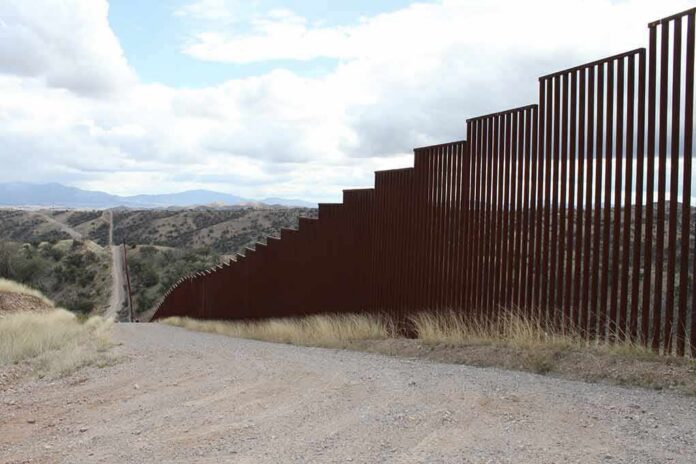
Finland has finished a 200-kilometer fortified fence on its Russian border, built to counter “hybrid” pressure that used migrant flows to test its defenses.
Story Highlights
- Finland completed a 200-kilometer border fence with cameras and barbed wire.
- Officials say the barrier answers “hybrid” tactics that route migrants toward the border.
- The project advanced in phases from 2023 to 2026, with first sections opening in 2025.
- The fence covers only part of the 1,300-kilometer border; more sections could follow.
What Finland Built, Where, and When
Finland built a 200-kilometer fence along select stretches of its 1,300-kilometer frontier with Russia. The barrier stands about three meters high, with barbed wire on top. Sections include sensors, night-vision cameras, lights, and loudspeakers where needed. Work began with a pilot near Imatra in early 2023, expanded through 2025, and reached the 200-kilometer mark in 2026. Interior officials said the country could add more segments if risks rise.
Finland’s Border Guard described the barrier as part of a larger border-security program. The plan included more patrols, drones, and electronic tools to spot illegal crossings. The agency said the goal was to manage incidents faster and hold the line if pressure spikes. The program rolled out in phases to test materials, confirm routes, and control costs as supply chains and terrain challenges changed across the long forest border.
Why Leaders Call It a Response to “Hybrid” Pressure
Finnish leaders linked the fence to a pattern they call “hybrid” tactics from the Russian side. They said smugglers and handlers funneled third-country nationals toward crossing points to stress Finland’s system and force political tradeoffs. Helsinki proposed funding in late 2022 to prepare for mass arrivals and reduce routes that bypass checks. The government framed the fence as one tool to block engineered flows and to protect order at legal crossings.
Officials pointed to a surge in 2024 that appeared to use a new route through Russia to reach Finland. In response, authorities raised patrol levels and deployed more sensors. They also used temporary closures at some points to regain control. The fence aims to slow entries, channel movement to staffed gates, and give officers more time to respond. Leaders argue that a clear, physical line also sends a signal not to test the border.
Costs, Coverage, and Limits of the Barrier
Finland first set aside about 139 to 145 million euros to start construction, then expanded funding as the scope matured. Reports placed total project costs in the hundreds of millions by 2026. The finished 200 kilometers cover the most at-risk terrain in the south and near busy roads and crossings. Large stretches of wilderness remain without a fence, by design, since officials say risks concentrate in select corridors.
BIG | 🇫🇮🇷🇺‼️‼️ Finland has completed 200 kilometers of new fencing along its border with Russia, turning another section of NATO’s eastern frontier into a significantly harder barrier against the kind of hybrid pressure Helsinki says Moscow has already attempted to use.
The… pic.twitter.com/slOdxwU7Yn
— Visioner (@visionergeo) September 7, 2026
The fence does not seal the entire border. Officials said it works with other tools, including surveillance, rapid response, and legal measures. The system aims to raise the time and effort needed to cross, making it easier to detect and stop attempts. Finland’s interior minister said the country could build more sections if threats change. That keeps options open without committing to a full 1,300-kilometer wall.
How This Fits Europe’s Security Shift
Finland’s move mirrors a wider trend across Europe since 2015. States facing sudden migration pressure or suspected “instrumentalization” have turned to fences to regain control and send clear signals. Research on barriers finds they can help when placed in the right terrain and backed by manpower and sensors. But experts also note that fences are one piece of a system, not a stand-alone fix for complex cross-border pressure.
What It Means for Everyday Citizens
For many Finns, the fence promises steadier control and fewer shocks at the border. For neighbors across Europe and in the United States, the lesson is familiar. When leaders feel pressure at a frontier, they build. That answer speaks to shared worries about security, migration, and state capacity. The fence shows a government acting fast on a clear target, even as deeper problems—war, smuggling, and geopolitics—still demand hard, long-term work.
Sources:
insiderpaper.com, raja.fi, mezha.net, barrons.com, aljazeera.com, bbc.com, reuters.com, fra.europa.eu