

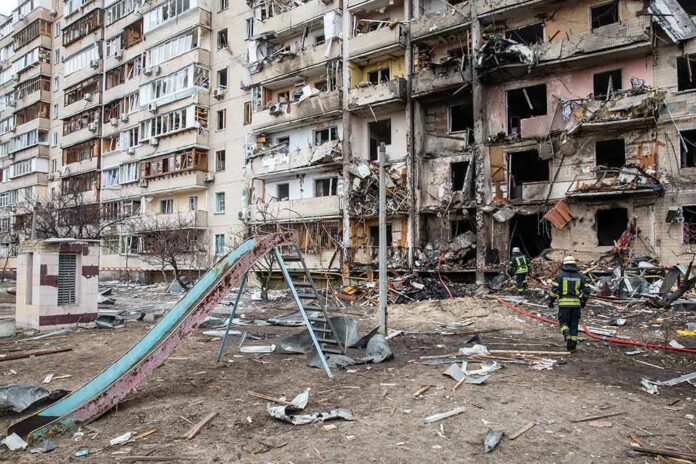
Russia hit Kyiv and other regions for a sixth straight night, killing at least 12 and shaking daily life yet again.
Story Highlights
- Sixth consecutive night of Russian drone-and-missile strikes hit Kyiv and other regions.
- At least 12 people were killed, with many more injured, according to officials.
- Attacks used mixed salvos meant to strain Ukraine’s air defenses.
- Pattern reflects a wider shift toward routine, massed strikes on cities and infrastructure.
Sixth Straight Night Of Strikes And Reported Casualties
Ukrainian officials said Russia bombarded Kyiv and its surrounding region for the sixth night in a row, killing at least 12 people and injuring others. Local authorities described hours of explosions and alarms overnight and into Tuesday. Reporters on the ground and wire services confirmed widespread blasts and damage in the capital and nearby districts. The continued strikes kept streets closed, slowed transit, and sent families back into shelters. Emergency crews worked through the morning to put out fires and search damaged buildings.
International outlets reported that the overnight assault used both drones and missiles, a mix meant to stretch interceptors and defenders. Bloomberg cited the use of jet-powered drones and ballistic weapons in the wave aimed at the capital and nearby areas. The Associated Press described bombardment that lasted more than 12 hours. Such long windows force responders to rotate crews, while residents face repeated alerts and debris risks. Officials warned that falling fragments can be deadly even when intercepts succeed.
How Russia’s Strike Pattern Seeks To Overwhelm Defenses
Analysts say Moscow now relies on massed, layered salvos to exhaust air defenses and raise the human and economic cost of each attack. The Institute for the Study of War has detailed prolonged waves that use drones to probe and deplete interceptors before missiles follow, making it harder to shield cities and key sites. This approach also wears down radar crews and repair teams. The goal is to keep pressure constant so normal life, industry, and transport cannot fully recover between strikes.
Research groups track a clear shift since earlier phases of the war. The Center for Strategic and International Studies reports that average strike waves have grown, and the time between large barrages has shrunk. Mixed attacks that blend drones and missiles have become routine, not rare, raising risks for power stations, rail nodes, and urban neighborhoods. These trends match what Kyiv has endured this week: repeated nights of alarms, widespread damage, and strained emergency and utility crews.
Targets, Civilian Impact, And The Broader Stakes
Ukraine’s military and local officials have said recent waves struck or threatened energy sites, ports, industrial facilities, and logistics hubs, while debris and blasts hit homes and city blocks. Reuters and other outlets have recorded past claims from Russia that it aimed at defense or industrial targets, but the death toll and damage in residential areas keep rising in Kyiv and beyond. Each new strike knocks out more infrastructure, drives up repair costs, and deepens the toll on families.
For Americans watching from afar, this matters for energy prices, supply chains, and security commitments. Prolonged strikes on ports and power grids in Ukraine can ripple into grain flows, metals, and transport in Europe. That can feed higher costs at home. The shared concern on the right and left is familiar: leaders talk big about strategy, yet basic safety for civilians remains fragile. When air defenses run low and cities take repeated hits, regular people pay first and most.
Sources:
thegatewaypundit.com, theguardian.com, straitstimes.com, reuters.com, defenceukraine.com, understandingwar.org