Libya’s state oil firm says guards shut a key valve, halting three sites and risking a force majeure that could jolt tight global supply.
Story Snapshot
- National Oil Corporation says a guard unit closed a pipeline valve, stopping output at multiple sites.
- The company is weighing force majeure as operations remain suspended.
- Petroleum Facilities Guard members frame the action as a protest over pay and rights.
- Libya’s oil has faced repeat shutdowns used as leverage in political and salary disputes.
What Libya’s Oil Chief Says Happened
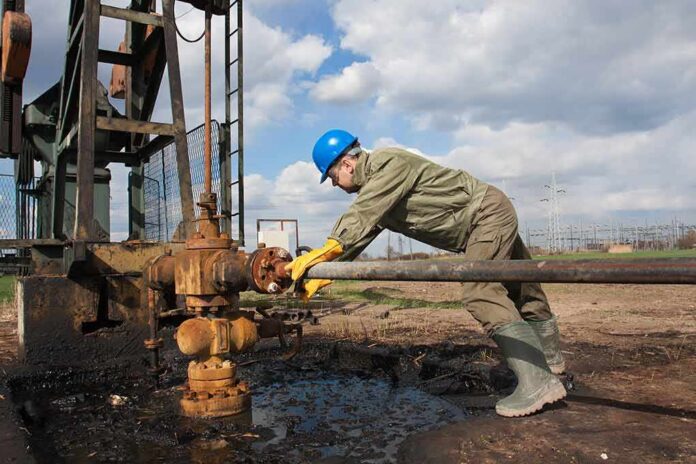
Libya’s National Oil Corporation said members of the Petroleum Facilities Guard closed a valve on the main Hamada to Zawiya crude pipeline on Sept. 15. The company said the shutdown suspended operations at two oilfields and a pumping station, and warned it may declare force majeure if disruptions continue. Reports said the closure caused a pressure spike that forced safety shutdowns at nearby sites, adding to the halt’s reach. A force majeure would allow the company to miss deliveries without penalty.
The state firm framed the action as illegal and disruptive to national interests. The Hamada to Zawiya line feeds the Zawiya refinery and export terminal, a key outlet in western Libya. Even small losses from Libya can sway prices because the oil market has little spare capacity and is sensitive to security risks. The company has used force majeure in past disruptions tied to valve closures, protests, or militia pressure, which tend to ripple into exports and state revenue.
What the Guards and Protesters Are Demanding
Reuters reported that the Petroleum Facilities Guard announced a partial one-week cut at several fields and warned of a full shutdown if demands were not met. Local outlets said some members cited long-running complaints over pay, benefits, and working conditions, and said they escalated after other steps failed. The same guard organization has at times urged protesters to reopen facilities and called such closures illegal, showing internal splits and weak control across units and regions.
These disputes are not new. Oil fields, pipelines, and ports have been used as bargaining chips for salaries, budgets, and political leverage since 2011. Analysts and past reporting describe a pattern: a closure triggers a force majeure warning, talks follow, then output resumes or stalls based on deals struck with armed groups or local leaders. In 2017, the National Oil Corporation declared force majeure after similar valve closures hit Sharara, El-Feel, and Hamada, underscoring how the same chokepoints recur.
Why This Matters Beyond Libya
Supply risk in Libya lands on American families through prices at the pump and higher costs across the economy. When a few people with a wrench can shut a valve and choke millions in state revenue, it highlights a larger problem that many Americans see at home: critical systems run for the few, not the many. Each shutdown hurts Libya’s budget, fuels corruption risks, and spooks markets already worried about war, tight supply, and shipping threats.
For readers who feel elites protect their own while services fail, Libya’s cycle is a warning. When rules break down, basic needs like fuel and power turn political. The United States cannot shrug off energy shocks abroad while hoping for stability at home. Policy makers here often talk energy security, but families judge results by bills and jobs. Libya’s case shows how fragile supply chains can be when accountability is weak and vital assets are bargaining tools.
Sources:
insiderpaper.com, reuters.com, middleeastmonitor.com, spglobal.com, libyaherald.com, news.sbs.co.kr, devdiscourse.com