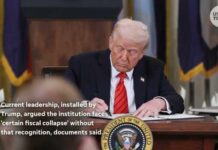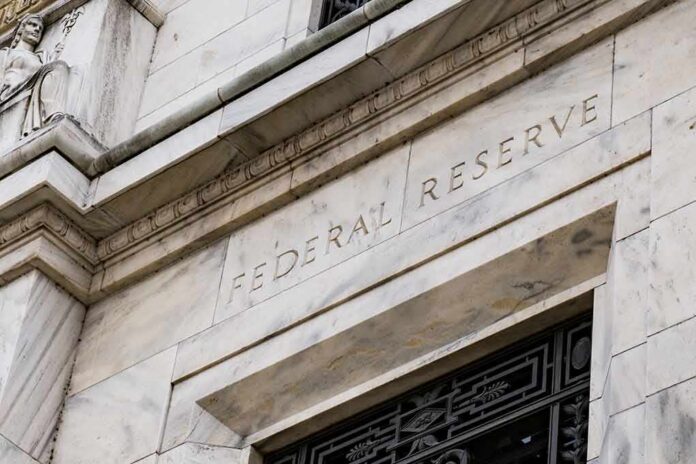
Within hours of the Federal Reserve’s first rate hike since 2023, President Trump demanded rates be cut to 1% or less, daring the central bank’s authority and raising fresh questions about who really steers the economy.
Story Snapshot
- President Trump called for rates at 1% “or less” after the Fed’s quarter-point hike.
- The White House called the decision “rather unfortunate,” arguing the case was weak.
- The Federal Reserve said inflation remains elevated and cited its 2% target.
- Markets expected the hike, making this a fight over policy choice, not a surprise.
What Triggered The Clash: A Post-Hike Demand For Cuts
On September 16, the Federal Reserve raised its benchmark rate by a quarter point to a range of 3.75% to 4.00%, its first hike since 2023. The Federal Reserve said inflation remained elevated and the move would support a faster return to its 2% goal. Soon after, President Trump posted that U.S. rates should be 1% “or less” and urged the Fed to “lower the interest rates… fast,” framing America as the world’s best credit with room to borrow cheaper.
The White House reinforced the pushback. Spokesperson Kush Desai called the hike “rather unfortunate” and said the choice lacked a strong economic case. That message aligned the administration with Trump’s demand for quick and deep cuts. Trump’s critics framed the remarks as pressure on the central bank. But the administration cast it as a policy dispute over how to balance growth, jobs, and prices in a still-uneven recovery.
The Fed’s Stated Rationale: Inflation First, Even If It Hurts
The Federal Reserve’s official statement said inflation was still too high and that raising rates backed its dual mandate of price stability and maximum employment. Officials said the action would help bring inflation down toward 2% in a timelier way. They lifted the target range by 0.25 percentage point and signaled a focus on getting prices under control even as the economy showed resilience. This framing stresses long-run stability over short-term relief.
Reuters and other outlets reported that policymakers marked up inflation forecasts and did not expect a full return to 2% inflation until 2029. That timeline, if accurate, helps explain why the Federal Reserve chose to tighten policy now rather than wait. It also shows why rate relief to one percent, as Trump wants, would be a sharp break from the current inflation path the central bank sees ahead.
Why This Fight Resonates: Costs, Credibility, And Control
For many families and small businesses, higher rates sting. Borrowing for homes, cars, and equipment gets pricier. Savers may welcome better yields, but debt-heavy households feel squeezed. Trump’s call taps a broad frustration that Washington’s choices often punish workers and owners while helping insiders. Many on the right and left believe elites make rules that regular people must pay for through higher bills and slower wage growth.
The US Federal Reserve has raised its benchmark interest rate by 25 basis points to 3.75%–4%, marking its first hike since 2023. The decision comes as inflation remains elevated and President Donald Trump calls for lower rates. #FederalReserve #Fed #InterestRates #USEconomy… pic.twitter.com/kJ3UrnKlOL
— NewsX World (@NewsX) September 17, 2026
For the Federal Reserve, credibility is the anchor. The central bank argues that sticking to the two percent target protects everyone over time. It points to its legal mandate and stresses independence from day-to-day politics. Its recent Monetary Policy Report said inflation rose this year and stayed above target, in part due to energy shocks. That backdrop gives the hike a policy basis, not a political one, at least by the Fed’s own account.
What We Know And What We Do Not
We know three things. First, the Federal Reserve raised rates a quarter point to 3.75% to 4.00% to fight elevated inflation. Second, President Trump immediately called for rates of one percent or less and said America’s credit strength justifies it. Third, a White House spokesperson said the hike lacked a strong case. We do not yet have full meeting minutes and vote-level detail to test dissent lines or staff models behind the decision.
We also know markets widely expected a hike, so this clash is about strategy, not a surprise emergency. Some investors and commentators say a small hike will not move key price drivers like oil. Others say small steps still signal resolve and shape expectations. That debate sits in a long history of presidents pressing the central bank while the bank defends its independence to keep inflation anchored.
Why It Matters Now
Higher rates touch almost every bill a family pays, from mortgages to credit cards. Lower rates can give quick relief but risk fueling prices if cut too far, too fast. The stakes are high because trust is thin. Many Americans think the system favors the well connected. When the president and the central bank pull in opposite directions, people wonder who is accountable if things get worse. Clear data and transparency from both sides would help restore faith.
Sources:
youtube.com, reuters.com, cnbc.com, moneycontrol.com, finance.yahoo.com, fortune.com, news.sbs.co.kr, federalreserve.gov, piie.com