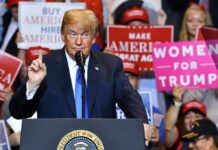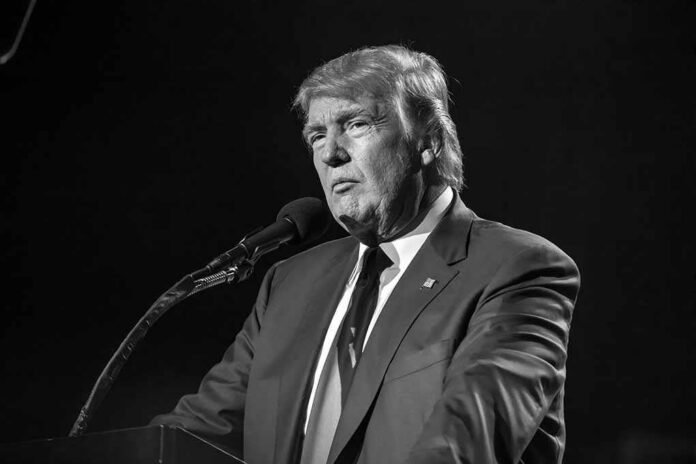
At a Michigan rally, President Trump told voters to “send him back to where he came from,” tying Abdul El‑Sayed to jihadism without offering proof.
Story Snapshot
- Trump urged Michigan voters to reject Abdul El‑Sayed and back Republican Mike Rogers.
- Trump labeled El‑Sayed a “jihadist” and linked him to the Muslim Brotherhood, offering no evidence.
- Fact‑checking found no record that El‑Sayed is a Muslim Brotherhood member.
- El‑Sayed called the rhetoric Islamophobic and said he would be “Senator Mohamed” after November.
What Trump Said And Why It Matters In Michigan
At a campaign event in Michigan, President Trump urged the crowd to back Republican Mike Rogers and defeat Democrat Abdul El‑Sayed. He told voters to “send him back to where he came from” and claimed El‑Sayed was tied to jihadism. The remarks aimed to frame the Senate race as a fight over national security, not only policy. The phrase “send him back” carried a sharp edge in a swing state race where turnout and suburban voters often decide outcomes.
Trump linked El‑Sayed to the Muslim Brotherhood and warned about security at the United States Capitol if El‑Sayed won. He invoked images of terrorism and 9/11 while urging voters to stop a supposed threat. Reporters at the rally recorded the claims, but none cited underlying records to support them. Independent outlets later noted the campaign offered no documents, briefings, or intelligence to back the allegation against El‑Sayed.
The Evidence Gap And A Fact‑Check Rebuttal
PolitiFact examined Trump’s core claim about Muslim Brotherhood membership and rated it “Pants on Fire.” The review said there is no evidence connecting El‑Sayed to the group. It also said Trump provided none when asked. That finding undercuts the security case Trump raised and shifts the focus to the tactic itself. When a candidate links identity, faith, and unproven extremist labels, the attack can shape a race even if later shown false.
Coverage from major outlets described the remarks as anti‑Muslim or Islamophobic. Reports detailed Trump’s repeated focus on El‑Sayed’s name, faith, and alleged ties to jihadism. This framing added fuel to an already tense debate about where hard campaigning ends and group‑based targeting begins. The outcry grew after Trump invoked 9/11 while warning against El‑Sayed entering the Senate, which drew strong backlash in and beyond Michigan.
How El‑Sayed Responded And What Voters Heard
El‑Sayed answered Trump’s metal‑detector jab with a counter‑challenge. He said he would walk through a metal detector if Trump would take a lie detector test. He called the attacks “vile and grossly Islamophobic,” arguing that his faith and first name were being used to mark him as foreign or unsafe. He told supporters that after November, Trump could “call me Senator Mohamed,” signaling he would not retreat from his identity or the fight.
For many voters on the right and left, this episode taps a shared worry: leaders use fear and identity to dodge real issues. Michigan families care about prices, jobs, safety, and schools. Yet time and airtime went to arguing about a label with no evidence behind it. That pattern feeds the view that the political class prefers sharp sound bites and division over hard policy work, while ordinary people pay the price when problems go unsolved.
Sources:
mediaite.com, npr.org, boston.com, nbcnews.com, bbc.co.uk