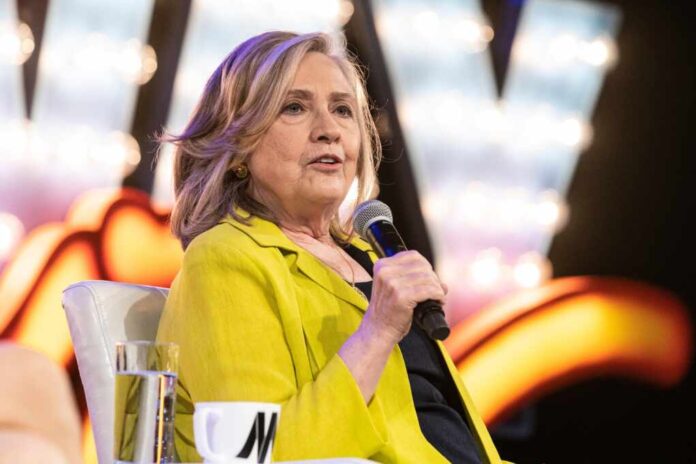
A new book endorsement by Hillary Clinton labeling political opponents “fascists” has ignited a conservative backlash.
Story Snapshot
- Hillary Clinton promotes a book warning about “fascists” targeting education.
- Conservatives argue the rhetoric is inflammatory, especially after Charlie Kirk’s assassination.
- The controversy underscores deepening divides over education and political discourse.
Clinton’s Endorsement Sparks Outrage
On September 17, 2025, Hillary Clinton took to social media to promote Randi Weingarten’s new book, *Why Fascists Fear Teachers: Public Education and the Future of Democracy*. Clinton’s post praised the book’s insights into “authoritarians” targeting public education, prompting a swift and vehement response from conservative circles. Critics argue that the book’s rhetoric, and Clinton’s endorsement, unfairly labels political opponents as “fascists,” escalating tensions in an already polarized political climate.
Hillary Clinton sparks social media firestorm for promoting book warning about 'fascists': 'Sick people'
Source: Fox News https://t.co/XHbhSmzH0m— Marlene b Fabregas (@Mfabregas1906) September 20, 2025
The endorsement comes on the heels of the assassination of conservative activist Charlie Kirk, a tragedy that has heightened scrutiny on political language and its potential consequences. Conservatives have linked the book’s rhetoric to the violence, suggesting it contributes to a hostile environment that targets their beliefs and values. The backlash against Clinton’s post has been substantial, with criticisms from influential conservative figures and organizations.
Political Rhetoric and Education Policy
This controversy highlights ongoing disputes over public education, curriculum control, and the role of teachers’ unions. Conservatives have long advocated for parental rights and school choice, while progressives defend public education from what they perceive as authoritarian overreach. Weingarten’s book enters a contentious debate, as education policy remains a flashpoint in the broader culture wars. Clinton’s endorsement has further polarized the discussion, intensifying the focus on how public figures use charged language.
Clinton’s statements emphasize the importance of public education as a cornerstone of democracy, a view that resonates with her base but alienates critics who see it as an attack on alternative educational approaches. The book’s historical analysis of fascist regimes targeting education is contentious, with opponents arguing that such comparisons are exaggerated and misapplied in the current U.S. context.
Impact and Future Implications
The immediate impact has been an intensification of partisan rhetoric and polarization, particularly concerning education policy and political labeling. Public figures are under increased scrutiny for their language, especially in the wake of political violence like Kirk’s assassination. The controversy has not only influenced social media discourse but may also affect upcoming elections and policy debates around education and free speech.
In the long term, the incident may further entrench political divides, impacting public trust in educational institutions and legislative efforts related to education policy. As both sides warn about the dangers of inflammatory language, the boundaries of acceptable political rhetoric continue to shift, challenging how Americans engage in civil discourse.
Sources: