

Minneapolis is grappling with renewed tensions over federal law enforcement accountability following a deadly incident on January 7, 2026, where an ICE agent fatally shot 37-year-old mother Renee Good during a federal operation. While the agent claims self-defense, the narrative is strongly contested by local officials and civil rights groups. The shooting has sparked widespread protests demanding transparency, justice, and the removal of the federal agency, setting the stage for a national debate on federal authority and police oversight.
Story Highlights
- ICE agent Jonathan Ross fatally shoots Minneapolis mother Renee Good, sparking protests.
- Federal claims of self-defense are disputed by local officials and civil rights advocates.
- Second night of protests sees calls for transparency, accountability, and ICE’s removal.
- Federal and local tensions escalate over investigative transparency and public safety.
ICE Operation Turns Deadly in Minneapolis
On January 7, 2026, Minneapolis was thrust into the national spotlight after an ICE Special Response Team agent shot and killed 37-year-old Renee Good during a federal operation. The agent, identified as Jonathan Ross, claimed self-defense, alleging that Good attempted to ram officers with her car. This narrative has been met with skepticism by local officials and civil rights groups, who argue the shooting was unjustified and demand a full investigation.
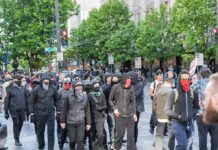
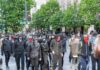
The incident quickly triggered large protests in Minneapolis, with thousands taking to the streets by the second night. Demonstrators are calling for justice and transparency, and many are demanding ICE’s removal from the city. The protests, described as mostly peaceful, echo the city’s enduring struggle with law enforcement accountability, particularly in the wake of the George Floyd incident in 2020.
ICE OUT OF DALLAS!
A massive crowd marched tonight to show the Trump administration and its racist deportation machine that it cannot kill with impunity — the people demand justice for Renee and all victims of ICE terror! pic.twitter.com/7QNILjYGSY
— Party for Socialism and Liberation (@pslnational) January 9, 2026
Conflicting Narratives and Legal Challenges
ICE’s portrayal of the shooting as a lawful response to a perceived threat is starkly contrasted by local leaders, who emphasize the need for an independent investigation. The FBI’s decision to rescind its cooperation with the Minnesota Bureau of Criminal Apprehension (BCA) has further complicated efforts for a transparent review. Hennepin County Attorney Mary Moriarty is actively seeking alternative paths to ensure a state-level investigation continues, highlighting the community’s right to clarity.
Vice President JD Vance has publicly defended the ICE agent, labeling Good’s actions as an attack on law enforcement. Meanwhile, Attorney General Pam Bondi has warned protesters against crossing a “red line,” reinforcing federal commitment to law and order. These statements have only heightened the national divide, with civil rights advocates and immigrant rights groups rallying against what they see as excessive federal force.
Protests and Political Implications
The ongoing protests underscore a broader debate about federal authority versus local oversight. As Minneapolis residents demand ICE’s removal, the incident may invigorate campaigns to defund or restructure the agency. The federal government’s firm stance has sparked discussions about the need for accountability frameworks for federal agents, akin to those sought after high-profile police shootings.
Minneapolis, a city still healing from past traumas, faces challenges in maintaining peaceful demonstrations while pushing for swift transparency and accountability. The ramifications of this incident are likely to influence both local policy and national discourse on immigration enforcement and protest rights.
Watch the report: ICE agent who shot and killed Minneapolis woman was part of special response team
Sources:
- ICE shooter in Minneapolis identified as Jonathan Ross; court records reveal he was previously dragged 100 yards by a fleeing car | Fortune
- Democrats threaten to withhold funding after ICE killing in Minneapolis | US news | The Guardian