Legal battles over the scope of federal authority have forced the Texas National Guard to withdraw its troops from Illinois, marking a significant—and costly—retreat. The deployment, intended for immigration enforcement, exposed deep constitutional rifts between states over sovereignty, the proper role of the military in American cities, and the balance of power between state and federal government. With the Supreme Court now involved, the political fallout from this episode promises to reshape the debate over American federalism for years to come.
Story Highlights
- Texas National Guard troops deployed to Illinois for immigration enforcement will return home ahead of Thanksgiving, following legal and political pressure.
- The recall highlights ongoing constitutional disputes over federal versus state control and the use of military forces in domestic law enforcement.
- Illinois officials and local communities raised strong objections, citing state sovereignty and concerns about militarization.
- The Supreme Court is now involved, with broader implications for future National Guard deployments and state-federal relations.
Federal-State Tensions Over Troop Deployment Come to a Head
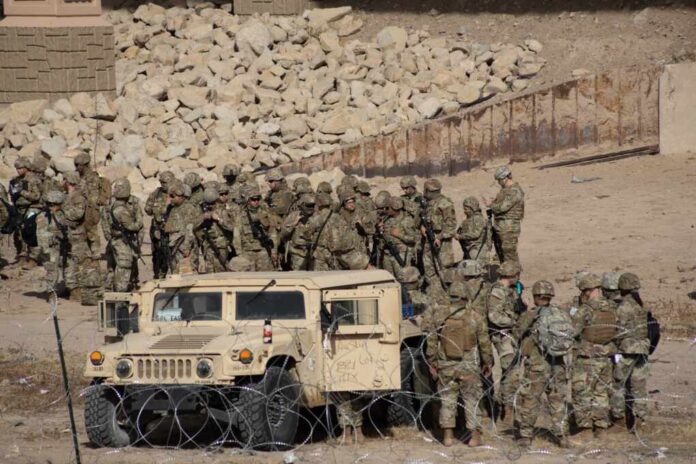
Governor Greg Abbott’s decision to deploy roughly 400 Texas National Guard troops to Illinois in early October 2025 sparked immediate controversy. The troops, stationed primarily in Chicago, were sent to support federal immigration enforcement amid ongoing disputes over border security and the role of state governments. Illinois officials, led by Governor JB Pritzker, condemned the deployment as an infringement on state sovereignty and a dangerous precedent for using military forces in civilian law enforcement. The legal and political pushback highlighted the growing divide between states prioritizing border security and those resisting what they view as federal overreach.
⚠️JUST IN: TEXAS NATIONAL GUARD RETURNS FROM ILLINOIS — Gov. Abbott Stares Down The Left, Brings Troops Home For Thanksgiving
🔥 Governor Greg Abbott confirms the return of Texas National Guard troops from Illinois after a month-long showdown with Democrat officials. Troops… pic.twitter.com/p6E41YuuAi
— Medeea Greere (@GreereMedeea) November 23, 2025
By mid-November, mounting legal challenges escalated the standoff. A federal court ruled that while the troops could not be newly activated for law enforcement, they were not required to immediately withdraw. However, continued objections from Illinois officials and local governments, along with a pending Supreme Court case, pressured both the Pentagon and U.S. Northern Command to reconsider the troop presence. Official statements confirmed that adjustments were being made, not only in Chicago but also in other cities where National Guard units had been deployed for similar purposes. As Thanksgiving approached, reports indicated that Texas troops would be home within days, marking a significant retreat in the face of sustained legal and public opposition.
Constitutional Questions and the Role of the National Guard
The dispute over the Texas Guard’s deployment brings longstanding constitutional issues to the forefront. Historically, the National Guard serves state emergencies and federal missions, such as disaster relief or border security—not routine law enforcement in other states. Illinois officials argued that deploying out-of-state troops for immigration enforcement oversteps both the Posse Comitatus Act, which restricts military involvement in domestic policing, and the principle of state sovereignty protected by the Constitution.
The Supreme Court’s involvement underscores the unresolved nature of these legal questions, with the outcome likely to set a precedent for how—and whether—the federal government can leverage state military resources for domestic operations in the future.
Military specialists voiced strong caution. Retired Maj. Gen. Randy Manner emphasized that the military is not structured or trained for everyday law enforcement roles, warning that normalizing a military presence in American cities could erode civilian freedoms and further strain community relations. Legal scholars echoed concerns that, without clear constitutional boundaries, future administrations could exploit such deployments for political purposes, undermining both federalism and the balance of power between states and Washington.
Community Impact and Political Fallout
The near $5 million cost of the deployment, combined with heightened anxiety over a visible military presence, fueled local frustration in Illinois. Many residents and officials saw the troops’ presence as a symbol of federal intrusion and an unnecessary escalation of the immigration debate. Texas officials, on the other hand, defended their actions as a necessary response to the ongoing border crisis and a demonstration of state-federal cooperation under President Trump’s leadership. The recall of troops relieves immediate tensions but leaves unresolved the broader policy disputes and political animosities between states and the federal government—an issue now entangled with Supreme Court deliberations and national debates about the role of the military in civil society.
Long-term, the episode sets the stage for continued legal and political battles over federal power, immigration enforcement, and the proper use of the National Guard. As the legal case proceeds, both supporters of state sovereignty and advocates for strong border enforcement will be watching closely, knowing that the Court’s decision may reshape the boundaries of American federalism for years to come. Limited communication from federal authorities during the recall process has only deepened mistrust and highlighted the urgent need for greater transparency and respect for constitutional principles in future policy decisions.
For many conservatives, the withdrawal of Texas troops from Illinois is a necessary course correction that reasserts constitutional limits and protects communities from the creeping normalization of military involvement in domestic affairs. The event is a stark reminder that safeguarding liberty requires vigilance not only at the border but within every layer of government, especially as debates over sovereignty, enforcement, and federal reach intensify under the current administration.
Watch the report: 200 Texas National Guard troops deployed in Chicago to return home
Sources:
Texas National Guard troops to be recalled from Illinois soon, according to reports
Texas National Guard deployment in Chicago cost nearly $5 million
Texas National Guard leaves Illinois: Retired major generals offer insight on troops’ role
Texas National Guard troops returning from Chicago deployment