

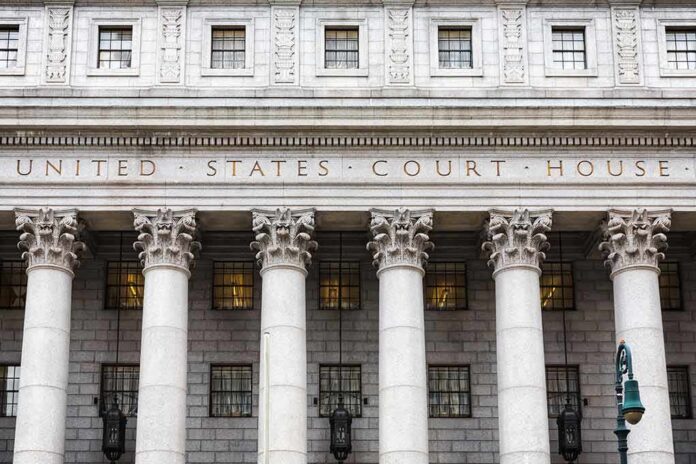
Every federal judge in Middle Tennessee stepped off Senator Marsha Blackburn’s lawsuit, forcing an outside judge to be brought in to hear her challenge to Special Counsel Jack Smith’s subpoena.
Story Snapshot
- All Middle Tennessee district judges recused from Blackburn’s suit; an outside judge will be assigned.
- Blackburn alleges Jack Smith unlawfully subpoenaed her phone records during the Arctic Frost probe.
- The complaint argues Smith’s appointment violated the Appointments Clause and breached multiple constitutional rights.
- Reports confirm the recusal but do not show the order’s full reasoning or the subpoena’s contents.
What Prompted the Unusual Full-Bench Recusal
Chief Judge William L. Campbell Jr. said all judges in the U.S. District Court for the Middle District of Tennessee recused from Senator Marsha Blackburn’s case against Jack Smith. The order, quoted in multiple outlets, states the Sixth Circuit will designate an outside judge and the case will be reassigned. Earlier reporting noted an initial recusal by Judge Aleta Trauger before the district-wide step back. The quoted order explains the next steps, but it does not explain why every judge recused.
Bench-wide recusals are rare but not unheard of. Federal recusal law requires judges to step aside when their impartiality might reasonably be questioned. When a full district cannot hear a case, an appellate court can assign an out-of-district judge to ensure the case moves forward. That safeguard protects trust in the courts, but it also fuels public concern when reasons are not public, especially in politically charged disputes.
Blackburn’s Allegations and the Constitutional Stakes
Senator Blackburn’s lawsuit says Jack Smith subpoenaed her cell phone records during the Arctic Frost investigation tied to President Trump. The complaint claims the demand swept in legislative materials protected by the Constitution’s Speech or Debate Clause. It also argues violations of the First and Fourth Amendments and asks the court to declare Smith’s appointment as special counsel unlawful under the Appointments Clause. Reporting indicates she seeks mainly accountability, not damages. These are allegations, not rulings on the merits.
According to coverage of the filing, Blackburn says she had no notice and no chance to challenge the records demand before her data was obtained. She argues that process undermined core protections for a sitting senator’s work and communications. The suit raises two big questions: how far government can go when seeking records from lawmakers, and whether Smith held lawful authority when he acted. Those issues cut across party lines because they affect any future Congress.
What We Know—and What Remains Sealed or Unclear
Multiple outlets confirmed the district-wide recusal and Sixth Circuit reassignment path. However, the public record shown in reporting does not include the full recusal order or any conflict memo explaining why each judge stepped aside. The subpoena itself, any nondisclosure order, and return records from the phone carrier have not been provided in the gathered material. Without those documents, the public cannot verify the scope of the subpoena or whether legislative materials were in fact reached.
That lack of detail creates space for doubt at a time when many Americans already distrust Washington. Conservatives see proof of selective enforcement and overreach. Liberals see threats to checks on executive power and to the separation of powers. Both sides, though, share one worry: a justice system that seems to serve insiders first. The recusal resets the venue and may cool local pressures, but it does not answer the core questions the lawsuit raises.
Why This Matters for Voters Beyond Tennessee
This case tests how far investigators can go when a sitting lawmaker’s records are in play and how courts police those lines. It also tests claims about the legal status of a special counsel, which could influence future probes into leaders from either party. A clean process with clear reasoning would help rebuild trust. The Sixth Circuit’s choice of an outside judge is a step toward that. The filings and rulings to come will show if the system can still correct itself.
Sources:
thegatewaypundit.com, law360.com, redstate.com, law360.co.uk, x.com, nytimes.com, thefederalist.com