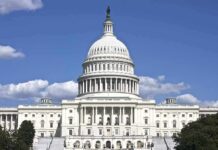
Trump and Zelenskyy met at the White House while the war in Ukraine remained stuck between diplomacy and force.
Quick Take
- The White House confirmed Trump held a bilateral lunch with Zelenskyy.
- The talks focused on ending the war and on Ukraine’s security needs.
- Trump said the United States would work on a security package for Ukraine.
- Zelenskyy pushed air defense as a top priority during the meeting.
White House Talks Center on War and Security
The White House said Trump hosted Zelenskyy for a bilateral lunch meeting focused on how the war between Russia and Ukraine could be resolved. The official framing matters because it shows the talks were not just a photo op. They were tied to the biggest issue in the conflict: whether Washington can help shape an endgame without sending American troops into the fight.
Contemporaneous reports say Trump told Zelenskyy the United States would help with Ukraine’s security if a deal is reached. BBC reporting said Trump also did not rule out American military involvement when asked about security guarantees, though he gave no firm promise. That leaves the public record with a clear message and a narrow limit: support was discussed, but no final guarantee was announced.
Air Defense Stayed at the Center
The strongest operational detail in the supplied record is air defense. The White House transcript summary says Zelenskyy highlighted air defense as a priority during the meeting. It also says Trump discussed letting Europe, including Ukraine, make Patriots. That is important because Patriots are tied to missile defense, and Ukraine has long argued that stronger air shields are needed to protect cities, power plants, and front-line forces.
Even so, the record does not show a signed air-defense deal coming out of the meeting. ABC News and BBC both describe security assistance in broad terms, not as a completed package. That gap matters in Washington and in Kyiv alike. Leaders can talk about protection, but until agencies approve contracts, licenses, or transfer steps, the promise remains political rather than operational.
US President Donald Trump said Washington halted further strikes on Iran at Tehran’s request. Iran, however, denied that any talks with the US were underway. Trump is also set to host Ukrainian President Volodymyr Zelenskyy and Israeli Prime Minister Benjamin Netanyahu at the… pic.twitter.com/YCkPzPcXVV
— daily buzz media (@dailybuzzmedia1) July 28, 2026
Diplomacy Remained Open, But Unfinished
Trump also framed the war as something that could be settled through negotiation. BBC reported that after the talks he said the United States had contacted President Vladimir Putin and started arranging a possible meeting between Putin and Zelenskyy, with a later trilateral session involving Trump. CNN later reported the same push in its live coverage. That is a real diplomatic move, but it is still only a move, not a settlement.
The larger pattern is hard to miss. Ukraine wants security backing before any peace deal. Trump is pushing for talks and wants progress fast. Russia remains the missing actor in the room. That leaves the White House in a familiar place for this war: making headlines about peace while still facing the hard work of turning talk into terms both sides will accept.
Why the Meeting Matters Politically
The meeting also shows how quickly foreign policy gets pulled into domestic argument. Supporters see a president pressing for peace and a stronger defense plan. Critics see a process with no final agreement and little public detail. Both readings come from the same basic fact pattern: a White House meeting, talk of security, and no completed deal. That is why the lack of a full transcript or written framework keeps driving speculation.
There is also a broader trust issue. The supplied reporting shows multiple Trump-Zelenskyy White House encounters across different dates and settings, which can blur the public record. One meeting is remembered for open conflict. Another is presented as a more orderly diplomatic push. When the government releases only short readouts, people are left to fill in the blanks. That weakens confidence, even when the facts themselves are not in dispute.
Sources:
facebook.com, en.wikipedia.org, cbsnews.com, nbcnews.com, abcnews.com, war.gov, bbc.com, pbs.org, whitehouse.gov, youtube.com, aljazeera.com, cfr.org, cnn.com, npr.org